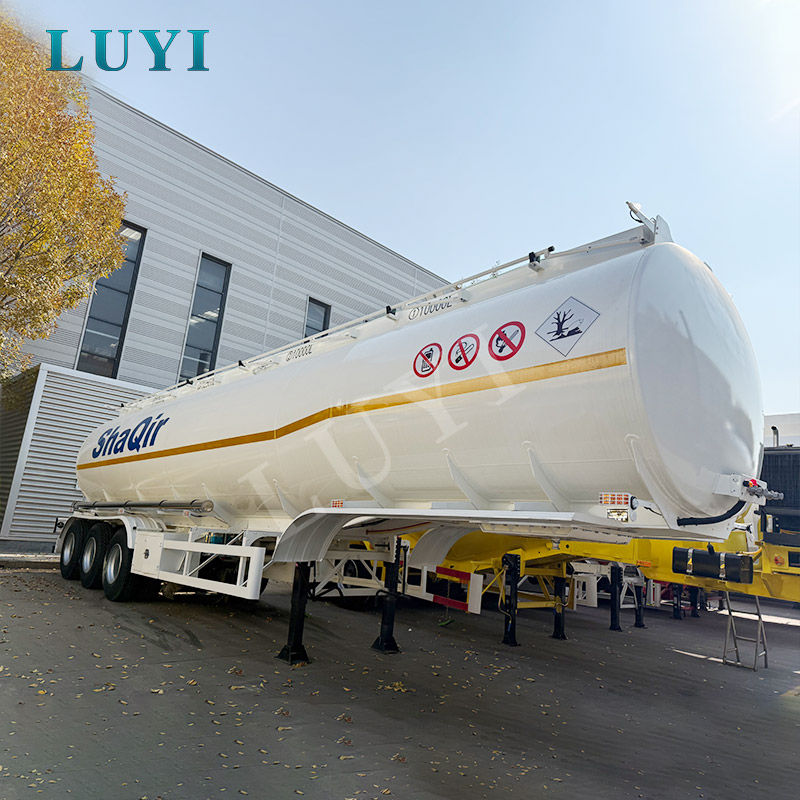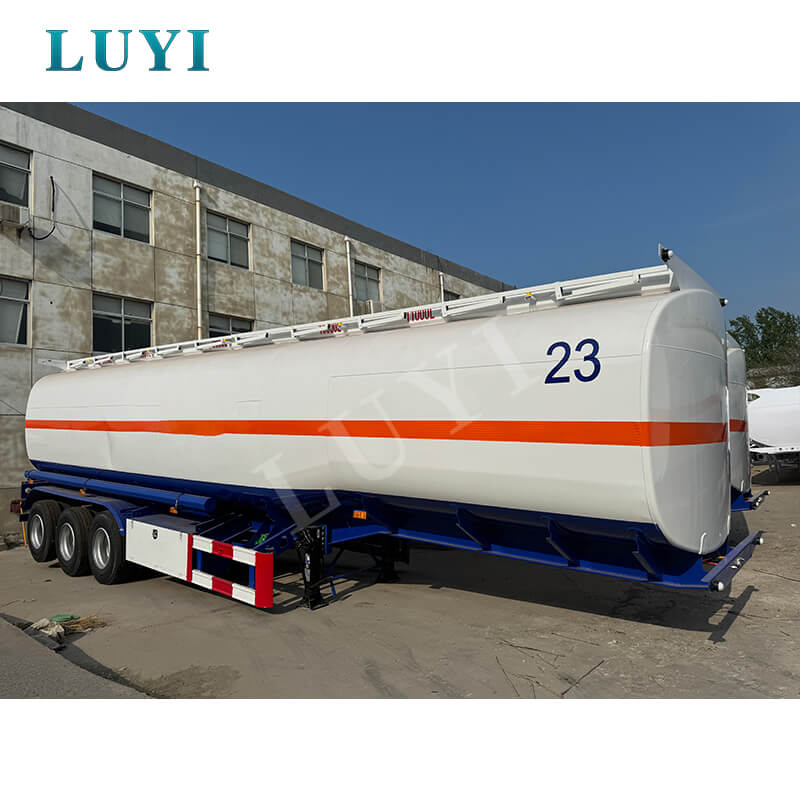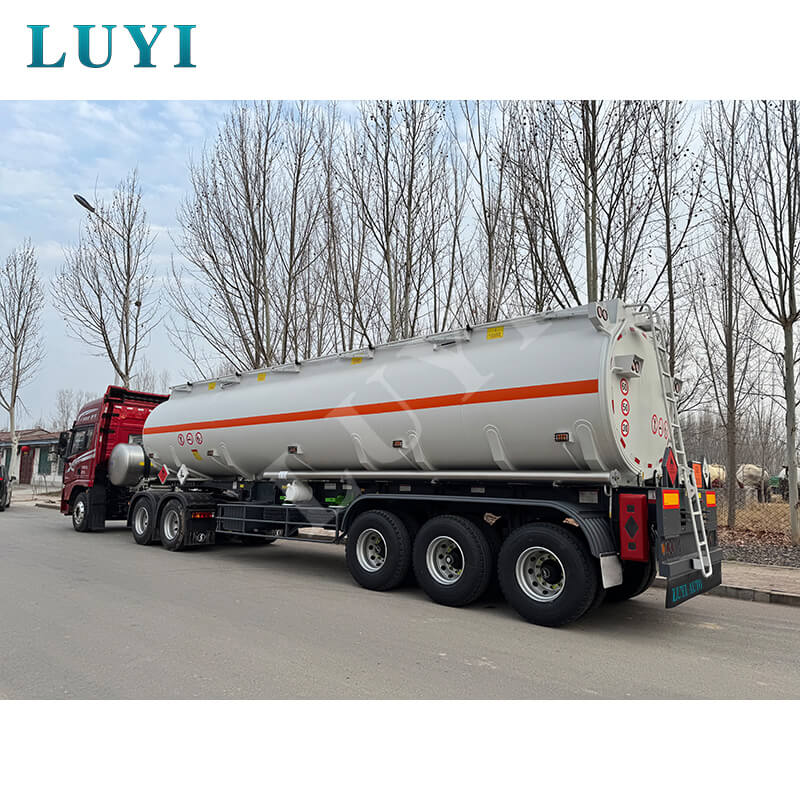

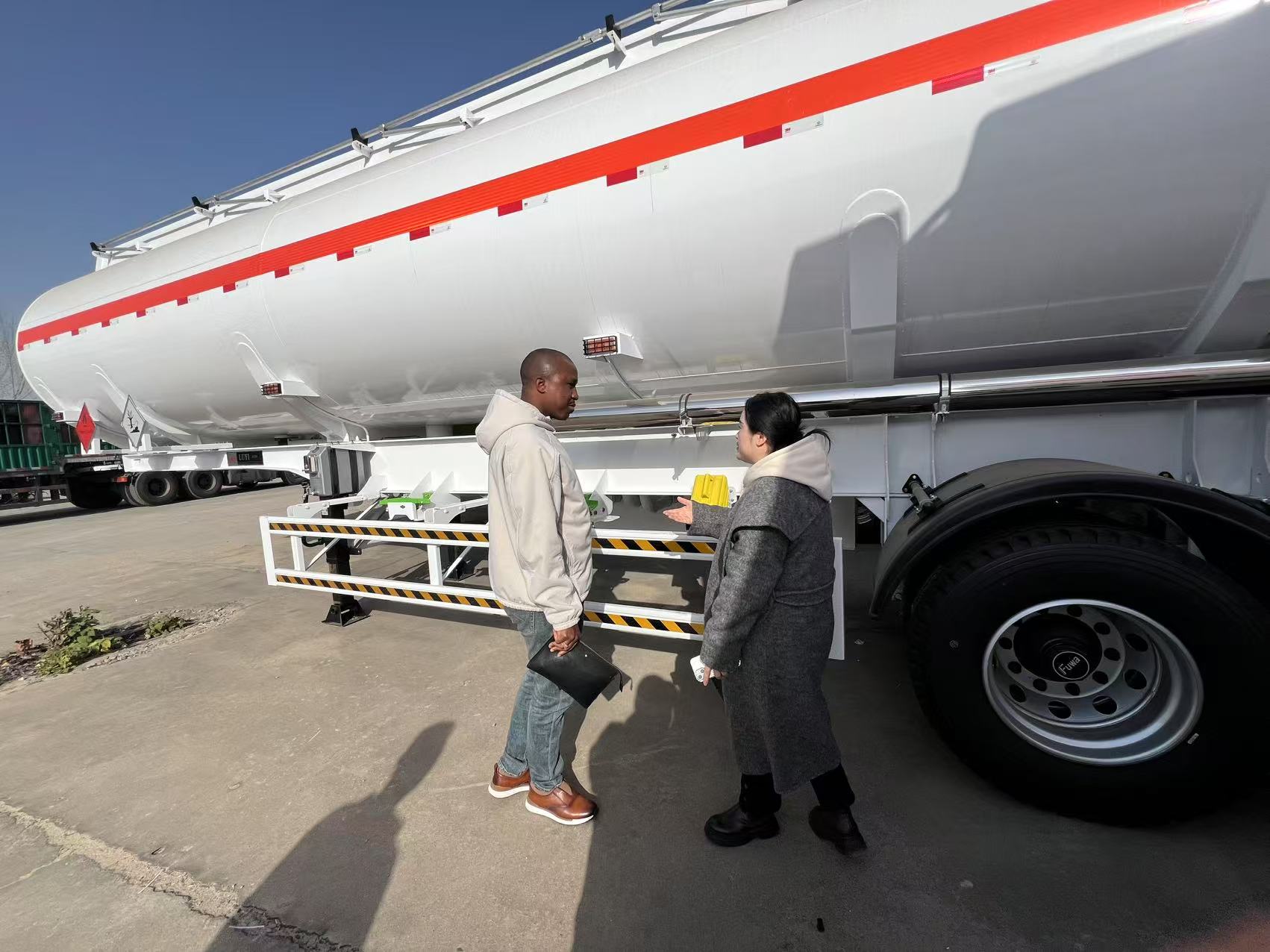
"All the emails in the world can’t compare to seeing a tanker semi-trailer in person." Standing in the finished product area of LUYI’s factory, Guinean freight operator Kadiatou Diallo patted the steel tank of the tanker semi-trailer, his voice brimming with approval. Last week, he led his team halfway across the globe to LUYI, initially just wanting to "verify the rumored quality." Little did he know, this inspection would push their cooperation from "initial contact" straight to "negotiating order details."
Diallo’s company has been in the oil transportation business in Guinea for a decade, and its biggest headache has always been finding tanker semi-trailers that can handle local road conditions. "Roads in Africa are nothing like those in Europe. Mining areas are full of gravel, and rural dirt roads turn muddy and slippery during the rainy season. The trucks we used to buy either had tanks that cracked easily or chassis that couldn’t stand heavy loads. Repairs would cost us days of business downtime." Before his trip, Diallo had plenty of doubts—LUYI had a good reputation in the African market, but could a product from halfway across the world really meet their specific needs?
Those doubts faded half as soon as he stepped into LUYI’s production workshop. Inside, workers were applying anti-corrosion coating to the tanker semi-trailer tanks. A technician held up a design drawing and explained, "This special coating can resist the high temperatures and humidity in Guinea; it won’t peel even after years of exposure to the sun." Diallo knelt down to feel the welds on the tank, then walked around to check the chassis structure—the three-axle design was wider than the models he’d used before, and the shock absorber springs were noticeably thicker. "We’ve optimized the suspension system specifically for African roads. Even when loaded with 30 tons of oil, it stays stable on bumpy terrain," the LUYI technician said—words that hit right at the heart of Diallo’s needs.
What surprised Diallo most was the customized solution LUYI had prepared for him. In the finished product display area, a tanker semi-trailer marked "Guinea Special" stood out: it had a sun protection and heat insulation layer on the side of the tank, an anti-clogging device at the discharge port, and even the tires had been upgraded to wear-resistant off-road models. "We studied Guinea’s climate data. Roads get slippery during the rainy season, and these tires can boost grip by 20%," the LUYI sales manager said, handing over test reports detailing the tanker semi-trailer’s load-bearing and leak-proof performance under simulated African road conditions.
"Previous manufacturers either said ‘standard models can’t be modified’ or dragged their feet even when we offered extra money," Diallo said, flipping through the test reports repeatedly. He suddenly pointed to a detail and asked, "Can this emergency braking system lock automatically in case of a power outage?" The technician demonstrated on the spot: as soon as the power was disconnected, the tanker semi-trailer’s brakes engaged instantly, holding the tank steady in place. "Guinea has a lot of mountain roads—this safety feature is crucial. A colleague of mine once had an accident because of brake failure," one of Diallo’s team members said, pulling out his phone to snap photos of the tanker semi-trailer.
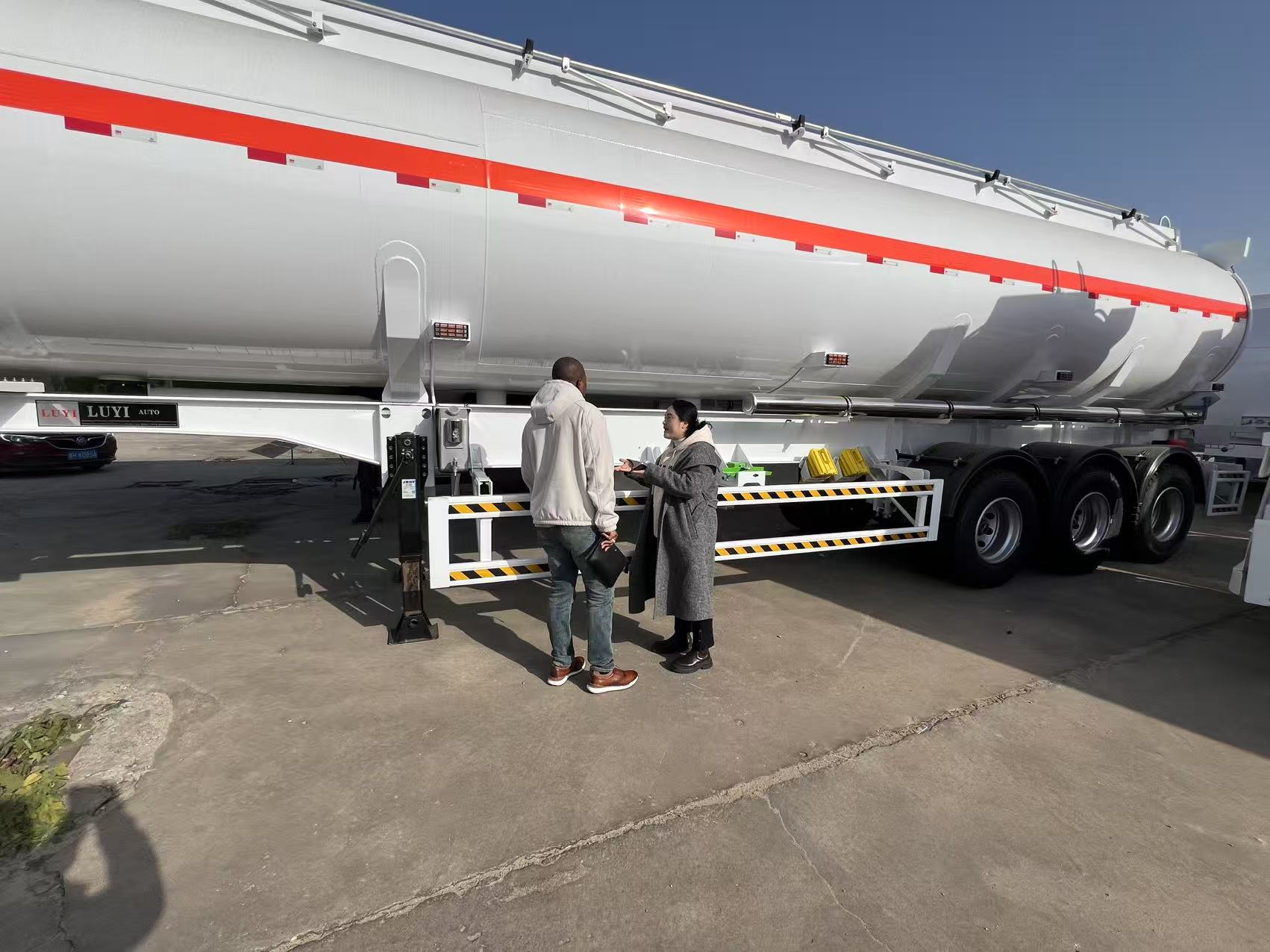
The afternoon meeting was short-lived, quickly shifting from "product introduction" to "discussing cooperation details." Diallo came straight to the point: "I want to order 5 tanker semi-trailers first. If they perform well, I’ll add 20 more by the end of the year." But he still had one concern: "What about spare parts and after-sales service? We can’t afford to wait for parts shipped all the way from China every time something breaks down."
LUYI’s response put his mind at ease completely: "We already have a parts warehouse in Conakry, Guinea. We keep all commonly used valves and seals in stock, so we can deliver parts the same day a repair request is made. For complex issues, our technicians can provide remote guidance via video call. If that doesn’t work, we can send a team to Guinea within 48 hours." The manager then pulled up real-time footage of the parts warehouse on his computer—shelves were neatly stocked with various components for tanker semi-trailers, and there were photos of local maintenance staff undergoing training.
By the end of the inspection, Diallo signed a letter of intent to cooperate. He shook hands with the LUYI manager and said, "I came here just to ‘take a look,’ but now I’m truly eager for a long-term partnership. Your company doesn’t just sell tanker semi-trailers—you actually solve our problems."
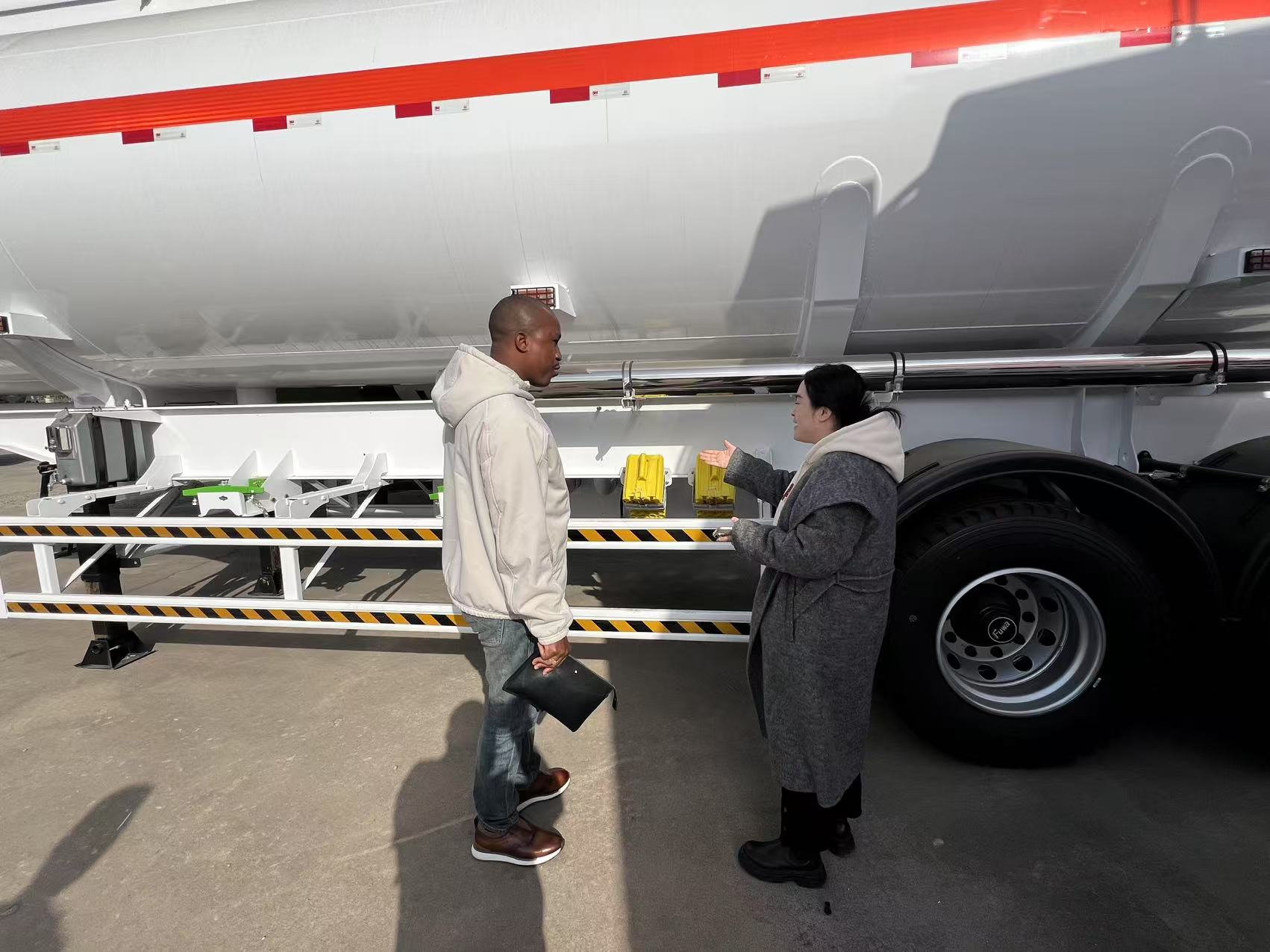
For LUYI, this cooperation marks a new beginning. "The African market has very specific needs; we can’t just ‘sell the same tanker semi-trailer globally,’" a LUYI representative said. Moving forward, the company will further optimize the design of the tanker semi-trailers based on Diallo’s feedback—for example, adding a remote monitoring function for tank liquid levels, allowing Guinean clients to track transportation progress right from their offices.
Right now, those 5 customized tanker semi-trailers are undergoing final pre-delivery inspections. In two weeks, they’ll be loaded onto a cargo ship and head to the Port of Conakry in Guinea. "As soon as the trucks arrive, I’ll send you a video," Diallo said before leaving LUYI, posing for a photo with the "Guinea Special" tanker semi-trailer. In the picture, his smile shines as brightly as the tank under the sun. And this cross-ocean cooperation, like the sturdy tanker semi-trailer itself, is steadily embarking on a path to mutual benefit.