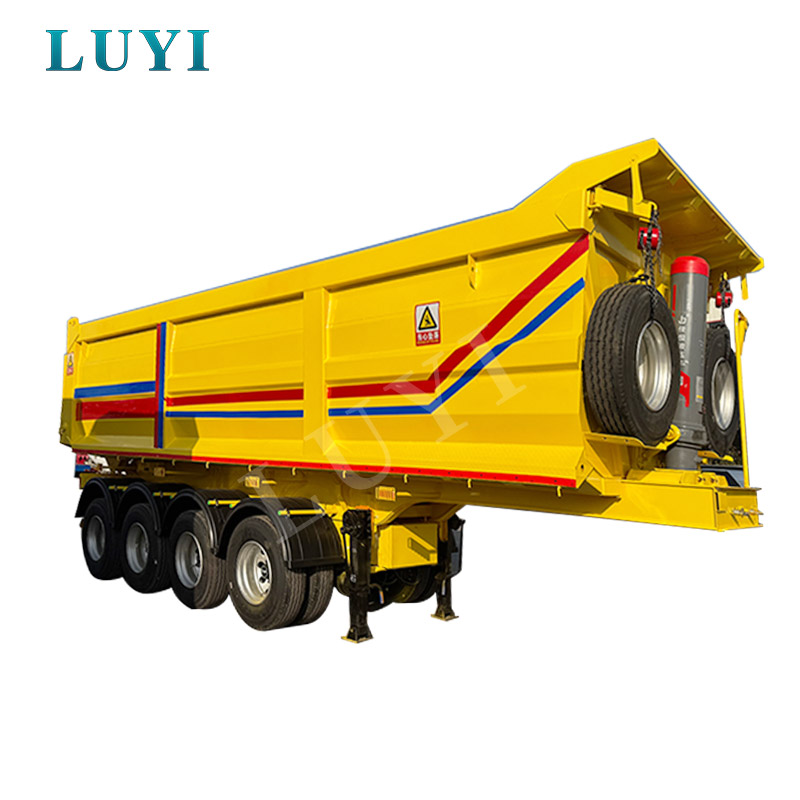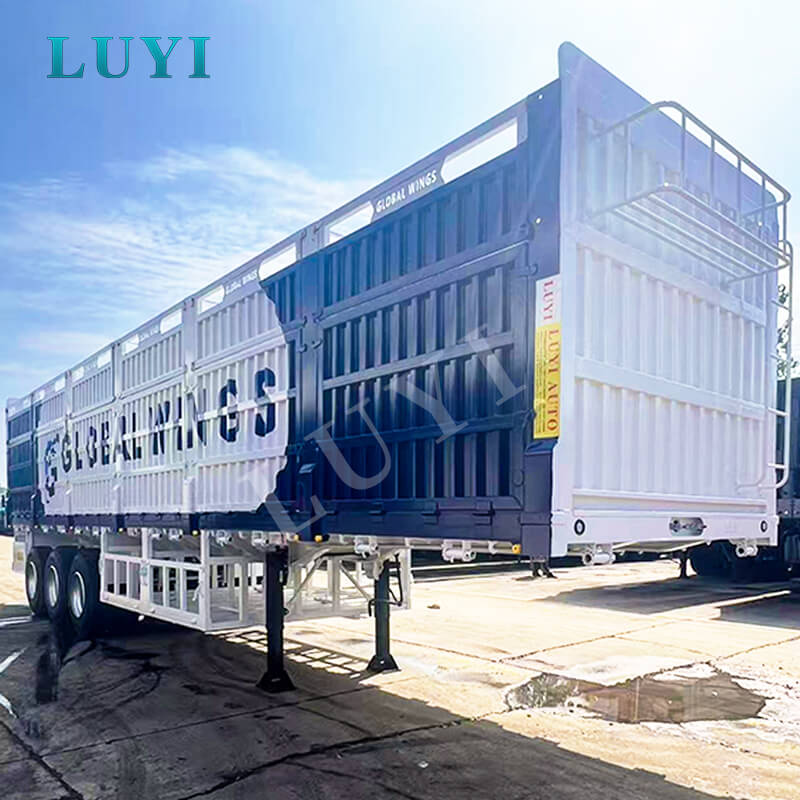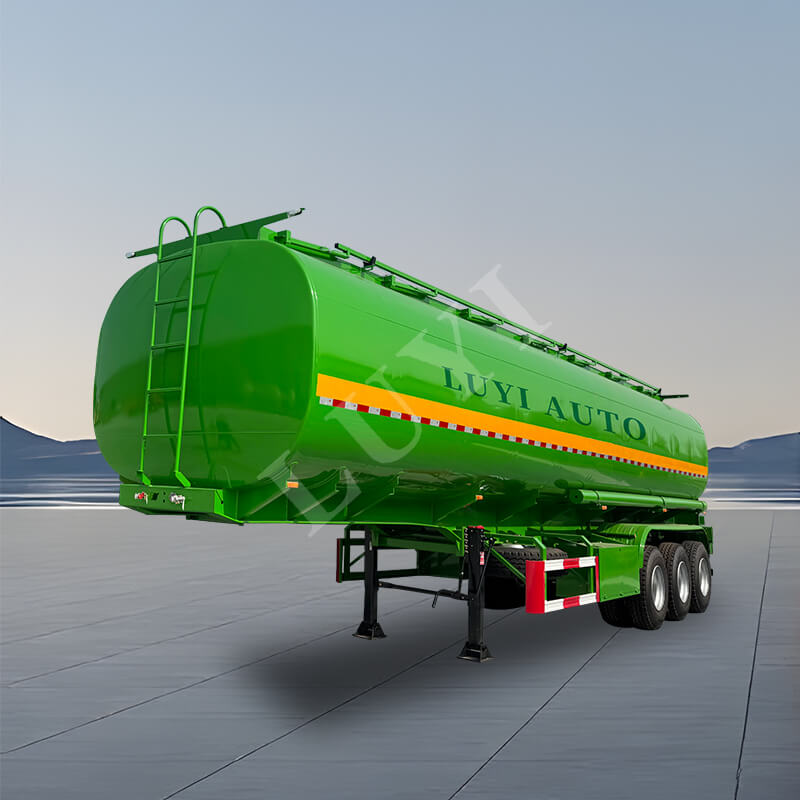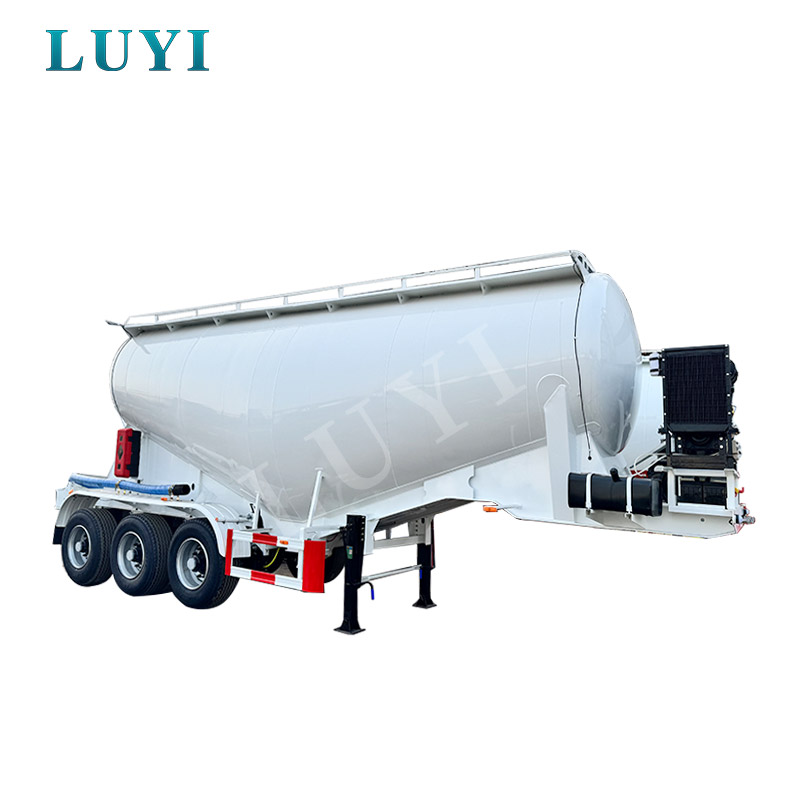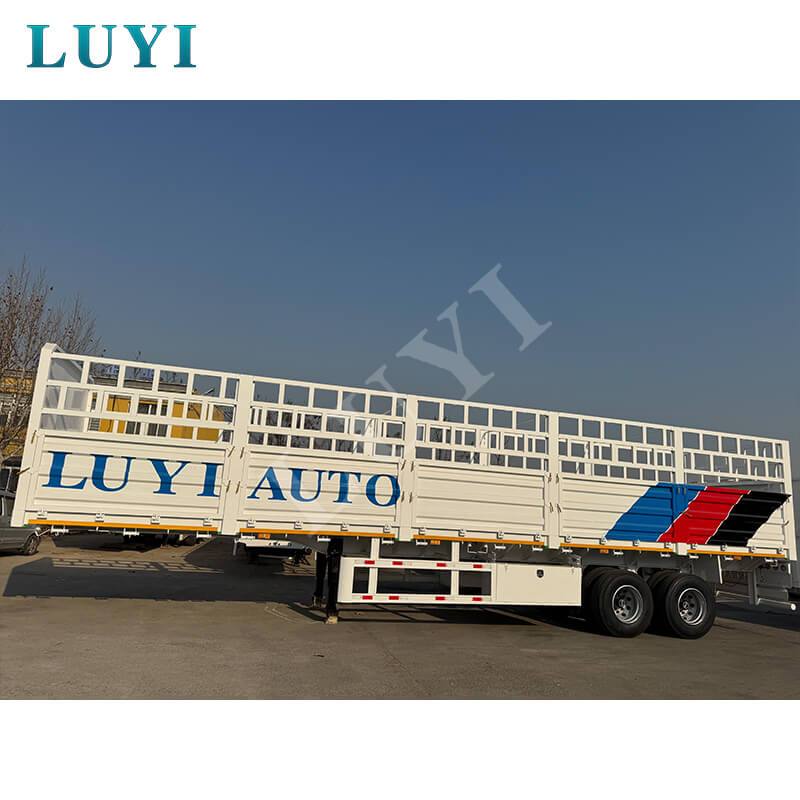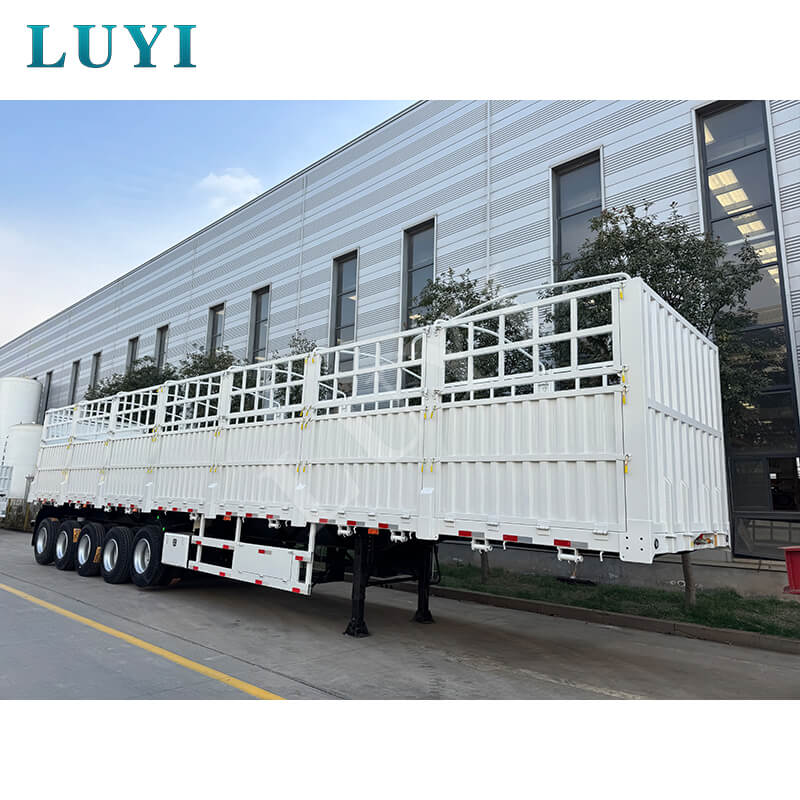

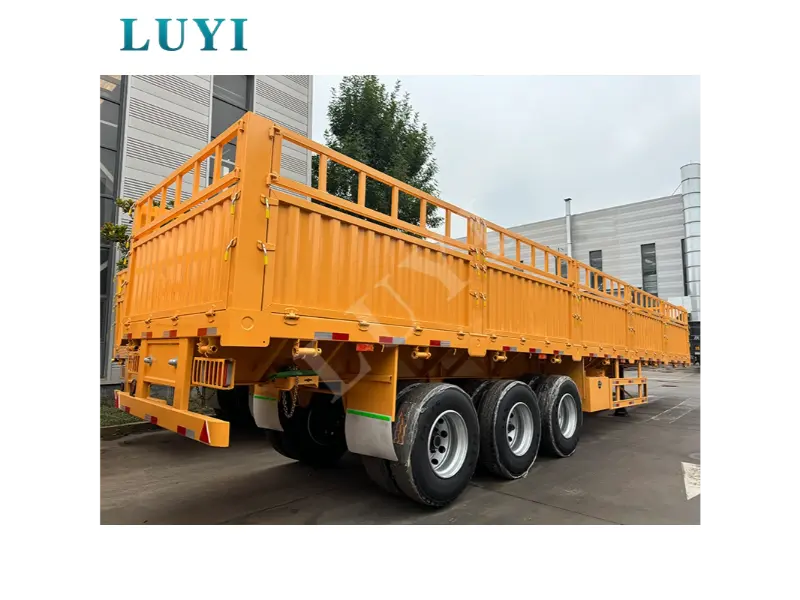
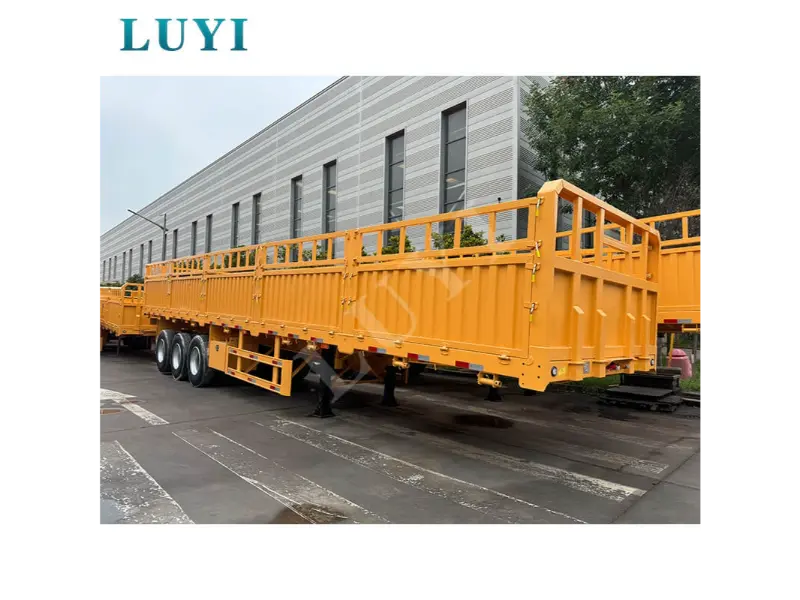
If you work in heavy freight or construction logistics, you’ll be familiar with the 60-ton three-axle flatbed semi-trailer. Luyi Auto’s one of the most reliable workhorses for heavy haulage, pairing perfectly with most standard truck tractors on the market. Capable of safely carrying up to 60 tons, it handles nearly all heavy and oversize cargo transport needs on daily job sites. The three-axle layout is a huge upgrade over basic two-axle models. It spreads cargo and vehicle weight more evenly across the road, delivering much smoother driving, less tire wear, and far lower road stress during long hauls. Built with tough high-tensile steel and reinforced cross bracing, this trailer rarely deforms even after years of heavy, continuous use. Its open flat deck offers unmatched flexibility, free from the size limits of enclosed trailers, making it a go-to option for all sorts of industrial and construction transport tasks.
Operators rely on this flatbed trailer for almost every heavy-duty transport task on site. Construction teams use it constantly to move large machinery, from excavators and bulldozers to road rollers and split tower crane parts. Factories trust it to ship bulky steel frames, steel coils, precast concrete pieces and bulk metal supplies. It also supports major municipal and infrastructure projects, moving bridge segments, road safety barriers and assorted construction auxiliary gear. Ports, freight depots and mining sites also benefit greatly from its fast turnover capabilities. Best of all, the open deck design easily accommodates irregular, out-of-gauge loads that simply cannot fit inside conventional box trailers.
Every part of this 60-ton three-axle flatbed semi-trailer is built with real-world durability in mind. Rated for 60-ton full-load operation, its three axles work with either mechanical or air suspension, both doing a great job absorbing road bumps and keeping cargo secure in transit. The chassis uses premium low-alloy steel, fitted with thick base plates and sturdy cross beams that hold firm under constant heavy pressure without bending. The standard deck sits at 12 to 13 meters long and 2.5 meters wide, providing ample room for large equipment and bulk goods.
Choosing the right trailer setup should always match your actual work routes and cargo types, not just flashy spec numbers. If you mostly move construction machinery, pick units with anti-slip decks and plenty of lashing points to lock loads firmly in place and stop sliding on rough roads. Air suspension works best for long highway trips; it delivers a smoother ride and cuts down on frequent tire replacement costs. For bumpy construction tracks and twisty mountain roads, reinforced mechanical suspension and thickened frame beams are far more durable and stable. Fleet owners should also match trailer size to their tractor’s power output, follow local road limit rules strictly, and check brakes and lighting parts regularly to avoid fines and failed inspections.
Most trailer buyers, whether fleet managers or independent drivers, make the same avoidable mistakes during purchase. The most common one is chasing high load ratings while overlooking frame and chassis build quality. This shortcut always leads to early bending, heavy wear and a much shorter service lifespan. Many also fit air suspension for rough off-road sites, unaware that it lacks the rigidity for heavy uneven terrain, resulting in constant breakdowns. Another overlooked detail is load-securing fittings; poor-quality or insufficient lashing points create major safety risks mid-transit.
Trusted manufacturers offer flexible custom tweaks to tailor each trailer to unique job site needs. Operators can add practical upgrades like anti-slip deck treatment, reinforced side rails and heavy-duty lashing rings for safer load fixation. Suspension setups are fully customizable: tough mechanical suspension for rugged off-road work, or adjustable air suspension for more comfortable, fuel-efficient highway travel. You can also upgrade tire assemblies and brake systems, plus add professional galvanizing and paint coating to resist rust and extend service life significantly. For extra-large unique cargo, factories can adjust deck length and width on request, while installing helper ladders and optimized support legs to make loading and unloading far easier for workers.
Buyers usually ask similar questions about daily use, maintenance and custom order timelines. With simple, regular upkeep — checking brakes, suspension tightness and tire pressure routinely — this 60-ton three-axle flatbed semi-trailer can run reliably for 8 to 10 years in normal working conditions. Built for standard highway and municipal road use, it never tolerates overloading, which is key to protecting structural integrity and staying road-legal. Custom modification orders typically take 7 to 15 working days, depending on how many upgrades you select. Thanks to its well-balanced three-axle weight distribution, the trailer stays stable at full load, effectively preventing uneven pressure and cargo tilting throughout every trip.