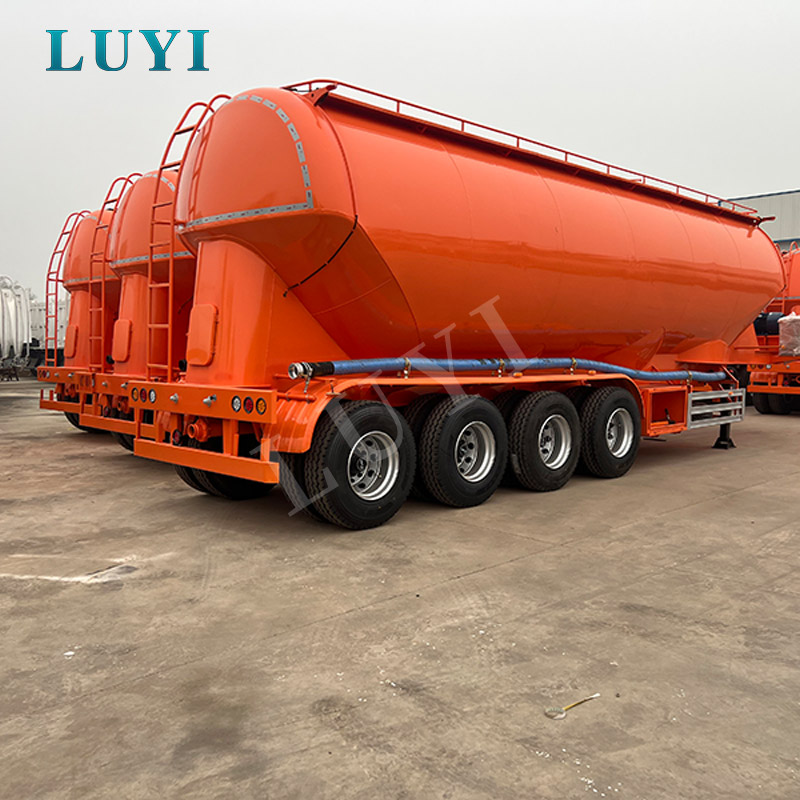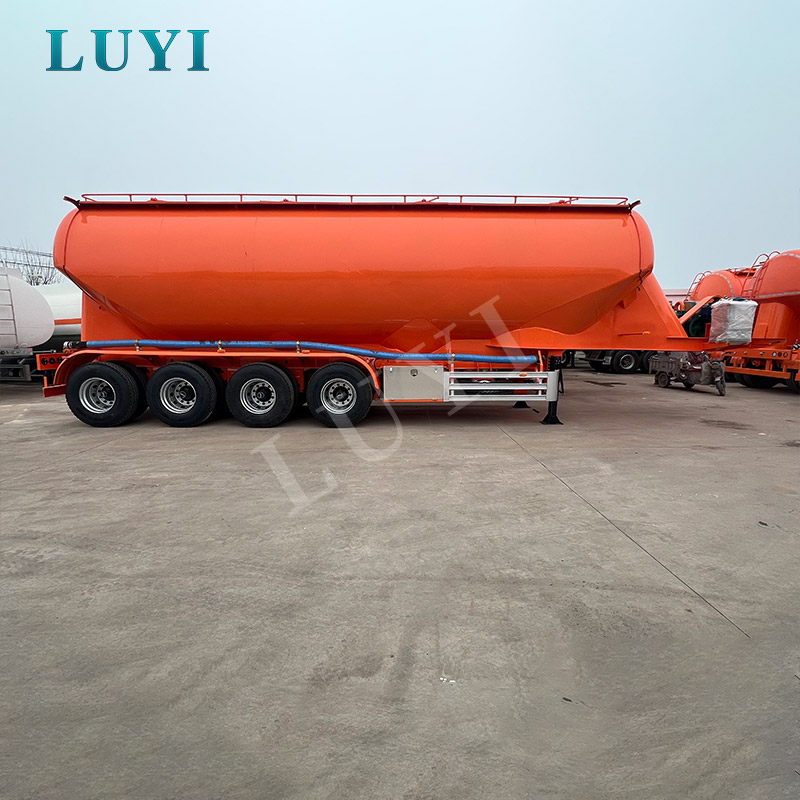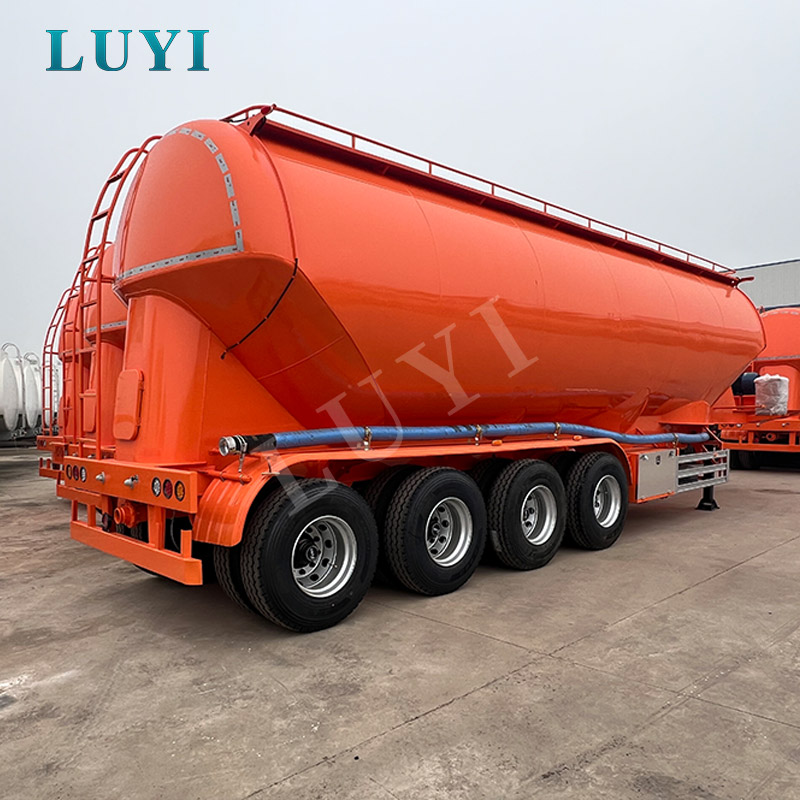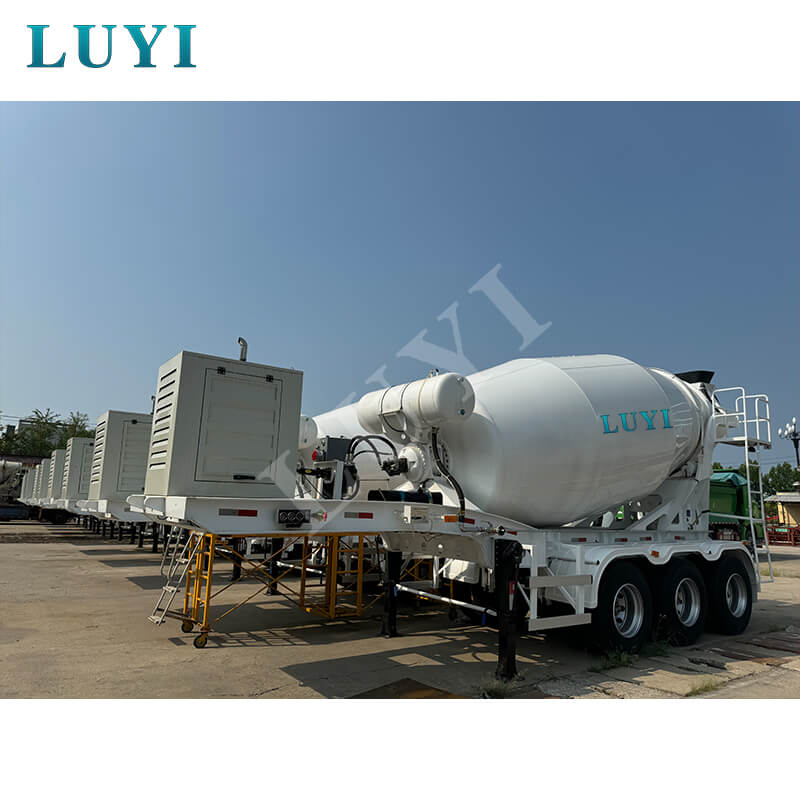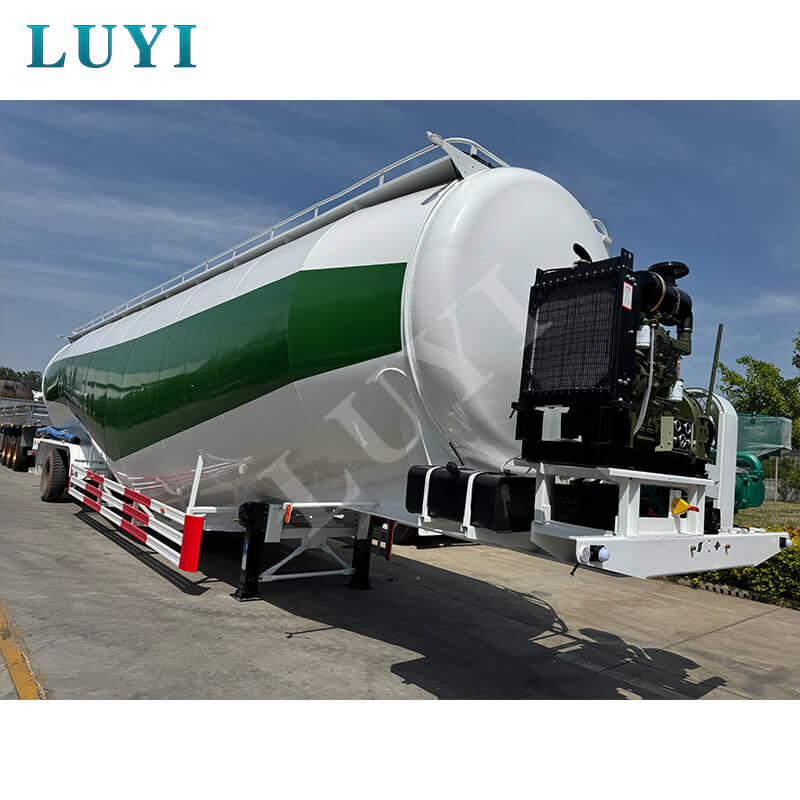

For cement plants, concrete batching stations, infrastructure contractors and dry bulk logistics fleets, a four-axle cement tank semi-trailer is not simply a larger tank on wheels. Its value comes from how the axle layout, tank structure, discharge system, suspension, braking components and export configuration work together under real transport conditions.
When buyers search for a cement tanker trailer, the first concern is often tank volume. In actual operation, however, the better question is: can the trailer legally carry the target payload, discharge efficiently at the jobsite, protect the powder from moisture, and keep maintenance predictable over years of service? This guide explains how to evaluate a four-axle cement semi-trailer from a practical fleet-purchasing perspective.
A four-axle cement tank semi-trailer is a sealed dry bulk transport trailer designed for carrying powder materials such as bulk cement, fly ash, lime powder, mineral powder and other non-corrosive dry granular materials. It normally uses a closed tank body, pneumatic discharge system, air compressor, discharge pipeline, manholes, safety walkway, braking system and heavy-duty running gear.
Compared with a standard three-axle powder tank semi trailer, the four-axle layout can distribute vehicle weight across more axles. This is useful for buyers who operate in regions with stricter axle-load limits, longer routes, heavier payload targets or more demanding construction material delivery schedules.
For buyers comparing specific models, Luyi Auto also provides product options such as the 4 axle 40 cubic meter powder tank semi-trailer and the 4 axle 50 cubic meter cement tank semi trailer, depending on cargo density, local road regulations, tractor compatibility and unloading requirements.
Four-axle cement tank semi-trailers are commonly used in construction material logistics and industrial dry powder supply chains. They are especially suitable for buyers who need frequent, sealed and relatively high-volume powder transportation between plants, ports, depots and project sites.
The sealed tank design helps reduce dust leakage, moisture intrusion and material waste during transport. For construction contractors and fleet operators, this matters because cargo loss, slow unloading and repeated cleaning can directly affect daily trip efficiency and operating cost.
Actual specifications should be confirmed according to destination country, powder density, route condition, tractor model and buyer operating habits. The following table shows common specification ranges used for four-axle cement tank semi-trailer evaluation.
| Item | Common Configuration Range | Buyer Evaluation Point |
|---|---|---|
| Trailer Type | Four-axle cement tank semi-trailer / dry bulk powder tanker | Confirm whether it is for cement, fly ash, lime powder or other dry materials. |
| Tank Volume | Usually 40–60 cubic meters, customizable by project | Do not choose volume only; match it with cargo density and legal payload. |
| Payload Range | Often configured around heavy-duty dry bulk transport requirements | Check axle-load rules, tractor capacity and road permit limits. |
| Tank Material | Carbon steel, high-strength steel or selected lightweight options | Balance durability, tare weight, powder abrasion and budget. |
| Axle Configuration | 4 axles, commonly 13-ton to 20-ton axle options depending on market | Select axle brand and rating according to payload, roads and service availability. |
| Suspension | Mechanical suspension or air suspension | Mechanical suspension suits rougher jobsite use; air suspension supports smoother long-haul operation. |
| Discharge System | Air compressor, pneumatic pipeline, discharge valve and fluidized structure | Confirm unloading speed, residue target and jobsite compressor requirements. |
| Brake System | Dual-line pneumatic brake, ABS optional or market-required | Match braking components with local road safety expectations and tractor setup. |
| Customization | Tank volume, discharge layout, paint, axle brand, suspension, tire and accessories | Provide route, cargo, destination and unloading site details before quotation. |
The four-axle design is mainly chosen for load distribution, stability and compliance flexibility. For dry bulk transport, the cargo is concentrated inside the tank, and its movement during loading, driving and unloading can influence vehicle balance. A well-matched axle layout helps the trailer remain more stable under heavy-load conditions.
In markets where transport authorities pay close attention to axle load, a four-axle cement tank semi-trailer may help fleet owners configure the vehicle more reasonably instead of relying only on larger tank volume. This can reduce the risk of overload penalties, premature tire wear and unnecessary suspension stress.
For buyers operating on mixed routes—highways, industrial parks, port roads and unfinished construction roads—the axle layout should be considered together with tire specification, suspension type, frame strength and braking performance.
A 50CBM or 60CBM tank does not automatically mean better profitability. Cement, fly ash and mineral powder have different densities, and local weight regulations may limit how much can be legally loaded. If the tank is too large for the allowed payload, the buyer may pay for unused volume while increasing self-weight and purchase cost.
For smaller route networks, a mid-volume solution may be more practical. For long-distance and high-frequency projects, larger models such as a 60m³ powder tank semi trailer may be evaluated if local weight limits, tractor power and unloading conditions allow.
Carbon steel tanks are widely used because they offer strong durability and practical cost control for cement and fly ash transport. High-strength steel can improve structural reliability in demanding use. Lightweight configurations may be considered for buyers focused on legal payload and long-distance operating economy, but material choice should be matched with powder abrasion, climate and maintenance habits.
Mechanical suspension is often preferred for rough construction sites, quarry access roads and frequent heavy-load operations because it is durable and easier to maintain in many developing markets. Air suspension can be suitable for long-distance highway transport, stricter axle-load management and fleets that value smoother driving performance.
The air compressor, pipeline layout, discharge valves and internal fluidized structure directly affect unloading speed and residual material. A low-cost but poorly matched compressor may cause slow discharge, more leftover powder and longer waiting time at batching plants or jobsites. For daily transport fleets, this lost time becomes a recurring operating cost.
Before placing an order, buyers should confirm destination-country requirements for axle load, overall dimensions, lighting, reflective markings, bumper height, braking system, ABS and documentation. Luyi Auto can adjust the trailer configuration according to destination market requirements through its custom trailer service process.
Engineering note: In dry bulk trailer projects, the most reliable configuration is usually not the largest or the cheapest one. It is the configuration that matches cargo density, road law, discharge site, tractor power and daily route conditions.
For a cement tank semi-trailer, quality control should focus on the areas that affect long-term safety and unloading performance: tank sealing, welding quality, frame strength, axle alignment, discharge pipeline tightness, braking reliability and surface protection.
Before shipment, a responsible manufacturer should inspect the tank body, manholes, valves, compressor installation, pipeline connections, suspension, brake system, lighting, landing gear, king pin and accessories. Buyers who want to understand Luyi Auto’s production capability can review the company’s semi-trailer manufacturing factory page before requesting a quotation.
For export projects, packing and shipping preparation are also important. Anti-rust treatment, accessory fixing, document preparation and shipping method selection can reduce the risk of damage and delays during international transportation.
Different buyers use cement tank trailers in different ways. A fleet serving concrete batching plants in a city has different requirements from a contractor transporting cement across long highway routes or a distributor delivering fly ash to remote industrial sites. Luyi Auto can customize cement tank semi-trailers according to real operation data, not only standard catalog specifications.
Buyers can also compare related product pages such as the 27CBM cement powder tank trailer when evaluating smaller-capacity dry bulk routes.
For international buyers, trailer procurement does not end when the product leaves the workshop. Export preparation, shipping method, spare parts packing, customs documents and communication during transport all affect the final buying experience.
Luyi Auto can support export-oriented buyers with configuration discussion, production follow-up, inspection communication, shipping coordination and after-sales spare parts support. For reference, Luyi Auto’s Saudi Arabia cement tanker semi trailer case study shows how bulk cement tanker configuration, production, delivery and operating feedback can be handled in a real project environment.
Buyers serving construction and infrastructure projects can also review more construction and infrastructure trailer case studies to understand how different trailer configurations are matched to jobsite transport conditions.
To receive a practical quotation, buyers should avoid sending only “price for cement tanker trailer.” A more accurate quote depends on real operating information. Before contacting Luyi Auto, prepare the following details:
With this information, the engineering and export team can recommend a more suitable four-axle cement tank semi-trailer configuration instead of offering a generic model that may not match the buyer’s actual route.
It is mainly used for bulk cement, fly ash, lime powder, mineral powder, ore powder and other non-corrosive dry powder or granular materials. Special chemical or food-grade powders should be confirmed separately because tank sealing, cleaning and material-contact requirements may be different.
It depends on the transport route, payload target and local road regulations. A four-axle model can provide better load distribution and stability for heavier or stricter operating conditions, while a three-axle model may be more cost-effective for lighter routes or markets with different axle-load rules.
Common project configurations often fall between 40 and 60 cubic meters, but the final choice should be based on cargo density, legal payload, tractor capacity and unloading site conditions. Choosing only by volume may lead to overload risk or unused capacity.
Yes. Luyi Auto can adjust axle layout, suspension, lighting, brake components, ABS, reflective markings, bumper, tank volume, discharge system and accessories according to destination market requirements.
Residue is affected by tank structure, fluidized bed design, compressor capacity, pipeline layout, discharge valve quality and operating method. Buyers should confirm discharge speed and residual expectations before production rather than focusing only on the tank size.
If you are planning to purchase a four-axle cement tank semi-trailer for bulk cement, fly ash or dry powder logistics, share your cargo type, payload target, route condition, destination country and preferred configuration with Luyi Auto. Our team can help you evaluate tank volume, axle layout, suspension, compressor, discharge system and export delivery plan based on your actual operating conditions.
Send your cement tank semi-trailer requirements to Luyi Auto or contact our team for a configuration-based quotation.