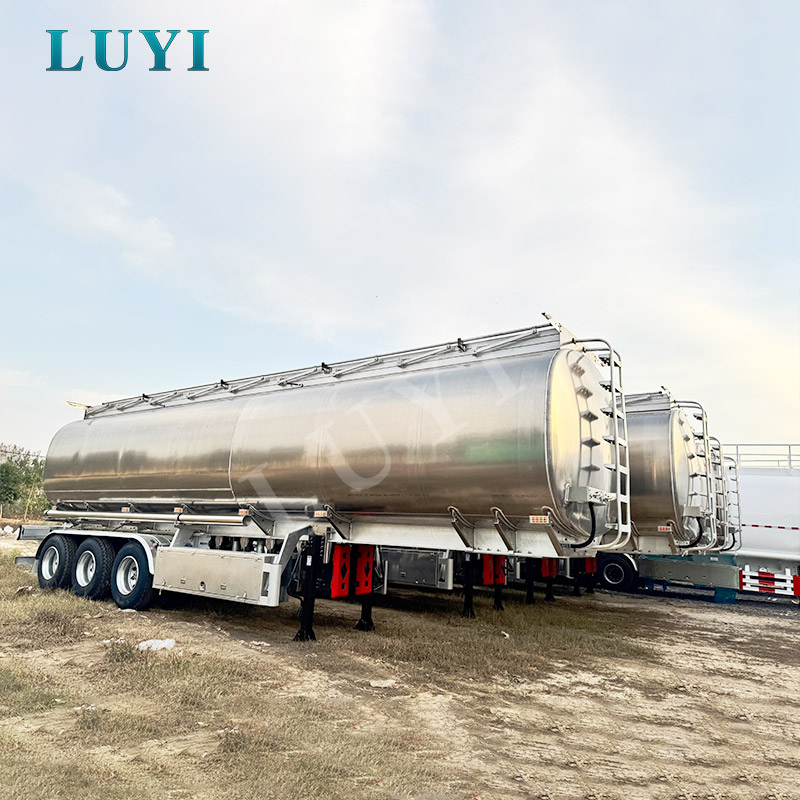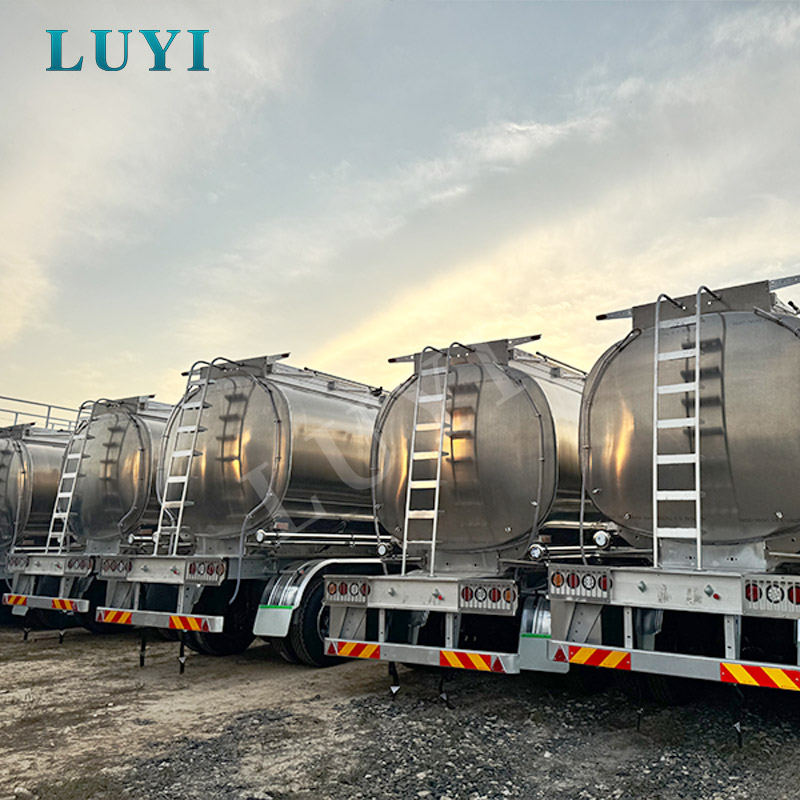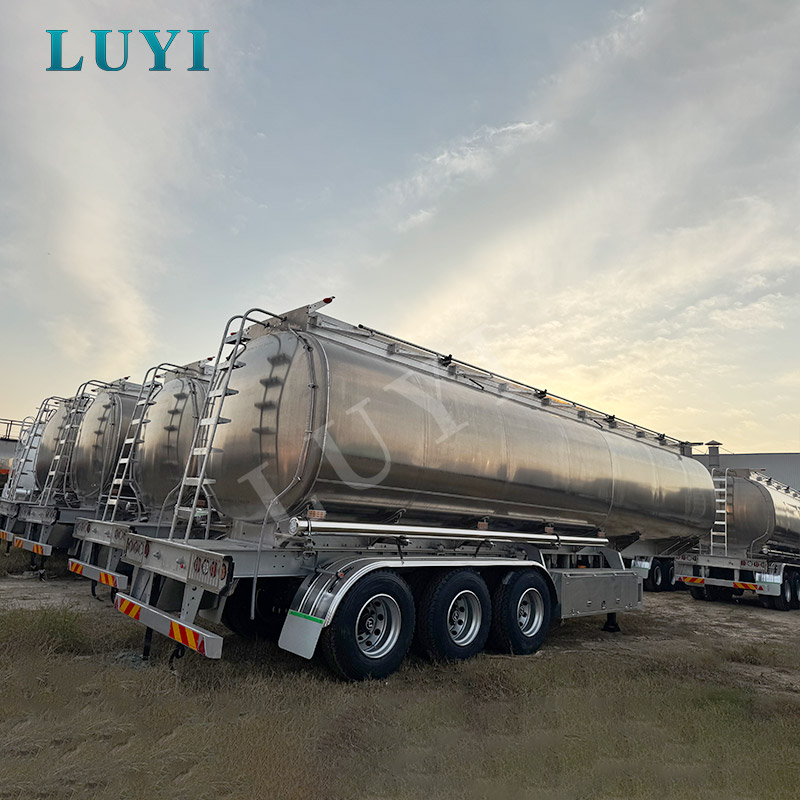

For fuel distributors, petroleum logistics fleets, industrial liquid transport companies and cross-border transport operators, a tanker trailer is not just a container on wheels. It is a safety-critical transport asset. The right configuration affects legal payload, unloading efficiency, product purity, maintenance cost and compliance with local transport regulations.
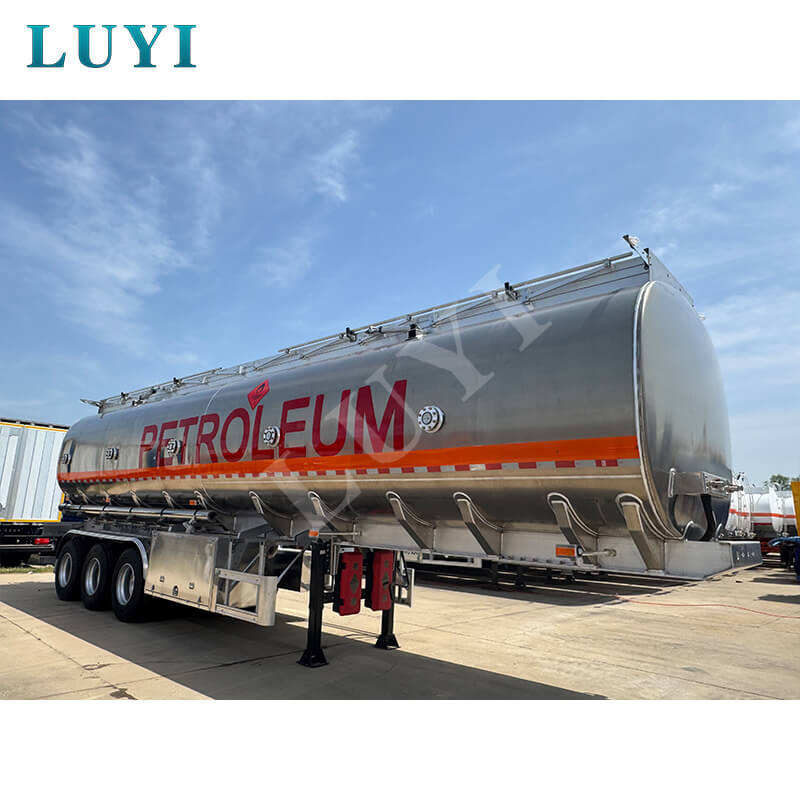
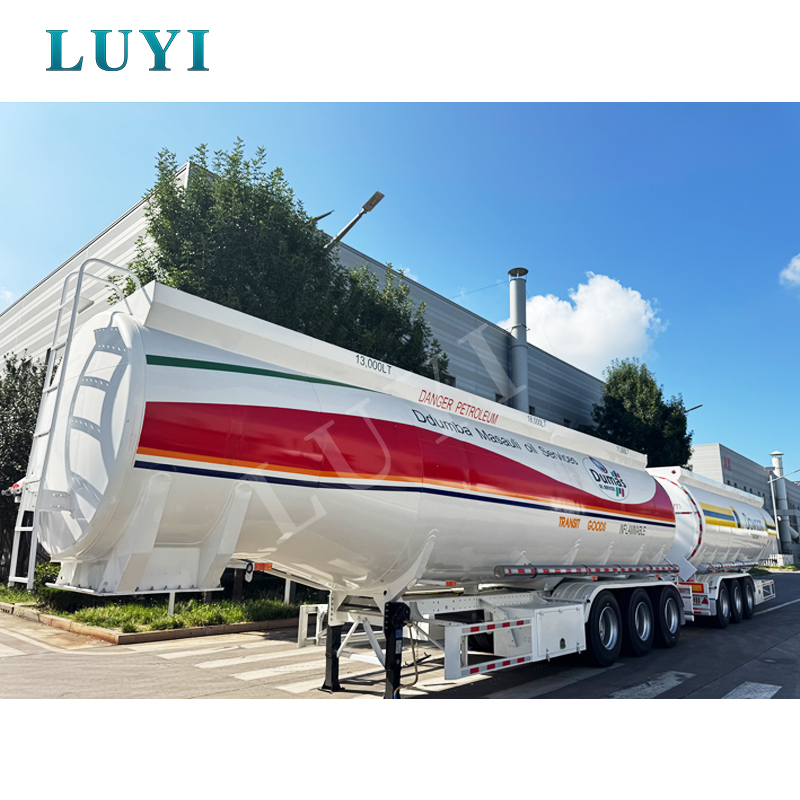
The 48,000L aluminum fuel tanker trailer from Luyi Auto is designed for bulk liquid fuel transport where operators need a lighter tank body, stable tri-axle running performance and a safer loading and discharge system. Compared with traditional steel tankers, an aluminum alloy tank can reduce tare weight, improve corrosion resistance and support better payload efficiency when the trailer is matched with the right route, cargo and local regulations.
An all-aluminum 48,000L tri-axle oil tanker trailer is a semi-trailer designed for transporting liquid fuels and compatible non-corrosive liquids in bulk. Its tank body is usually manufactured from aluminum alloy materials such as 5182, 5059 or equivalent grades selected according to the buyer’s cargo, route and compliance requirements.
The “48,000L” capacity means the tank volume is suitable for medium-to-large fuel distribution operations. The tri-axle layout helps distribute loaded weight more evenly, while the aluminum tank structure reduces self-weight compared with many carbon steel tanker designs. For buyers comparing different tanker semi trailer solutions, this model is especially relevant when long-distance transport, fuel economy and corrosion resistance are key purchasing factors.
A fuel tanker should be selected by cargo type, legal payload, route conditions, unloading method and safety compliance—not by tank volume alone.
The all-aluminum 48,000L tri-axle tanker is commonly used in liquid logistics routes where the fleet needs a balance between tank capacity, lower tare weight and operational safety.
For buyers in fuel, energy and industrial liquid logistics, Luyi Auto’s Energy & Chemical transport cases can help show how tanker configurations are matched to different countries, routes and cargo requirements.
Aluminum alloy is widely selected for fuel tanker trailers because it combines lighter self-weight with good corrosion resistance. For a fleet operator, this can directly influence legal payload, fuel consumption and maintenance planning.
A lighter tank body can help reduce the trailer’s empty weight. In practical fleet operation, this may allow a buyer to carry more cargo within legal weight limits or reduce fuel consumption when the vehicle returns empty or operates on long-haul routes.
Aluminum does not rust like carbon steel, which helps reduce corrosion-related maintenance in fuel and selected liquid transport. This is especially important for fleets operating in humid, coastal or high-temperature environments.
When the tank is properly manufactured, inspected and maintained, aluminum tanker trailers can support long operating cycles. Buyers should still follow routine inspection schedules for manholes, valves, welds, braking components, suspension and anti-static devices.
The following table summarizes typical configuration points for a 48,000L all-aluminum tri-axle oil tanker trailer. Final specifications should be confirmed according to destination regulations, cargo type, tractor compatibility and the buyer’s operating route.
| Item | Reference Configuration | Buyer Notes |
|---|---|---|
| Trailer Type | All-aluminum tri-axle oil tanker semi-trailer | Designed for fuel and compatible liquid transport |
| Tank Volume | 48,000 liters / 48m³ | Suitable for medium-to-large liquid logistics routes |
| Tank Material | Aluminum alloy, commonly 5182, 5059 or equivalent options | Material should be selected according to cargo compatibility and compliance requirements |
| Tank Thickness | Common reference: 6mm cylinder, 6mm end plate, 5mm anti-wave plate | Thickness may be adjusted according to design standard and cargo requirements |
| Axle Configuration | Tri-axle layout, commonly 13-ton FUWA/BPW or equivalent axles | Axle brand and rating should match route condition and local load rules |
| Suspension | Mechanical suspension or air suspension | Air suspension is often preferred for highway fuel logistics; mechanical suspension may suit rougher routes |
| Overall Dimension | Approx. 13,000 × 2,500 × 3,600mm | Dimension should be verified against local road and port requirements |
| Tare Weight | Approx. 12,500kg, depending on configuration | Actual tare weight affects legal payload and operating cost |
| Braking System | Dual-circuit pneumatic braking system with ABS | Brake configuration should comply with destination market requirements |
| Safety Devices | Anti-surge baffles, emergency valves, anti-static devices, API valves | Critical for fuel transport safety and controlled discharge |
| Compliance Options | Configurable for ISO, ADR, DOT, SASO or market-specific requirements | Buyers should confirm local legal requirements before ordering |
Fuel tanker trailers must be engineered with safety as a core requirement. For gasoline, diesel and other flammable liquids, small configuration differences can affect loading safety, discharge control and emergency response.
For buyers comparing tanker configurations, the Tanzania fuel tanker trailer case study is a useful reference because it shows how compartment design, aluminum material selection and road condition requirements can be considered together in a real fuel transport project.
Before selecting a tanker, confirm the main cargo first: gasoline, diesel, petroleum, lubricating oil, edible oil, milk or selected chemicals. Different liquids require different tank materials, cleaning standards, valve systems, lining options and safety accessories. A standard aluminum fuel tanker should not be assumed suitable for highly corrosive chemicals unless the manufacturer confirms compatibility and provides a suitable lining or material solution.
If the fleet transports more than one liquid product in the same route, compartment design becomes important. A 2-to-5-compartment layout can help operators deliver gasoline and diesel, or different grades of liquid cargo, in one delivery cycle. Each compartment should have appropriate valves, discharge pipes, sealing and identification to reduce mixing risk.
For stable highway fuel distribution, air suspension may improve ride stability and reduce vibration. For routes with rough roads, construction access roads or less developed loading areas, reinforced mechanical suspension and heavy-duty tires may be more practical. Buyers should describe road conditions clearly when requesting a quote.
Fuel transport regulations vary by country and region. Before confirming an order, buyers should clarify whether the trailer needs ADR, DOT, SASO or other local compliance-related configuration. This affects braking system, lighting, reflective marking, safety valves, manhole covers, anti-static design and documentation.
The tanker should match the buyer’s tractor in fifth wheel height, kingpin size, braking connector, electrical connector, gross combination weight and operating speed. Providing tractor specifications at the inquiry stage helps avoid mismatch problems before production.
Fuel tanker procurement is often high-value and safety-sensitive. The following mistakes can increase operating risk, downtime or compliance problems:
For an aluminum oil tanker, manufacturing quality is closely related to welding, sealing and safety system installation. Buyers should not only ask for a price sheet; they should also ask how the tank body is formed, welded, inspected and protected before shipment.
Important production and inspection points include:
Buyers who want to review Luyi Auto’s production background can visit the Luyi Auto factory page. For customization, technical support, delivery and after-sales information, the Luyi Auto service page provides additional details about solution design and support capability.
Different fuel logistics projects require different tanker configurations. Luyi Auto can customize all-aluminum tanker trailers according to cargo type, road condition, legal requirements, discharge method and fleet branding needs.
For buyers comparing different liquid transport models, Luyi Auto also provides broader fuel and liquid tanker semi-trailer configurations, including carbon steel, stainless steel and aluminum tanker options.
For international buyers, shipping method and documentation should be discussed before production is finalized. Tanker trailers may be shipped by bulk vessel, RO-RO vessel, flat rack or other methods depending on the destination port, order quantity, trailer size and route availability.
Before shipment, Luyi Auto can assist with export preparation such as final inspection, accessory protection, valve protection, tire and axle checks, shipping marks, loading coordination and document preparation. For buyers importing tankers for regulated fuel transport, it is important to confirm local registration requirements and compliance documents before delivery.
Service life depends on cargo type, road condition, maintenance discipline and operating environment. With correct cargo matching, regular cleaning, routine inspection and proper repair of valves and seals, aluminum tanker trailers can support long-term fleet operation.
It can transport selected compatible liquids, but strong corrosive chemicals should not be loaded into a standard aluminum fuel tanker without technical confirmation. For aggressive liquids, buyers should discuss stainless steel, special lining or dedicated chemical tanker designs with the manufacturer.
Aluminum is lighter and more corrosion-resistant than carbon steel, which can help improve payload efficiency and reduce rust-related maintenance. Steel tankers may have a lower initial purchase cost, but they are usually heavier and may require more anti-corrosion maintenance depending on use conditions.
Operators should regularly inspect the tank body, weld areas, manhole covers, valves, seals, discharge pipes, braking system, tires, suspension and anti-static system. After transporting food-grade or chemical liquids, proper cleaning and residue control are especially important.
Yes. Luyi Auto can configure tanker trailers according to destination market requirements, including safety accessories, braking system, lighting, marking and documentation needs. Buyers should provide the destination country and target compliance standard at the quotation stage.
If you are planning a fuel distribution, petroleum logistics, industrial liquid transport or cross-border tanker project, Luyi Auto can help evaluate tank volume, material, compartment layout, axle configuration, suspension type, safety devices and export compliance requirements.
Send your cargo type, route condition, destination country, required tank volume, preferred compartments and tractor model through the Luyi Auto inquiry page. You can also contact the team directly through the contact page to request a customized 48,000L aluminum oil tanker trailer quotation.