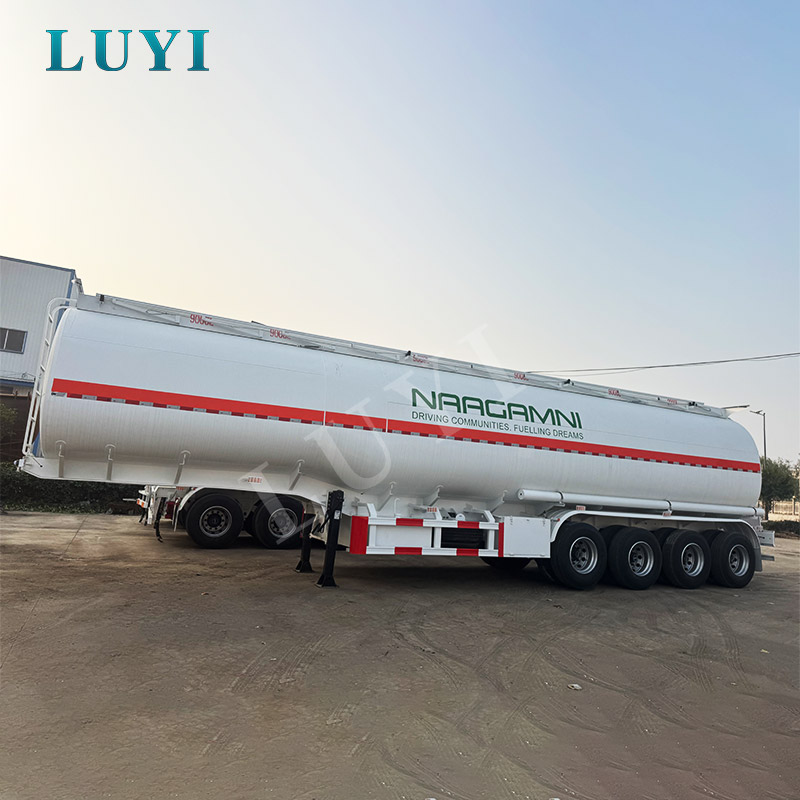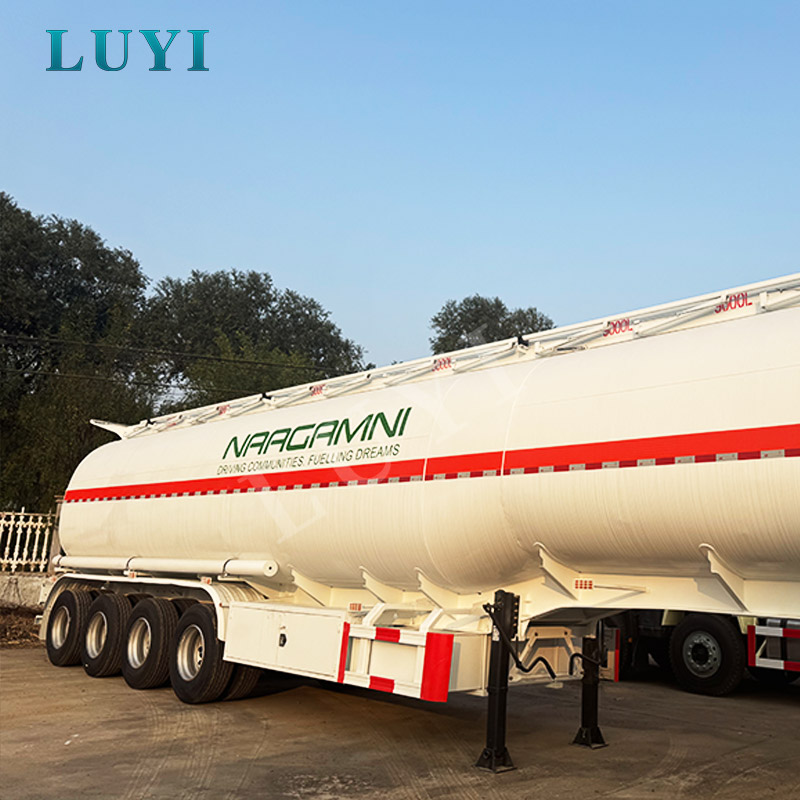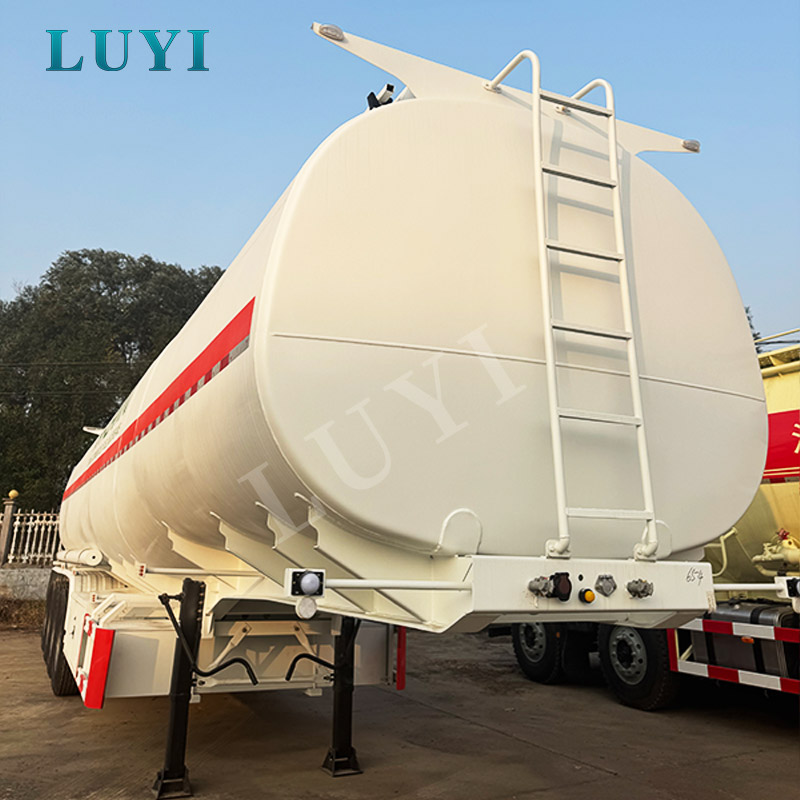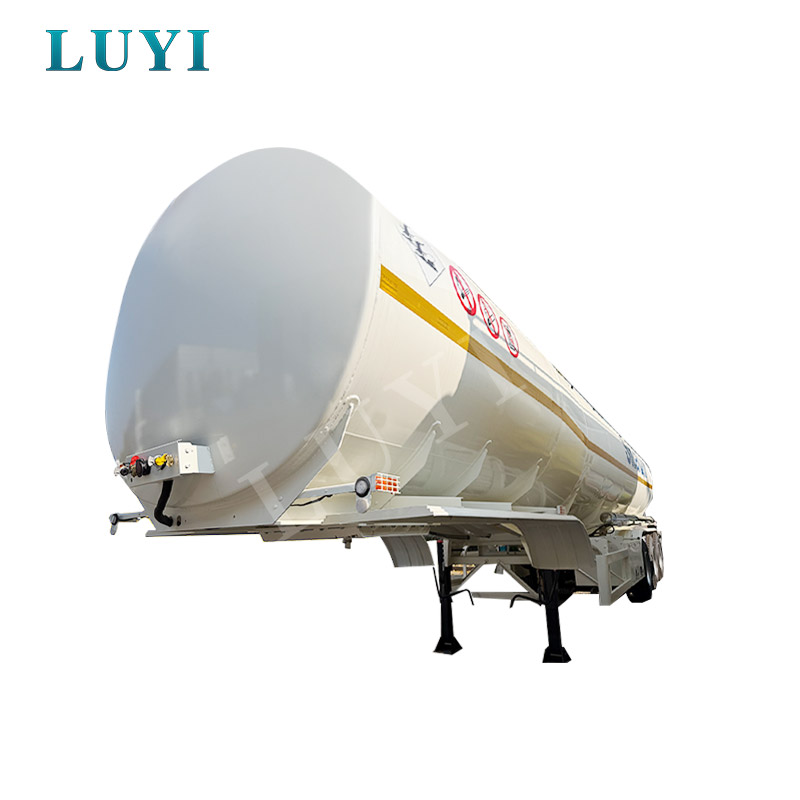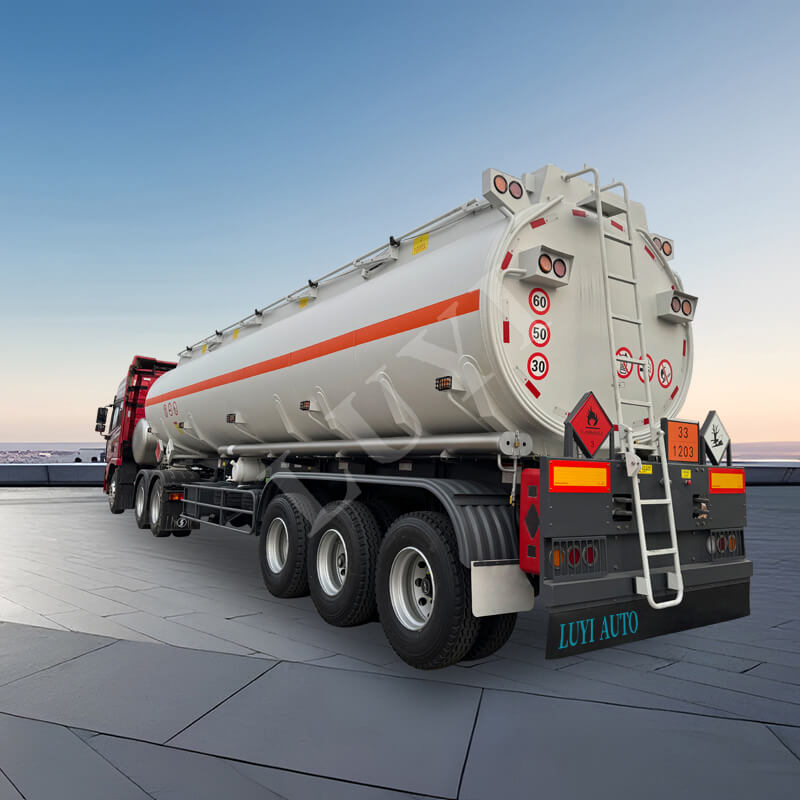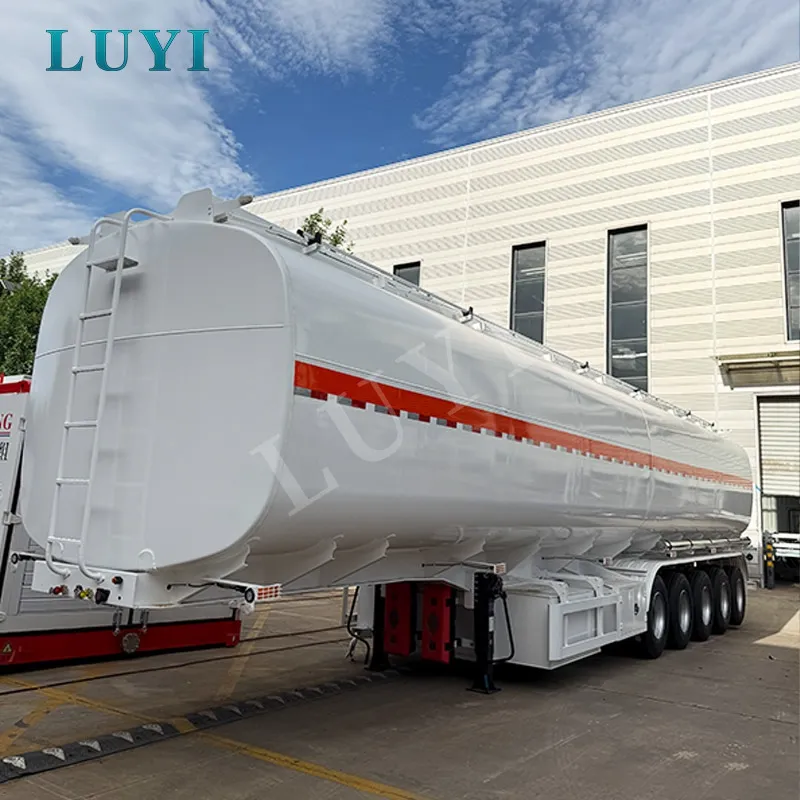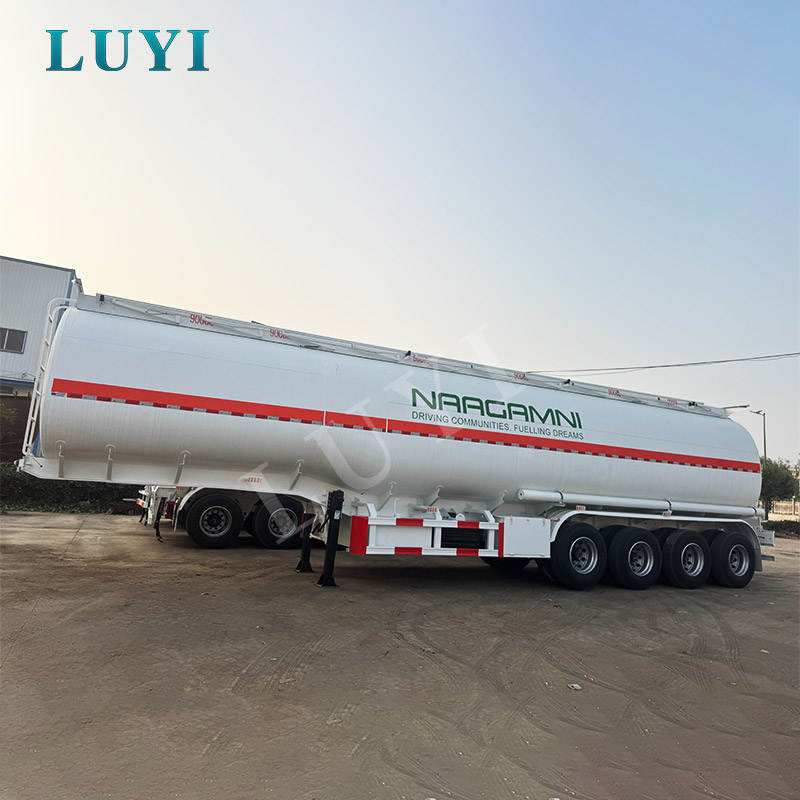

For fuel logistics companies, petroleum distributors, mining contractors, construction project fleets and industrial fuel suppliers, a 54,000L fuel oil tanker semi-trailer is a high-capacity transport asset that must be selected with safety, legal payload, route conditions and cargo compatibility in mind. The right tanker configuration can improve delivery volume per trip, reduce unnecessary refueling cycles and support safer bulk fuel movement across long-distance routes.
The 54,000L oil tanker semi-trailer from Luyi Auto is designed for transporting liquid fuels such as diesel, gasoline and petroleum products in large-volume distribution operations. For buyers comparing different tanker semi trailer models, this type of trailer is especially relevant when the project requires higher tank capacity, compartment customization, safety fittings and export-ready configuration.
A 54,000L fuel oil tanker semi-trailer is a heavy-duty liquid transport trailer designed to carry bulk fuel and selected combustible liquids. It usually adopts an integrated tank structure mounted on a reinforced semi-trailer chassis, with axles, suspension, braking system, discharge valves, safety accessories and compartment layout configured according to the buyer’s cargo and local transport regulations.
Unlike a small fuel delivery truck, a 54,000-liter tanker semi-trailer is built for medium-to-large fuel distribution tasks. It is commonly used for fixed-route delivery to gas stations, industrial parks, mining areas and large construction sites, as well as interregional fuel allocation and emergency fuel supply projects.
A high-capacity fuel tanker should not be purchased by tank volume alone. Buyers should evaluate cargo type, tank material, axle-load rules, compartment design, safety devices, route conditions and after-sales support before confirming the final configuration.
The 54,000L fuel tanker semi-trailer is commonly used where large-volume liquid fuel needs to be moved safely and efficiently between depots, terminals, job sites and distribution points.
For buyers working in fuel, petroleum and industrial liquid logistics, Luyi Auto’s Energy & Chemical transport cases can provide additional reference for how tanker trailers are matched to safety-sensitive transport requirements.
A 54,000L tanker offers large transport volume, but the usable payload depends on the density of the liquid, the tanker’s empty weight, axle configuration and local gross weight limits. For example, diesel, gasoline, crude oil and heavy fuel oil have different densities and handling requirements. A tanker that is suitable for refined fuel distribution may not be the right choice for heavier or more corrosive liquids without material and safety modifications.
Tank material should be selected according to cargo type and operating environment. Aluminum alloy tanks are lighter and offer corrosion resistance, making them practical for many refined fuel logistics routes. Carbon steel tanks provide stronger structural hardness and may be selected for heavy fuel, crude oil or applications where impact resistance and cost control are major concerns. For special liquids, material compatibility should be confirmed before production.
A 54,000L tanker can be configured with 3 or 4 axles depending on local axle-load rules, road conditions and the buyer’s required payload. A 4-axle design is often considered for heavier-duty routes, while 3-axle configurations may be suitable where legal load, road type and payload requirements allow.
Internal tank separation allows different fuel types or grades to be transported in one trip. For fuel distributors serving multiple delivery points, customized compartments can improve route flexibility and reduce the need for separate vehicles. Each compartment should be designed with proper sealing, valve control and discharge arrangement to reduce mixing risk.
The following specification table gives B2B buyers a practical reference. Final configuration should be confirmed according to cargo type, destination regulations, tractor compatibility, port requirements and operating route.
| Item | Reference Configuration | Buyer Notes |
|---|---|---|
| Trailer Type | Fuel oil tanker semi-trailer | Designed for bulk fuel and compatible liquid transport |
| Tank Volume | 54,000 liters | Suitable for large-volume fuel distribution and long-distance delivery |
| Tank Material | Aluminum alloy or carbon steel | Choose according to cargo type, tare weight target, corrosion resistance and project budget |
| Axle Configuration | 3 axles or 4 axles, customizable | Must match legal axle-load limits and road conditions in the destination market |
| Compartments | Single or multiple compartments | Useful for transporting different fuel types or serving multiple delivery points in one route |
| Suspension | Mechanical suspension or air suspension | Air suspension can improve running stability on long routes; mechanical suspension is practical for tougher road conditions |
| Safety Valves | Emergency shutoff valves and discharge control valves | Critical for leakage control and safer unloading operation |
| Anti-Static System | Static elimination and grounding devices | Important for reducing ignition risk during loading and unloading |
| Safety Components | Explosion-proof accessories, sealed manholes, anti-leakage structure and safety markings | Should be configured according to local hazardous goods transport rules |
| Testing Before Delivery | Air-tightness test, pressure test and leakage inspection | Buyers should request test confirmation before shipment |
| Custom Options | Compartment size, coating, loading/unloading system, measuring device, paint and markings | Useful for project-specific fuel distribution routes and fleet standards |
Fuel transportation is safety-sensitive. When gasoline, diesel, crude oil or other combustible liquids are transported over long distances, the tanker must be equipped with reliable safety systems and inspected before delivery.
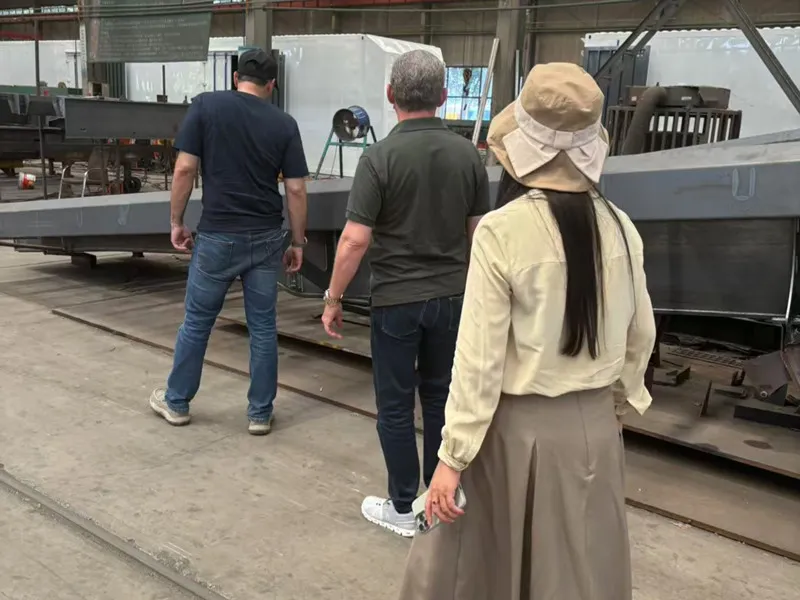
Buyers can also review Luyi Auto’s factory-related fuel tanker cooperation experience, such as the Liberia oil tank semi-trailer factory visit, where clients inspected tank material, welding process, braking system, leak-proof design and pressure testing details before purchasing.
The first question is not “How many liters can the tanker hold?” but “What liquid will it carry?” Gasoline, diesel, crude oil, heavy fuel oil, lubricating oil and selected industrial liquids have different density, volatility, corrosion risk and discharge requirements. Cargo information directly affects tank material, internal coating, valve type, sealing design and safety accessories.
If the buyer’s main goal is lower tare weight and corrosion resistance for refined fuel routes, aluminum alloy may be a suitable option. If the application involves heavier liquids, rougher road conditions or tighter budget control, carbon steel may be considered. The final decision should balance legal payload, durability, maintenance cost and compliance requirements.
A 54,000L tanker should be engineered around the destination country’s axle-load and gross weight limits. Choosing too few axles may create overload risk, while choosing too many axles without legal or route need may increase cost and maintenance complexity. Buyers should provide destination country, route type and expected payload before quotation.
Fuel distributors often serve several customers or stations in one trip. In this situation, multiple compartments can improve operational flexibility. Buyers should confirm how many liquid types will be transported, the usual delivery volume per stop and whether each compartment needs independent discharge control.
Highway fuel distribution, suburban site delivery, mining fuel supply and construction site replenishment require different chassis and suspension choices. For rough roads, reinforced chassis, heavy-duty tires, anti-slip walking platforms, guardrails and stable braking performance become more important.
Many fuel tanker purchasing problems do not appear during the quotation stage. They appear later during registration, inspection, route operation, loading and unloading, or maintenance. Buyers should avoid the following mistakes:
For a 54,000L fuel tanker semi-trailer, manufacturing quality directly affects daily safety and service life. Buyers should not only compare tank capacity and price; they should also ask how the tank is formed, welded, sealed, tested and prepared for export shipment.
Key manufacturing and inspection points include:
International buyers who want to understand Luyi Auto’s production background can visit the Luyi Auto factory page. For project communication, custom configuration, delivery coordination and after-sales support, the Luyi Auto service page provides more information about the company’s support process.
Fuel tanker trailers should be customized around real transport work, not only standard catalog dimensions. Luyi Auto can support configuration adjustments according to cargo type, local road conditions, compliance requirements, delivery route and buyer fleet standards.
For overseas buyers, tanker delivery planning should be discussed before production is finalized. A 54,000L fuel tanker semi-trailer is large and safety-sensitive, so shipping method, port conditions, accessory protection and documentation should be planned in advance.
Before shipment, Luyi Auto can help confirm final inspection items, tank sealing checks, valve protection, tire and axle condition, safety accessories, shipping marks and export documents. Depending on destination and order quantity, tanker trailers may be shipped by bulk vessel, RO-RO vessel, flat rack or other suitable logistics methods.
Yes, it can be configured for long highway routes, interregional fuel delivery and suburban distribution. Buyers should confirm road conditions, legal weight limits, suspension type, tire specification and braking requirements before ordering.
Yes, if the trailer is designed with multiple compartments and separate valve systems. Compartment quantity and volume should be customized according to the buyer’s delivery route, fuel types and unloading sequence.
Aluminum alloy is lighter and corrosion-resistant, which can be useful for refined fuel distribution. Carbon steel offers strong structural hardness and may be selected for heavier fuel applications or cost-sensitive projects. The final choice should be based on cargo type, route condition, payload calculation and compliance needs.
Important safety systems include emergency shutoff valves, static elimination devices, explosion-proof components, sealed manholes, anti-surge baffles, discharge control valves, safety markings, reliable braking systems and inspection-tested tank sealing.
Buyers should provide cargo type, destination country, expected tank volume, compartment requirement, preferred tank material, axle requirement, road conditions, tractor model, local compliance requirements and order quantity. This helps the manufacturer recommend a practical configuration instead of a generic price.
Operators should regularly inspect safety valves, static elimination devices, manhole seals, discharge pipes, tank body, weld areas, axles, tires, suspension and braking system. Tank cleaning and residue control should be arranged according to cargo type and fleet operating rules.
If your fleet needs a 54,000L tanker semi-trailer for diesel, gasoline, crude oil, industrial fuel supply, mining fuel delivery, construction site replenishment or cross-border petroleum logistics, Luyi Auto can help evaluate tank material, compartment layout, axle configuration, safety devices, suspension type and export delivery requirements.
Send your cargo type, destination country, compartment requirement, preferred tank material, road condition and tractor model through the Luyi Auto inquiry page. You can also contact the team directly through the contact page to request a customized 54,000L fuel oil tanker semi-trailer quotation.