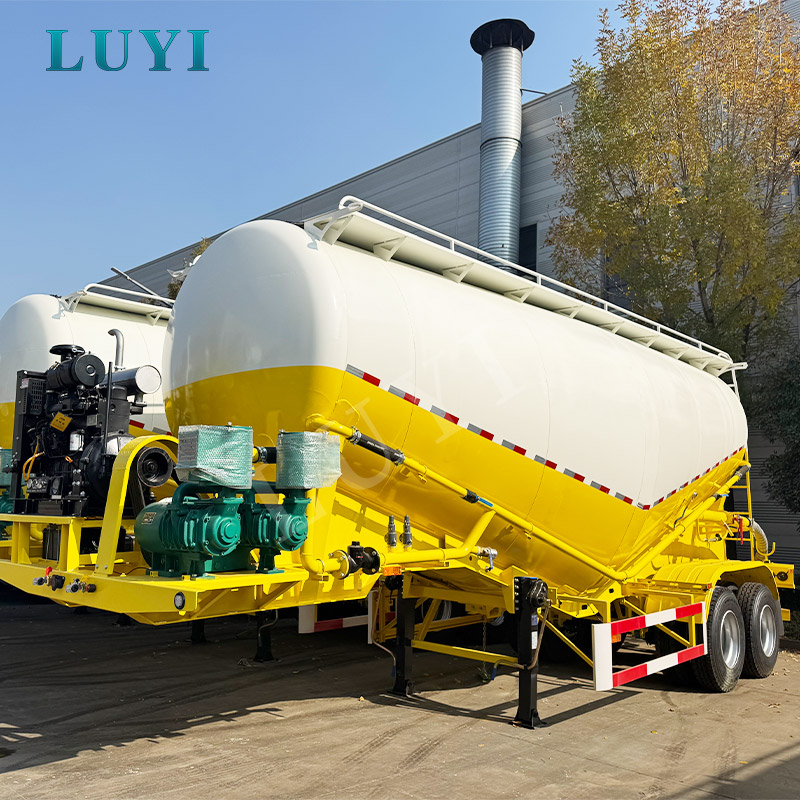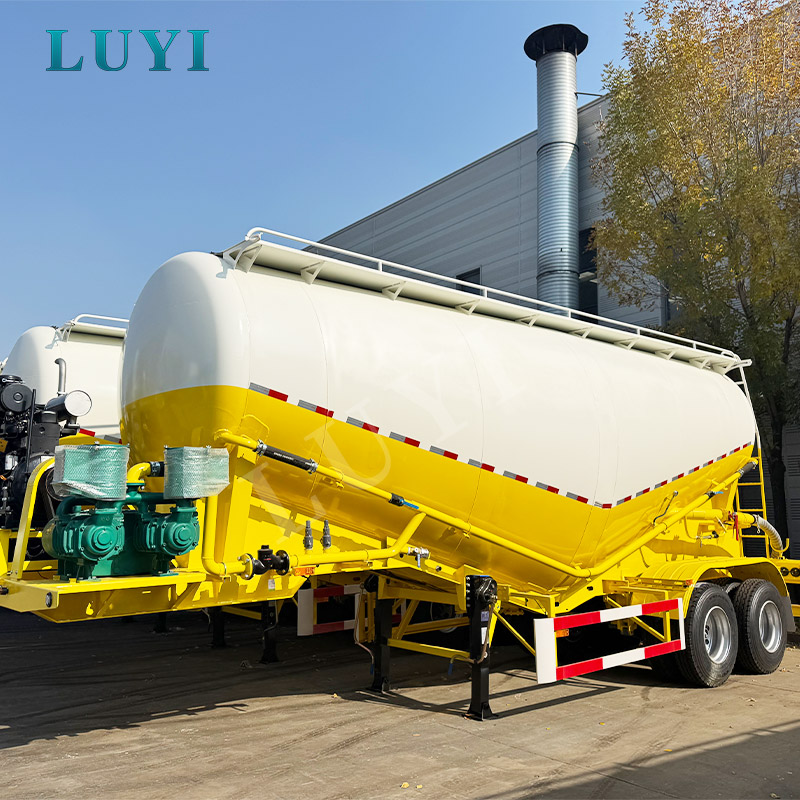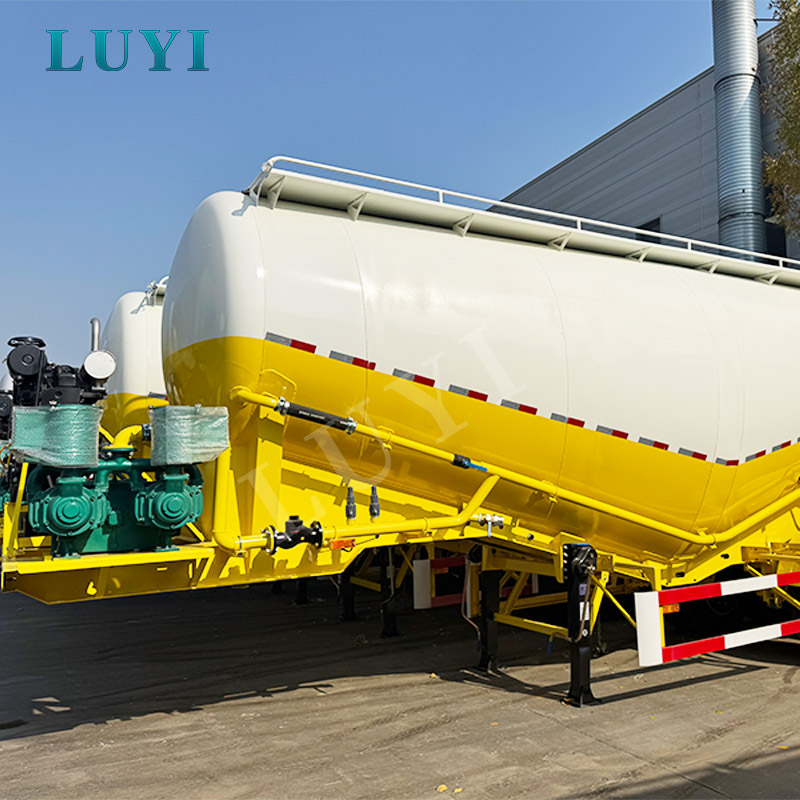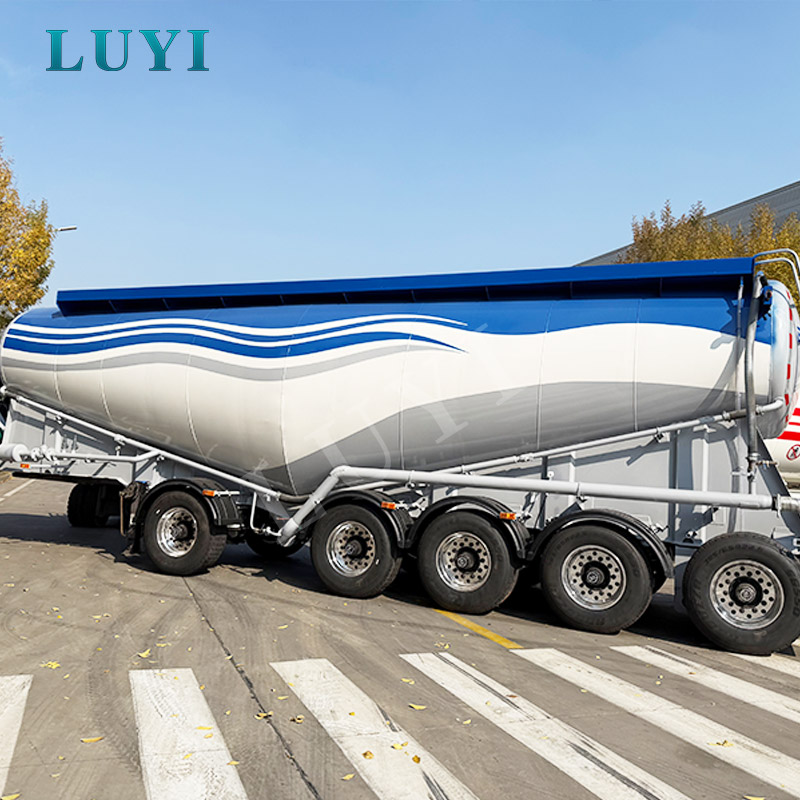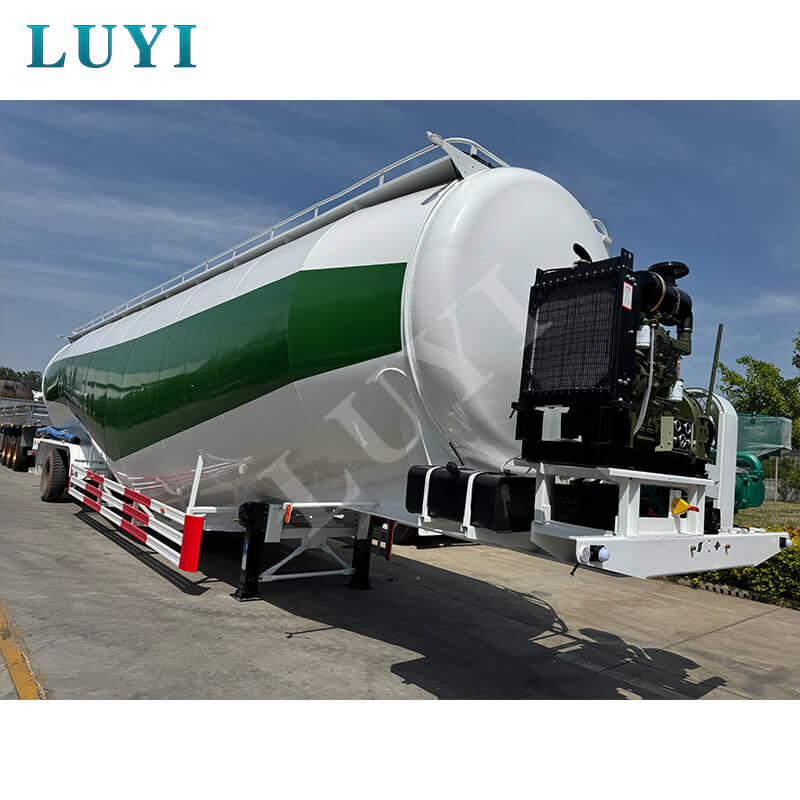

A 38m³ bulk cement tanker trailer is designed for sealed, efficient and controlled transportation of dry powder materials such as bulk cement, fly ash, lime powder, mineral powder and other non-hazardous dry bulk materials. Unlike flatbed or dump trailers, a cement tanker uses a sealed tank body and pneumatic discharge system to unload powder through air pressure, helping reduce manual handling, packaging waste and material loss during transport.
For construction material suppliers, cement distributors, ready-mix concrete plants and dry powder logistics fleets, the 38m³ capacity is a practical middle-size option. It can serve medium-to-large transport routes while remaining easier to match with standard tractor units compared with larger-volume tankers. Buyers who are comparing models can use Luyi Auto’s 38CBM cement tanker trailer as a direct product reference, or review the wider powder tank semi trailer range for different capacity options.
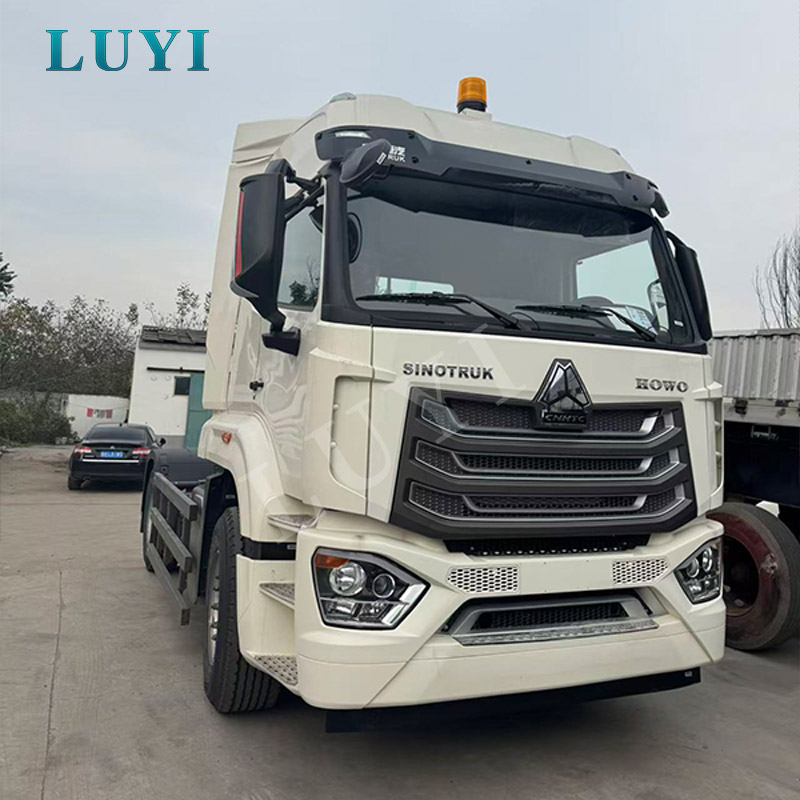
A 38m³ bulk cement tanker trailer is a semi-trailer with a sealed powder tank, air compressor, discharge pipeline, fluidization system, manhole, pressure safety components, axle system, suspension and braking system. It is pulled by a tractor truck and used to transport dry powder in bulk instead of bagged cargo.
The main working principle is pneumatic discharge. Air is supplied into the tank through the compressor and fluidization system, allowing the powder to flow toward the discharge outlet. A well-designed tank angle, internal fluidized bed and pipeline layout can help improve unloading speed and reduce residual material after discharge.
In real operation, buyers often choose a 38m³ cement tanker when they need better efficiency than bagged cement transport but do not require a very large 50–60m³ tanker. It is especially suitable for routes where road access, tractor matching, unloading site space and payload regulations must be balanced carefully.
The value of a cement tanker trailer comes from sealed transport, fast discharge and lower labor dependence. It is widely used in construction material supply chains, industrial powder logistics and mining-related powder transport.
For construction projects and ready-mix concrete plants, bulk cement tankers transport cement directly from cement plants, ports or storage terminals to batching plants and job-site silos. Compared with bagged cement, bulk transport reduces packaging waste, improves loading and unloading efficiency, and supports more stable supply for high-volume projects.
For project references related to construction transport, buyers can review Luyi Auto’s construction and infrastructure case studies, including cement tanker applications and factory inspection-based cooperation cases.
A 38m³ powder tanker can also be used for fly ash, lime powder, gypsum powder and mineral powder. These materials require sealed transport to reduce moisture exposure, dust leakage and material loss. For fleets serving building material producers, discharge speed and residual rate are often more important than tank volume alone.
Some industrial customers use powder tank semi trailers for non-hazardous dry powders that require clean, enclosed and controlled unloading. In this case, tank material, sealing performance, pipeline layout and cleaning procedure should be confirmed carefully before production.
In mining and mineral processing operations, powder tankers can transport processed mineral powders between plants, terminals and storage facilities. Buyers should consider road conditions, dust control requirements, tank wear, discharge distance and maintenance convenience.
If the trailer is intended for food-grade powder or special industrial powder, buyers should not use a standard cement tanker directly. Tank material, lining, cleaning access, contamination control and certification requirements must be reviewed with the manufacturer before order confirmation.
A cement tanker trailer should be evaluated as a complete system, not only as a tank body. Capacity, usable volume, tank material, compressor performance, discharge rate, axle layout, suspension, safety components and tractor compatibility all affect long-term operating cost.
| Specification Item | Common Reference for 38m³ Cement Tanker | Why It Matters for Buyers |
|---|---|---|
| Tank Capacity | 38m³ total capacity; usable volume may vary by tank design and material density | Determines transport efficiency and whether the tanker matches daily delivery volume. |
| Adjustable Capacity Range | Common custom range around 30–45m³ depending on project requirements | Useful when buyers need a smaller city-route tanker or a larger regional delivery tanker. |
| Transport Material | Bulk cement, fly ash, lime powder, mineral powder and other non-hazardous dry powders | Material density, particle size and flow behavior affect tank design and discharge performance. |
| Tank Material | Q235 or Q345 carbon steel; aluminum or stainless steel options for special requirements | Material choice affects weight, corrosion resistance, cost and long-term service life. |
| Tank Thickness | Common reference: 4–5 mm depending on design and material selection | Must balance strength, tare weight and pressure safety. |
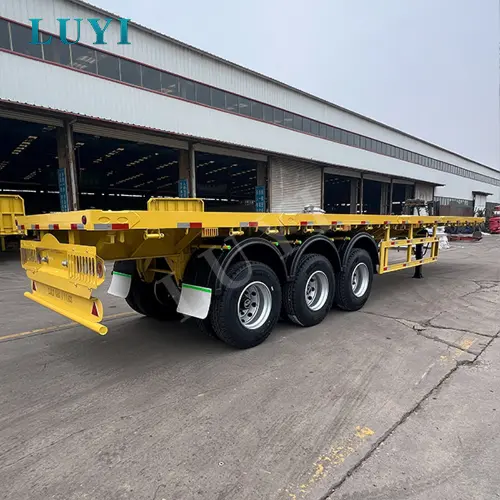
| Axle Configuration | Usually 3 axles, commonly 13T each; 2-axle or 4-axle options can be discussed | Axle selection should match payload, road regulations and destination market requirements. |
| Discharge Method | Pneumatic pressure discharge with air compressor and fluidization system | Directly affects unloading speed, residual rate and site operating efficiency. |
| Air Compressor | Capacity can be selected according to discharge distance, material type and unloading speed target | Weak compressor selection can cause slow unloading, pipe blockage or high residue. |
| Discharge Rate | Can be configured according to material and compressor specification | Important for high-frequency cement plant, batching plant and port delivery operations. |
| Suspension | Mechanical suspension standard; air suspension optional | Mechanical suspension is practical for rougher routes; air suspension supports smoother long-haul operation. |
| Braking and Safety | Emergency brake, pressure manhole, LED lights and optional ABS depending on market requirements | Supports safer operation under loaded conditions and helps meet local compliance requirements. |
| Typical Overall Dimension | Approx. 11,500 × 2,000 × 4,000 mm; final dimension depends on design | Must be confirmed against local road height, turning space and tractor matching. |
| GVW Reference | Commonly around 40–45 tons depending on configuration and regulations | Should be checked against destination country axle load and gross weight rules. |
The right tanker configuration should be selected according to material type, route condition, unloading site, local regulations and long-term maintenance plan. A cheaper tanker may look attractive at purchase, but poor discharge design, weak coating or mismatched components can increase downtime later.
Bulk cement, fly ash, lime powder and mineral powder have different density, moisture sensitivity and flow behavior. Cement transport normally uses carbon steel tanks, while more corrosive or special powders may require stainless steel, internal treatment or dedicated cleaning access. If the material is food-grade or chemically sensitive, the tank cannot be treated as a standard cement tanker.
A 38m³ tanker is useful when the buyer needs a balanced configuration for regional cement delivery, urban construction supply or medium-size batching plant routes. For very high-volume routes, a larger tanker such as a 60m³ powder tank semi trailer may be more suitable. For tighter sites or lower legal payload limits, a smaller customized capacity may be more practical.
The discharge system is one of the most important parts of a bulk cement tanker. Buyers should confirm compressor capacity, engine configuration, discharge pipe diameter, valve layout, tank angle, fluidized bed structure and residue control. If the unloading site requires a longer discharge distance or faster unloading cycle, the compressor and pipeline design should be upgraded accordingly.
Tank structure affects unloading efficiency. V-type or optimized internal fluidization structures can help powder move more smoothly toward the discharge outlet. Buyers comparing different tank structures may also review Luyi Auto’s V-type fly ash bulk cement tank semi-trailer for a related product reference.
For long-haul highway transport, air suspension may improve ride stability and reduce vibration. For rough local roads, construction routes or regions where maintenance simplicity matters more, mechanical suspension is often practical. Axle rating and tire specification should be confirmed according to legal payload, road quality and spare parts availability in the destination market.
Different markets may have different requirements for axle load, braking system, lighting, reflectors, electrical connectors, pressure safety and road registration. Buyers should provide the destination country and any local compliance requirements before production. This helps avoid a trailer that performs well mechanically but creates registration or inspection problems after arrival.
A bulk cement tanker must control both structural strength and air-tight performance. Buyers should evaluate the tank welding, sealing, pressure-related components, fluidized bed, discharge pipeline, compressor installation, axle assembly and braking system before delivery.
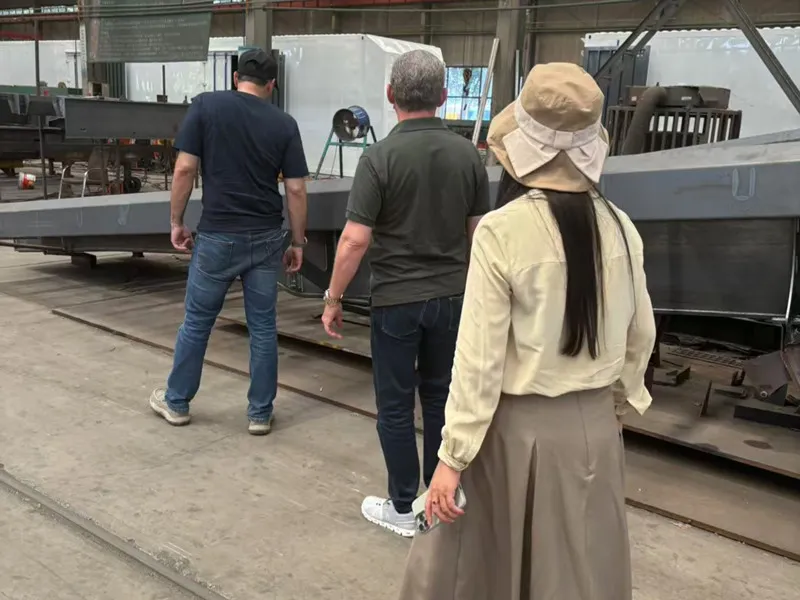
During supplier evaluation, ask whether the manufacturer checks weld consistency, tank roundness, manhole sealing, discharge valve function, air pipeline layout, compressor operation, braking performance and lighting system. Luyi Auto’s factory page provides a useful reference for understanding its production environment, workshop capability and quality control process.
For export orders, a practical pre-delivery inspection should include:
A 38m³ bulk cement tanker trailer can be customized around cargo type, route, local regulations, unloading site and fleet operating habits. For B2B buyers, customization should be based on practical transport requirements rather than unnecessary options.
For international buyers, cement tanker procurement should include export delivery planning from the beginning. Because powder tankers have large tank bodies, shipment method, anti-rust protection, loose parts packing and port handling all affect final delivery quality.
Before shipment, buyers should confirm whether the tanker will be delivered by bulk vessel, flat rack, RO-RO or another suitable method. Accessories, valves, small parts and documents should be packed and checked carefully. Anti-rust and surface protection are especially important for sea freight, humid ports and long storage periods.
Luyi Auto provides configuration communication, manufacturing coordination, export shipping support and after-sales service through its service support process. For buyers who want to compare cement tanker specifications, the fastest way is to submit material type, target capacity, destination country and unloading requirements through the Luyi Auto inquiry page.
For buyers who want to understand how cement tanker orders are evaluated in real projects, Luyi Auto’s Mozambique cement tanker case study shows how a construction client reviewed factory capability, quality control and custom configuration before confirming an order. This type of factory-visit case is useful for B2B buyers who need more confidence before placing a bulk trailer order.
Buyers can also browse Luyi Auto’s broader case studies to compare how different trailer configurations are selected for construction, infrastructure, mining, energy and logistics applications.
It is mainly used for bulk cement, fly ash, lime powder, mineral powder and other non-hazardous dry powders. If the material is corrosive, food-grade, hazardous or moisture-sensitive, buyers should confirm tank material, lining, cleaning method and compliance requirements before ordering.
A 38m³ tanker is suitable for many medium-to-large cement transport operations, especially when buyers need a balance between capacity, maneuverability and tractor matching. For higher-volume routes, a larger 50–60m³ powder tank trailer may be more efficient.
The air compressor sends pressurized air into the tank’s fluidization system. The powder is aerated and pushed toward the discharge outlet through pipelines. A good discharge system should unload smoothly, reduce residue and avoid pipe blockage.
Common causes include weak compressor capacity, poor valve layout, moisture inside the powder, blocked pipelines, poor fluidized bed design or incorrect operating procedure. Regular cleaning, filter maintenance and correct decompression are important.
Carbon steel is commonly used for standard cement and fly ash transport. Aluminum can reduce tare weight but costs more. Stainless steel may be required for certain corrosive or special powder materials. The final choice should match cargo type, budget and operating environment.
Please provide the powder material, target capacity, material density if available, destination country, road conditions, tractor model, unloading site requirements, expected discharge speed, required quantity and destination port. For direct support, contact Luyi Auto through the contact page or send details through the inquiry form.
A 38m³ bulk cement tanker trailer is a practical solution for dry powder transport when buyers need sealed loading, pneumatic discharge and stable operation for cement, fly ash, lime powder and mineral powder. The best configuration should be selected around material density, discharge speed, usable volume, road regulations, tractor matching, tank material and long-term maintenance.
If your business needs a cement tanker for construction material supply, batching plant delivery, industrial powder logistics or mineral powder transport, review Luyi Auto’s 38CBM cement tanker trailer and powder tank semi trailer range. For a configuration-based quotation, send your material type, capacity target and destination port through Luyi Auto’s inquiry page.