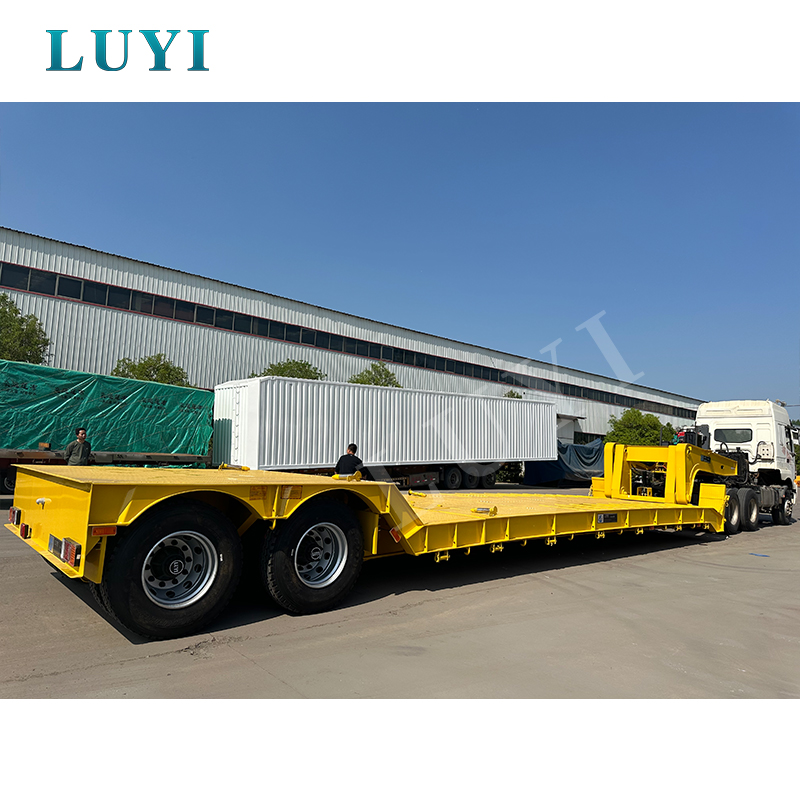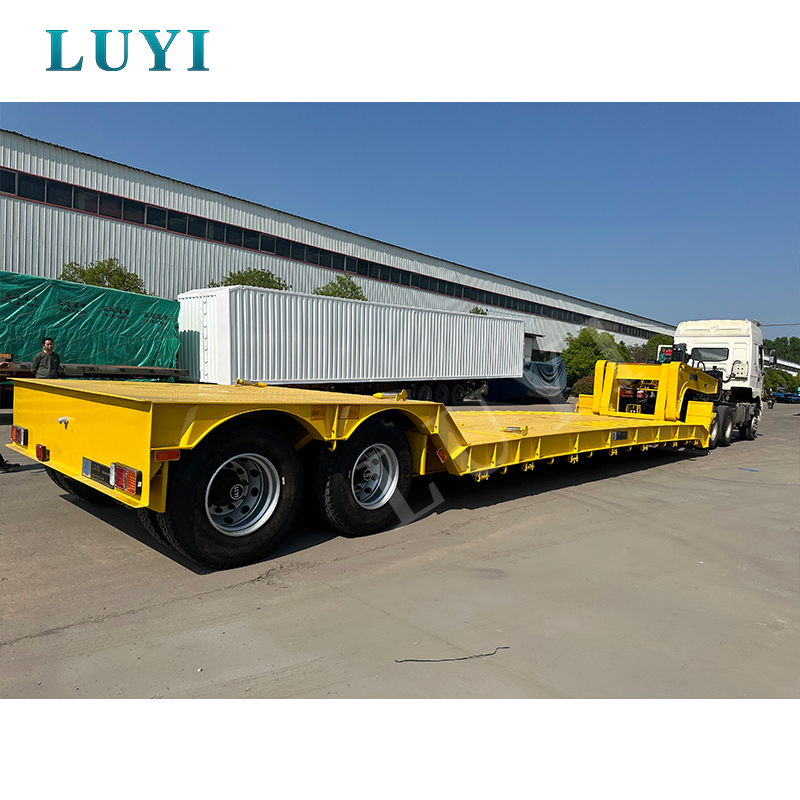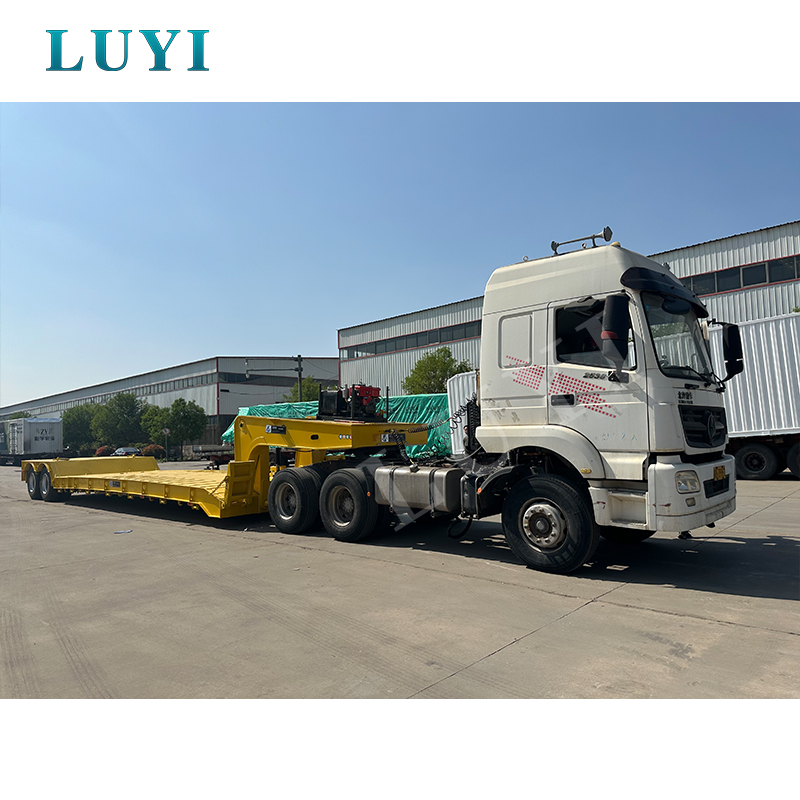

A 2 axle detachable gooseneck trailer is a practical heavy-haul transport solution for equipment owners, construction contractors, agricultural fleets and project logistics buyers who need safer front-loading access for heavy machinery. Unlike a standard fixed gooseneck lowboy trailer, the detachable front neck can be removed so the front of the trailer lowers close to the ground, allowing self-propelled machines to drive onto the deck with less dependence on cranes or steep loading ramps.
For buyers comparing trailer types, this model is often considered when the cargo includes excavators, bulldozers, tractors, loaders, rollers, small cranes, irrigation equipment or industrial machines that need a low loading height and controlled loading process. Luyi Auto supplies detachable gooseneck lowboy trailers for heavy equipment transport, with configuration options based on payload, loading frequency, road conditions and tractor compatibility.
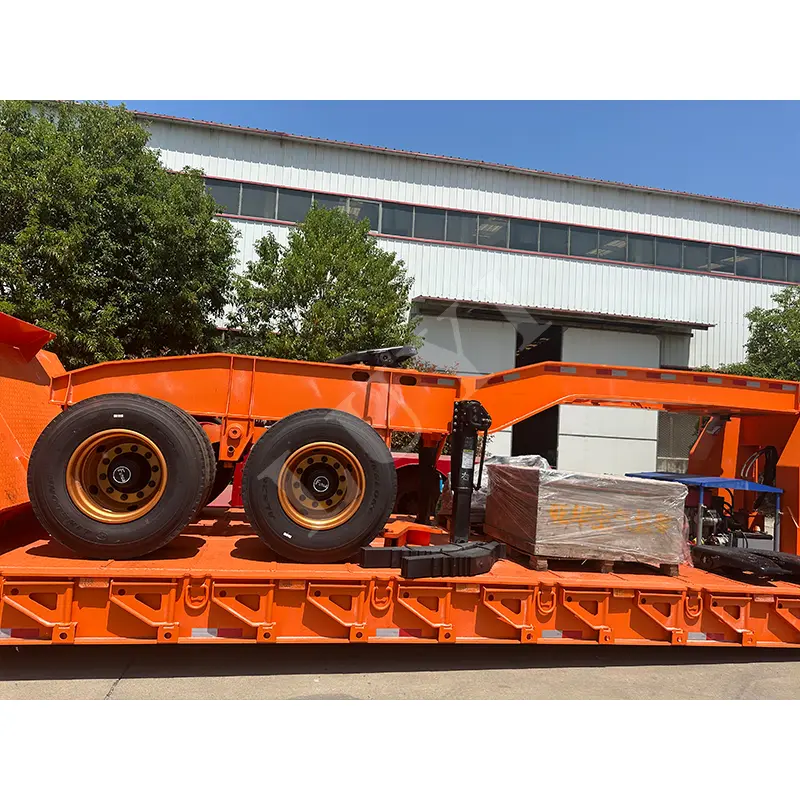
A 2 axle detachable gooseneck trailer is a low-deck semi-trailer with two rear axles and a removable front gooseneck. The gooseneck connects to the tractor’s fifth wheel during transport. When loading is required, the gooseneck is detached and the front of the main deck is lowered to create a drive-on loading path.
This design is useful when machinery can move under its own power. Instead of using a crane or forcing equipment up a steep ramp, operators can drive the machine onto the deck from the front. In real jobsite operations, this can reduce loading risk, shorten equipment transfer time and improve flexibility when working in areas where lifting equipment is unavailable or expensive to arrange.
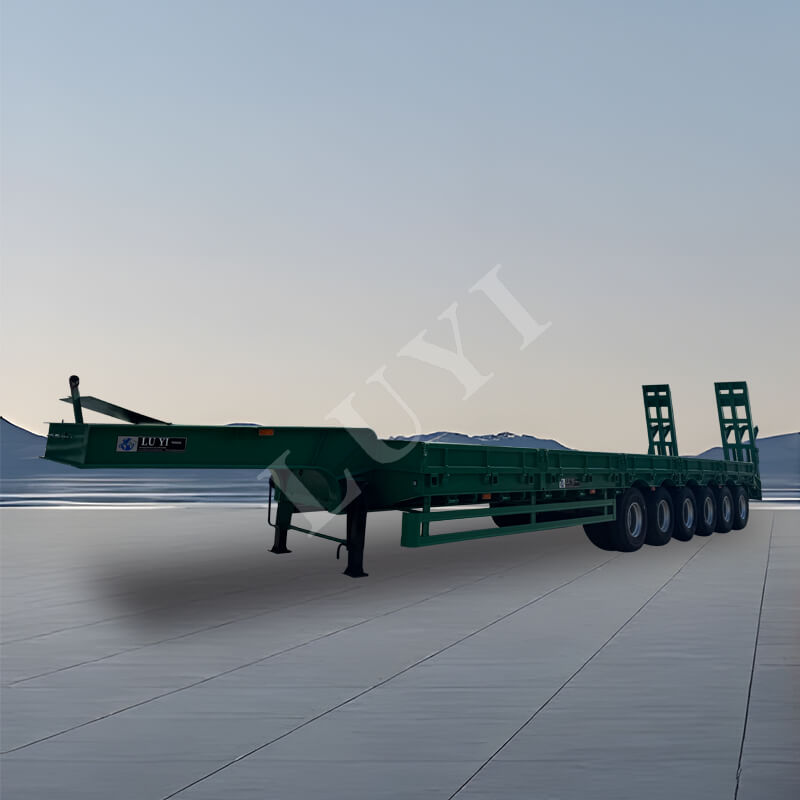
Compared with a 3 axle or multi-axle detachable gooseneck trailer, the 2 axle version is usually more maneuverable and easier to operate in tighter spaces. It is especially suitable for medium-duty heavy equipment transport where the buyer needs a balance between payload capacity, route flexibility and operating cost.
Construction companies use 2 axle detachable gooseneck trailers to move excavators, bulldozers, skid steers, compact loaders, rollers and small cranes between jobsites. The front-loading design is helpful when machines need to be moved frequently and project teams want to reduce dependence on external lifting equipment.
For agricultural contractors and large farms, the trailer can transport tractors, harvesters, irrigation machinery, planters and other field equipment. A lower loading angle helps protect machinery during loading, especially when equipment has wide tires, long wheelbases or limited ground clearance.
Equipment rental companies often need to move machinery between customer sites, storage yards and maintenance workshops. A 2 axle detachable gooseneck trailer allows operators to load self-propelled equipment more independently, which can improve dispatch efficiency when machines must be delivered to several sites in one day.
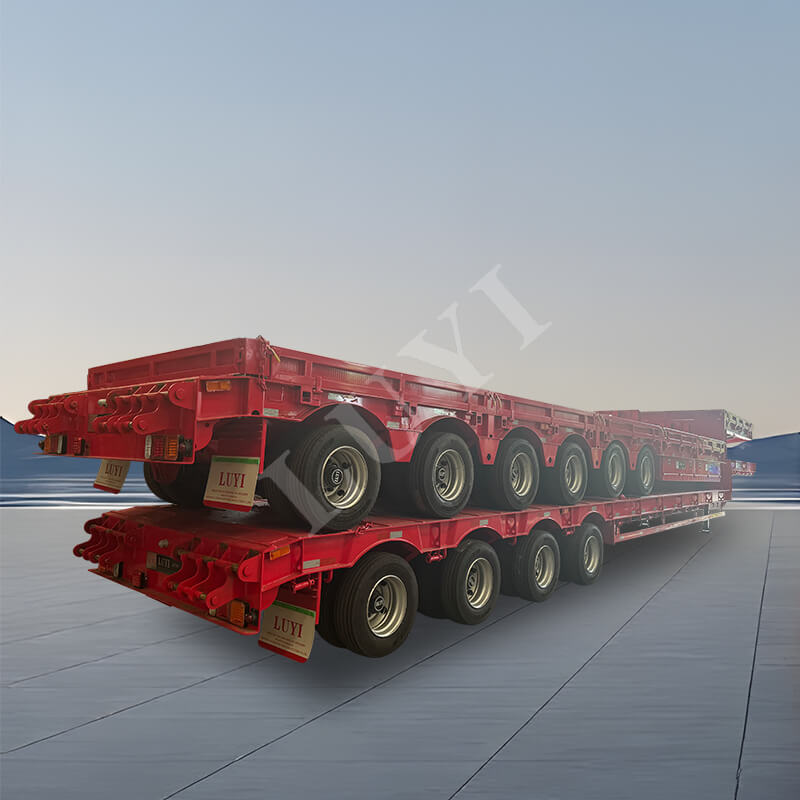
Industrial buyers may use this trailer for generators, compressors, drilling components, road construction machines and prefabricated equipment. When the cargo is taller or heavier, buyers can also review Luyi Auto’s lowbed semi trailer category for alternative deck heights, axle layouts and heavy-duty transport configurations.
Specifications should be selected according to real cargo and route conditions rather than only a standard catalog model. The table below summarizes the main points international buyers should confirm before requesting a quotation.
| Specification Item | Common Configuration Range | Procurement Consideration |
|---|---|---|
| Trailer Type | 2 axle detachable gooseneck lowbed trailer | Suitable for front-loading self-propelled machinery and medium-duty heavy equipment transport. |
| Payload Capacity | Commonly 20–60 tons; heavy-duty designs can be customized | Confirm actual cargo weight and add a reasonable safety margin instead of selecting only by nominal payload. |
| Axle Configuration | 2 axles, commonly 13–20 tons per axle depending on design | Axle rating should match cargo weight, road regulations and expected transport frequency. |
| Deck Length | Approx. 10.7–16.5 meters or customized | Shorter decks improve maneuverability; longer decks support larger machinery and wider cargo combinations. |
| Deck Width | Commonly around 3 meters or customized by market requirement | Check local width regulations and oversize permit requirements before production. |
| Deck Height | Low working platform design | Lower deck height improves stability and helps control total transport height for taller equipment. |
| Gooseneck System | Mechanical or hydraulic detachable gooseneck | Mechanical systems reduce purchase cost; hydraulic systems improve convenience for frequent loading. |
| Kingpin | 2 inch or 3.5 inch | Must match the tractor’s fifth wheel and expected gross load. |
| Brake System | Export-ready air brake system; ABS optional by market | Confirm destination market compliance and fleet maintenance capability. |
| Tires | 8–12 tires depending on specification | Tire model should match road conditions, axle load and replacement availability in the destination country. |
| Main Beam and Frame | High-strength steel structure with reinforced loading zones | Important for repeated loading, torsional resistance and long-term heavy-haul operation. |
A mechanical detachable gooseneck is usually selected by buyers who load equipment less frequently or want a simpler, lower-cost structure. It can be suitable for occasional machinery transport, agricultural equipment relocation or fleets with experienced operators who are comfortable with manual procedures.
The advantage is lower initial cost and simpler maintenance. The limitation is that detaching and reconnecting usually requires more time and more operator effort. For buyers with high-frequency loading tasks, this may reduce operating efficiency over time.
A hydraulic detachable gooseneck is better suited for buyers who load and unload machinery regularly. Hydraulic operation can reduce manual work and improve loading speed, especially when equipment must be transferred between several jobsites or customer locations.
For construction fleets, equipment rental companies and project logistics operators, hydraulic operation often provides better long-term value because it reduces waiting time, improves operator convenience and supports more consistent loading workflow. Buyers can also compare the 2 axle model with Luyi Auto’s 3 axle detachable gooseneck trailer buying guide if the cargo weight or route conditions require a heavier-duty structure.
The first step is to confirm whether the cargo can drive onto the trailer by itself. A detachable gooseneck trailer is most useful for self-propelled machinery such as excavators, loaders, bulldozers and tractors. If the cargo is non-mobile, loaded by crane, or extremely tall, a fixed lowboy or other heavy-haul trailer may be more practical.
Buyers should not select a trailer based only on the maximum cargo weight. In real operation, a safety margin helps protect the frame, suspension, tires and braking system. If the machine weight is close to the trailer’s limit, it is better to discuss a reinforced design or a higher-capacity trailer with the manufacturer.
If loading happens only occasionally, a mechanical system may be sufficient. If the trailer is used every week or every day, a hydraulic detachable gooseneck can reduce working time and improve operational consistency. This decision should be based on daily workflow, not only purchase price.
Before ordering, confirm fifth wheel height, kingpin size, tractor horsepower, air line position, electrical connector and gross combination weight. A trailer that does not match the tractor may cause poor load balance, difficult coupling or unsafe operation on the road.
For paved highways, the focus may be stable long-distance performance and tire life. For construction sites, mining roads or rural transport routes, buyers should pay more attention to frame reinforcement, mechanical suspension durability, tire specification and maintenance convenience.
Oversize dimensions, axle load limits, permit rules and lighting requirements differ by country and route. Buyers should confirm local regulations before finalizing deck width, total length, axle spacing and safety equipment. This is especially important for cross-border transport and infrastructure projects.
A 2 axle detachable gooseneck trailer can be customized according to cargo type, working conditions, local regulations and buyer operating habits. Common customization options include:
If your project needs a different deck length, heavier payload or special loading method, you can also compare Luyi Auto’s 2 axle gooseneck lowboy semi-trailer and related lowbed trailer models before confirming the final configuration.
For international buyers, the manufacturer’s production capability directly affects trailer reliability. A 2 axle detachable gooseneck trailer includes structural welding, hydraulic or mechanical connection points, braking system assembly, axle installation, suspension matching and surface protection. Each of these details affects daily use.
At the Luyi Auto manufacturing facility, buyers can discuss frame structure, steel selection, welding process, axle configuration, hydraulic system layout and export inspection requirements before production. This helps reduce misunderstanding between catalog specifications and real operating conditions.
Luyi Auto’s technical and export service team can also support buyers with configuration review, loading method discussion, document preparation, shipping coordination and after-sales communication. For B2B buyers, this technical communication is often the difference between simply purchasing a trailer and receiving a trailer that is suitable for the actual job.
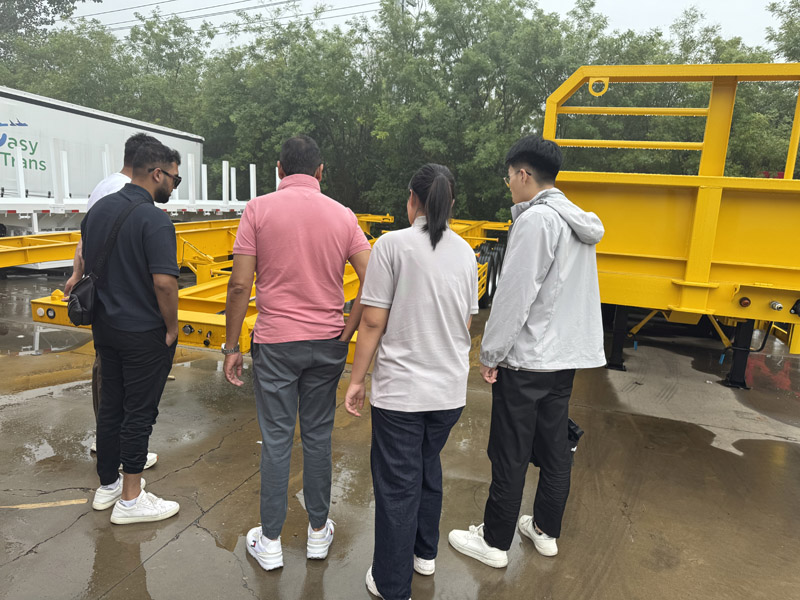
Real project references help buyers understand how detachable gooseneck and lowboy trailer configurations are selected for actual operating conditions. In Luyi Auto’s Saudi lowboy trailer factory visit case study, the customer evaluated factory capability, low-deck loading requirements and heavy equipment transport conditions before confirming custom lowboy trailers.
For buyers focused on detachable hydraulic gooseneck applications, the Suriname detachable hydraulic gooseneck lowboy trailer delivery case provides a useful reference for low deck height, hydraulic detachment and heavy equipment transport workflow.
If you are still comparing trailer types, Luyi Auto’s article on removable gooseneck trailer vs lowboy trailer explains when an RGN trailer is more suitable than a fixed gooseneck lowboy trailer.
Hydraulic systems are usually faster and easier to operate, often taking several minutes depending on operator experience and ground conditions. Mechanical systems usually take longer and require more manual work.
It can be used on construction sites, farm roads and light rough-road conditions if the frame, suspension and tires are properly selected. For severe mining roads or long-term off-road use, buyers should discuss reinforcement, tire specification and axle rating with the manufacturer.
It is suitable for self-propelled machinery such as excavators, loaders, bulldozers, rollers, tractors, irrigation machines and small cranes. For non-mobile heavy cargo, a fixed lowboy or crane-loading solution may be more appropriate.
A 2 axle version is usually more maneuverable and practical for medium-duty equipment transport. A 3 axle version is more suitable when payload, axle load distribution or route requirements demand a stronger heavy-duty structure.
Provide cargo type, maximum machine weight, cargo dimensions, loading frequency, road conditions, tractor model, destination country, required quantity and any local transport regulation details. This allows the manufacturer to recommend a configuration that matches real use rather than a generic model.
Yes. Trailer dimensions, axle layout, braking system, lighting configuration, paint, tire model, gooseneck system and safety accessories can be discussed according to destination market requirements.
Procurement note: A 2 axle detachable gooseneck trailer should be selected around actual loading workflow. If your machines move under their own power and loading sites change frequently, front-loading efficiency may be more valuable than simply choosing the lowest-cost lowbed trailer.
If you are planning to transport excavators, tractors, loaders, agricultural machinery or construction equipment, Luyi Auto can help you compare mechanical and hydraulic detachable gooseneck options, axle ratings, deck dimensions and export configurations based on your actual route and cargo requirements.
You can contact Luyi Auto or send your trailer requirements to receive a configuration-based quotation for your 2 axle detachable gooseneck trailer project.