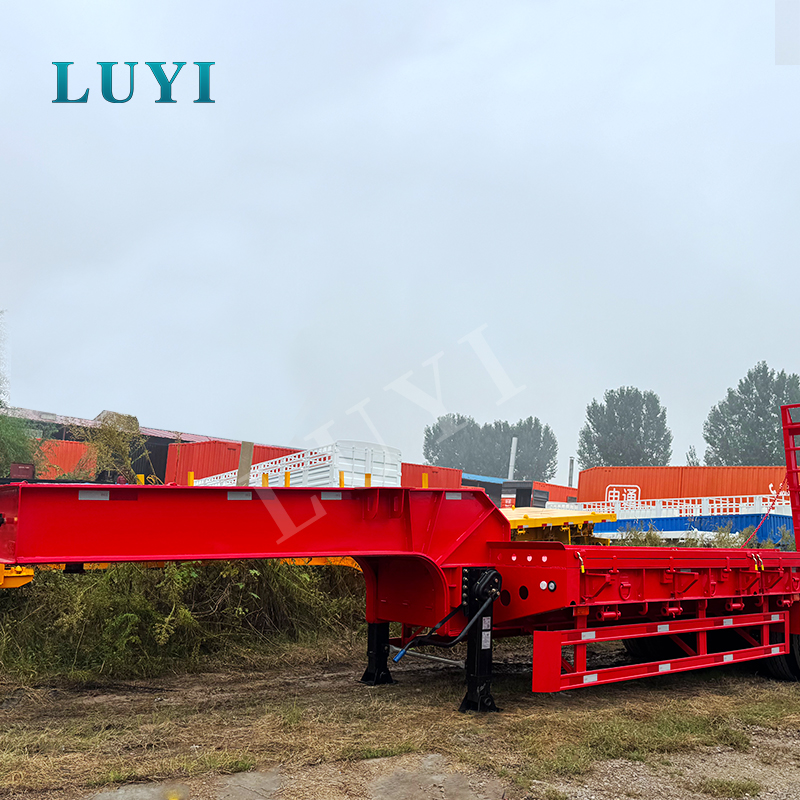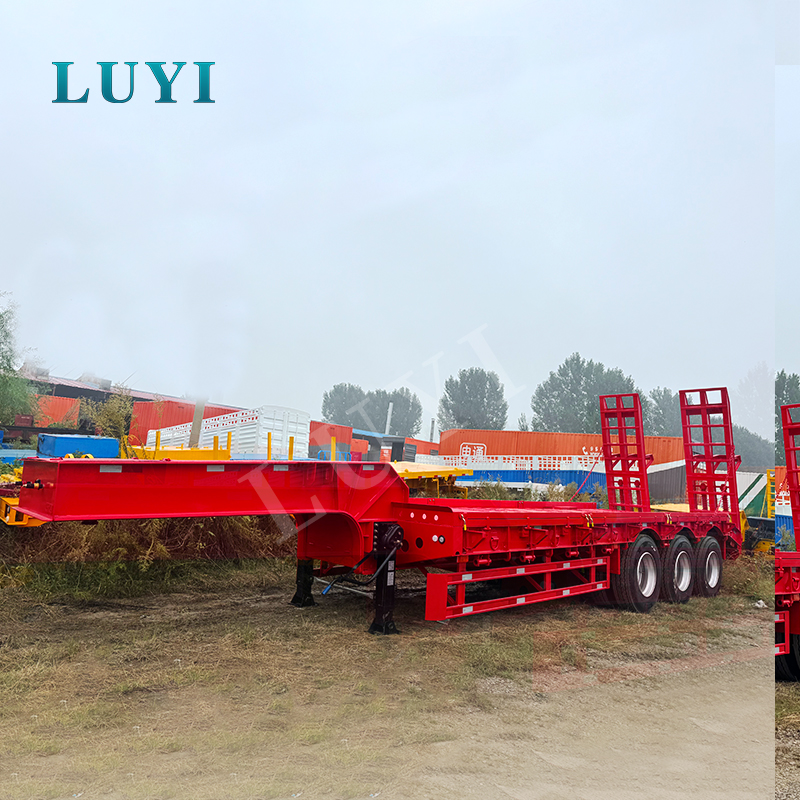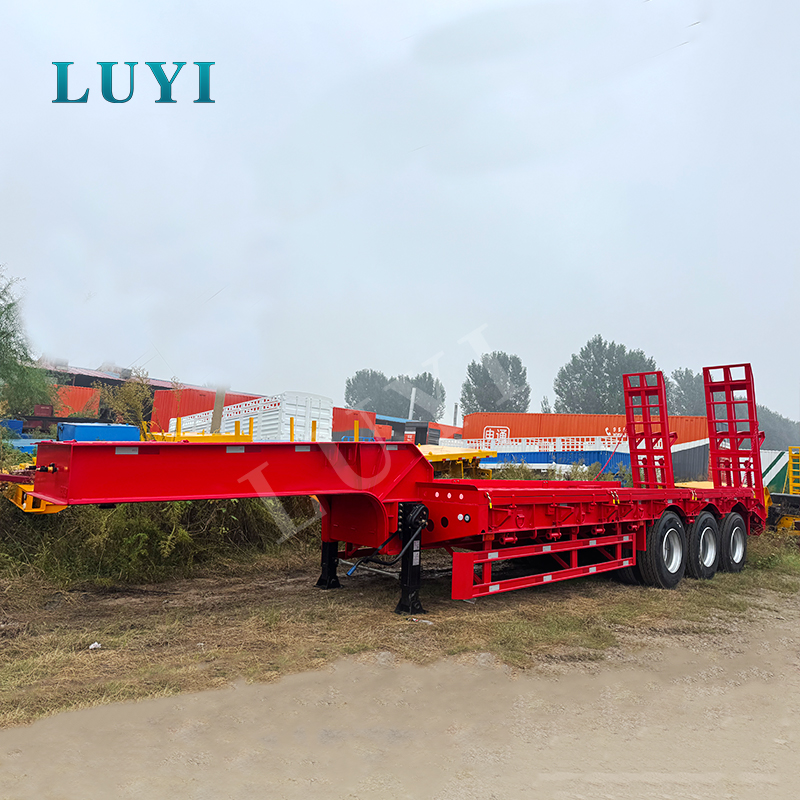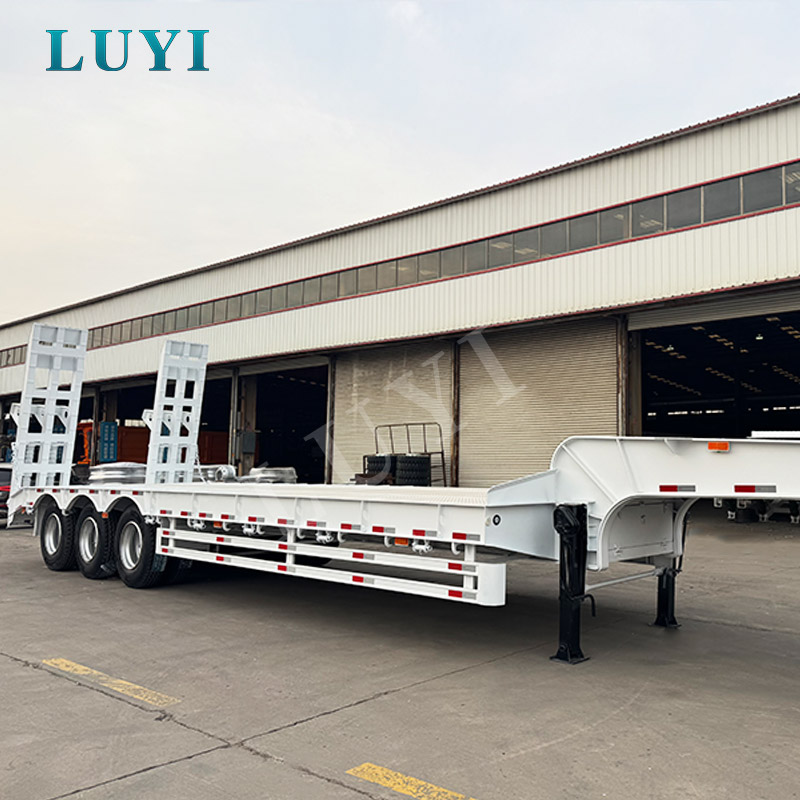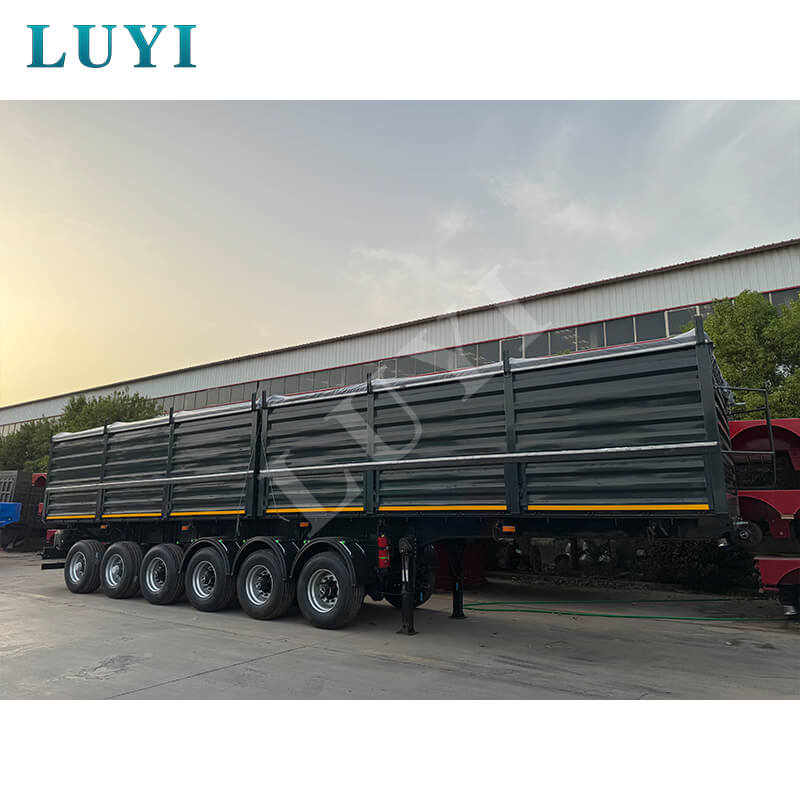

A 3 axle low platform semi trailer is built for heavy equipment transport where cargo height, weight distribution and loading stability matter more than ordinary platform capacity. In many markets, buyers also call it a tri-axle lowbed trailer or lowboy trailer. Its low deck helps reduce the overall transport height and center of gravity when moving excavators, bulldozers, loaders, road rollers, mining machines, industrial components and oversized project cargo.
For contractors, logistics fleets, equipment dealers and project procurement teams, the key question is not simply “how many tons can it carry?” A practical trailer configuration should match the cargo weight, machine dimensions, loading method, road conditions, tractor unit, axle load limits and local transport rules. Luyi Auto supplies a full range of lowbed semi trailers for heavy machinery transport, including 3 axle, 5 axle, 6 axle and higher-capacity configurations.
A 3 axle low platform semi trailer is a heavy-duty semi-trailer with a low working deck and three rear axles. The low deck makes it easier to carry tall machinery while keeping the loaded height under road-limit requirements where possible. Compared with a standard flatbed trailer, the lower platform improves stability during transport and reduces the risk caused by a high center of gravity.
This trailer is commonly used with mechanical ramps, spring-assisted ramps or hydraulic ramps so self-propelled machinery can drive onto the deck. The frame is usually built with high-strength steel, reinforced main beams, heavy-duty cross members and a loading surface designed to withstand repeated contact from tracked or wheeled machinery.
For buyers who need a ready reference model, Luyi Auto’s 3 axle low bed semi trailer is designed for heavy machinery and large equipment transport. For higher rated loading requirements, the 3 axle 80 ton lowbed semi trailer provides a useful benchmark for heavy-duty configuration review.
Construction contractors often use 3 axle low platform trailers to move excavators, bulldozers, loaders, road rollers, graders, cranes and compactors between jobsites. The low deck improves loading stability and helps control total transport height when moving tall equipment through highways, bridges, urban roads or project access routes.
Mining and quarry projects require trailers that can handle rough access roads, concentrated equipment loads and frequent loading cycles. A 3 axle low platform trailer can be used for crushers, mining excavators, drilling machines, generators and support equipment. In harsher environments, buyers should pay extra attention to frame reinforcement, axle rating, suspension durability, brake reliability and tire availability in the local market.
Infrastructure contractors may need to transport bridge components, paving machines, tunnel equipment, steel structures, prefabricated modules and other oversized cargo. In these projects, the trailer is not only a transport tool; it directly affects site readiness, equipment scheduling and project delivery time.
Large tractors, harvesters, forestry equipment and irrigation machinery often require a low loading angle and a stable platform. For agricultural buyers, the trailer should be selected according to machine width, tire track, deck length, ramp strength and the condition of rural or farm roads.
Industrial buyers may use 3 axle low platform trailers for boilers, transformers, generators, machinery bases and production-line components. These cargoes often have uneven weight distribution, so the manufacturer should review the cargo’s center of gravity, loading points and securing method before recommending the final trailer structure.
The specifications below are typical reference points for a 3 axle low platform semi trailer. Exact configuration should be confirmed according to cargo, route and destination market requirements.
| Specification Item | Common Reference Range | Procurement Consideration |
|---|---|---|
| Trailer Type | 3 axle low platform / lowbed / lowboy semi trailer | Used for heavy equipment, oversized machinery and project cargo transport. |
| Rated Loading Capacity | Commonly 40–80 tons; higher-capacity designs can be customized | Confirm actual machine weight, center of gravity, road condition and legal axle load limits. |
| Axle Configuration | 3 axles, commonly 12–16 tons or heavier-duty options | Axle rating and spacing affect legal compliance, tire wear and load distribution. |
| Overall Length | Approx. 11,000–16,500 mm or customized | Longer decks support larger machines but may reduce maneuverability in tight jobsites. |
| Overall Width | Approx. 2,500–3,300 mm or customized | Must be checked against local road rules and oversize permit requirements. |
| Platform Height | Low working platform design | Lower deck height helps reduce loaded height and improve stability for tall machinery. |
| Main Beam | High-strength steel with reinforced structure | Main beam thickness and welding process are critical for long-term heavy-load performance. |
| Deck Surface | Checker plate, diamond plate, hardwood or customized surface | Choose according to tracked machinery, wheeled machinery, anti-slip needs and repair convenience. |
| Ramp Type | Mechanical ramp, spring ramp or hydraulic ramp | Hydraulic ramps are more convenient for frequent loading; mechanical ramps reduce purchase cost and maintenance complexity. |
| Suspension | Mechanical suspension or air suspension | Mechanical suspension is practical for rough roads; air suspension helps reduce vibration for sensitive cargo. |
| Brake System | Air brake system, ABS or EBS options depending on market | Brake configuration should meet destination market requirements and heavy-load operating conditions. |
| Kingpin | 50# / 90# options | Must match the tractor’s fifth wheel and expected gross combination weight. |
Before requesting a quotation, buyers should prepare cargo name, machine weight, overall dimensions, wheelbase or track width, ground clearance, center of gravity and loading method. A trailer used for a 35-ton excavator may need a different ramp, deck length and loading point reinforcement than a trailer used for an industrial generator or steel structure.
Choosing a trailer with no safety margin can cause premature wear on the main beam, suspension, tires and braking system. For repeated heavy equipment transport, it is better to discuss actual working conditions with the manufacturer rather than selecting the lowest-rated model that barely meets the cargo weight.
The low platform design is especially valuable when the cargo is tall. Buyers should calculate total loaded height, including the trailer platform height, tire size, suspension condition and machine height. This helps avoid problems with bridges, tunnels, power lines and local height limits.
Mechanical ramps are suitable for buyers who want a simple and durable structure. Hydraulic ramps are more convenient for frequent loading and unloading, especially when machinery moves between multiple jobsites. The right choice depends on daily workflow, operator habit, maintenance capability and budget.
Mechanical suspension is widely used in export markets because it is durable, easier to maintain and suitable for rough roads. Air suspension can reduce vibration and improve ride quality, but it requires better maintenance support. Buyers working in mining, construction or remote areas should evaluate parts availability before selecting suspension type.
The trailer must match the tractor’s fifth wheel height, kingpin size, power, braking system, air and electrical connectors, and gross combination weight. If the tractor and trailer are not matched correctly, the buyer may face uneven loading, difficult coupling, poor braking performance or unsafe operation.
Axle load limits, trailer width, total length, lighting requirements, reflective markings and oversize permits differ by market. These rules should be reviewed before production, not after the trailer arrives. For cross-border or project-based transport, buyers should also confirm whether special permits or escort requirements apply.
Suspension selection should reflect the route and maintenance environment. For many construction and mining buyers, mechanical suspension remains the practical choice because it is strong, simple and easier to repair in remote areas. It performs well on rough roads, jobsite entrances and heavy-duty transport cycles.
Air suspension is more suitable when the cargo is sensitive to vibration or when the route is mainly paved highway. It can improve ride comfort and help protect certain types of industrial equipment. However, buyers should consider airbag, valve and line maintenance before choosing this option for harsh working environments.
Ramps are not minor accessories on a low platform semi trailer. They directly affect loading safety, machine access angle and operating efficiency. For tracked machines such as excavators and bulldozers, the ramp should provide enough width, traction and structural strength. For wheeled machines, ramp spacing and surface grip should be checked carefully.
If the trailer is used frequently on construction sites, hydraulic ramps may reduce operator workload and loading time. If the buyer prioritizes simple maintenance and lower cost, mechanical or spring-assisted ramps may be a better choice. In both cases, the ramp structure should be matched with the heaviest machine that will be loaded.
A standard 3 axle low platform semi trailer may work for many general heavy machinery tasks, but buyers with specific equipment, harsh routes or local compliance requirements often need customization. Luyi Auto can adjust trailer configuration according to cargo type, road condition, tractor model and destination market rules.
If your project requires higher payload capability or a longer loading platform, you can also compare the 5 axle lowbed gooseneck carrier and other models in Luyi Auto’s semi-trailer product range.
For international B2B buyers, a low platform semi trailer should be evaluated by both specification and manufacturing process. The most important inspection points include main beam welding, gooseneck reinforcement, ramp strength, axle installation, suspension alignment, brake system assembly, lighting function, deck flatness, paint coverage and anti-rust treatment.
At the Luyi Auto factory, buyers can review production capability, material processing, welding procedures, assembly workflow and pre-delivery inspection standards. This matters because heavy equipment transport creates repeated stress on the trailer frame, especially around the gooseneck, main beam, ramp connection and axle suspension area.
Luyi Auto’s technical and export service team can support buyers with configuration review, loading method discussion, document preparation, shipping coordination and after-sales communication. For overseas procurement, this communication helps reduce the risk of ordering a trailer that looks correct in a catalog but does not match real operating conditions.
Low platform semi trailers are commonly shipped by RO-RO vessel, bulk carrier or flat rack depending on destination, order quantity and trailer size. Before shipment, removable parts, accessories, spare tire frames, toolboxes and documents should be properly packed and checked. Anti-rust wax or marine protection may be used to reduce corrosion risk during ocean transport.
For batch orders, shipping method selection can affect total landed cost, unloading convenience and delivery schedule. Buyers should confirm destination port, import requirements, available unloading equipment and whether the trailer needs to be partially disassembled or reinforced for transport.
Project references help buyers evaluate whether a supplier understands real operating conditions, not just product specifications. Luyi Auto’s mining and heavy haulage case studies show how trailer configurations are matched with demanding payloads, rough routes and heavy transport applications.
For buyers who want to verify factory capability before procurement, the Czech factory audit case for 6 axle lowbed semi trailers provides a useful example of how customers reviewed welding, painting, assembly quality, customization and delivery discussions before moving toward cooperation.
A flatbed trailer has a higher straight platform and is commonly used for containers, steel and general cargo. A low platform semi trailer has a lower deck, making it more suitable for tall, heavy and oversized machinery such as excavators, bulldozers and loaders.
Most 3 axle low platform semi trailers are selected within a 40–80 ton working range, but the correct choice depends on actual cargo weight, center of gravity, road condition, axle load regulations and tractor capacity. Buyers should provide cargo details before requesting a final recommendation.
Mechanical suspension is often preferred for rough roads, mining areas and construction sites because it is durable and easier to maintain. Air suspension is better for smoother highway transport and cargo that needs lower vibration, but it requires more maintenance support.
Mechanical ramps are simple and cost-effective for occasional loading. Hydraulic ramps are more convenient for frequent loading, especially when machinery needs to move between multiple jobsites or customer locations.
Yes, it is commonly used for oversized machinery and project cargo. However, buyers must confirm local width, height, length and axle load rules. Oversize permits may be required depending on the destination country and transport route.
Send the cargo name, maximum weight, overall dimensions, photos or drawings, loading method, route conditions, destination country, tractor model, expected quantity and any local regulation requirements. This allows Luyi Auto to recommend a practical configuration instead of a generic model.
Procurement note: A suitable 3 axle low platform semi trailer should be selected around real cargo, real routes and real loading workflow. The strongest model is not always the most economical choice; the right model is the one that safely matches your transport task and reduces long-term operating risk.
If you are planning to transport excavators, bulldozers, loaders, mining equipment, agricultural machinery, industrial components or oversized project cargo, Luyi Auto can help you compare deck size, axle rating, suspension, ramp structure, braking system and export configuration based on your actual operating conditions.
You can send your trailer requirements or contact Luyi Auto to receive a configuration-based quotation for your 3 axle low platform semi trailer project.