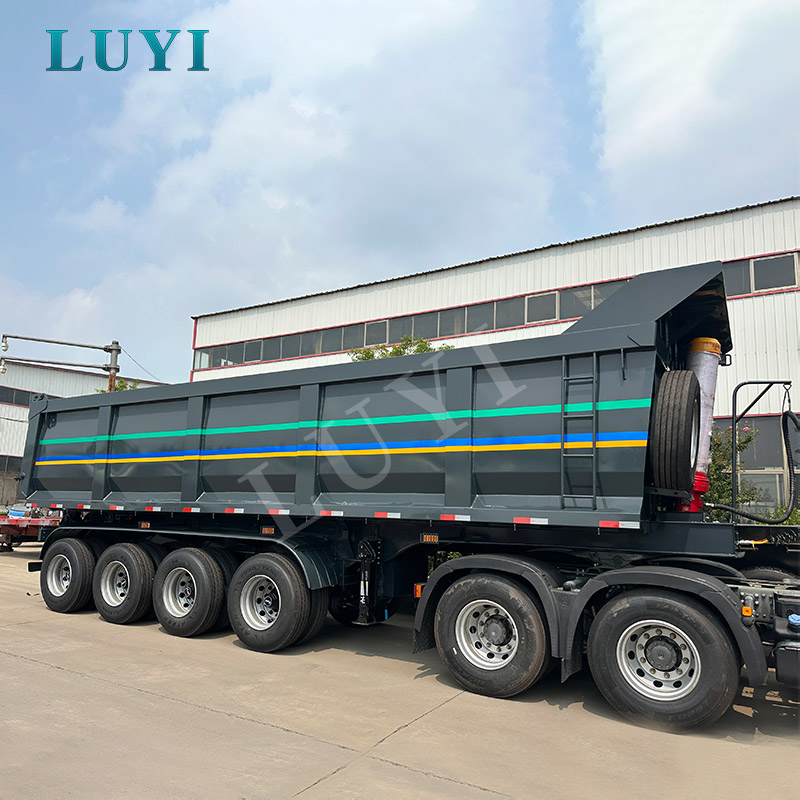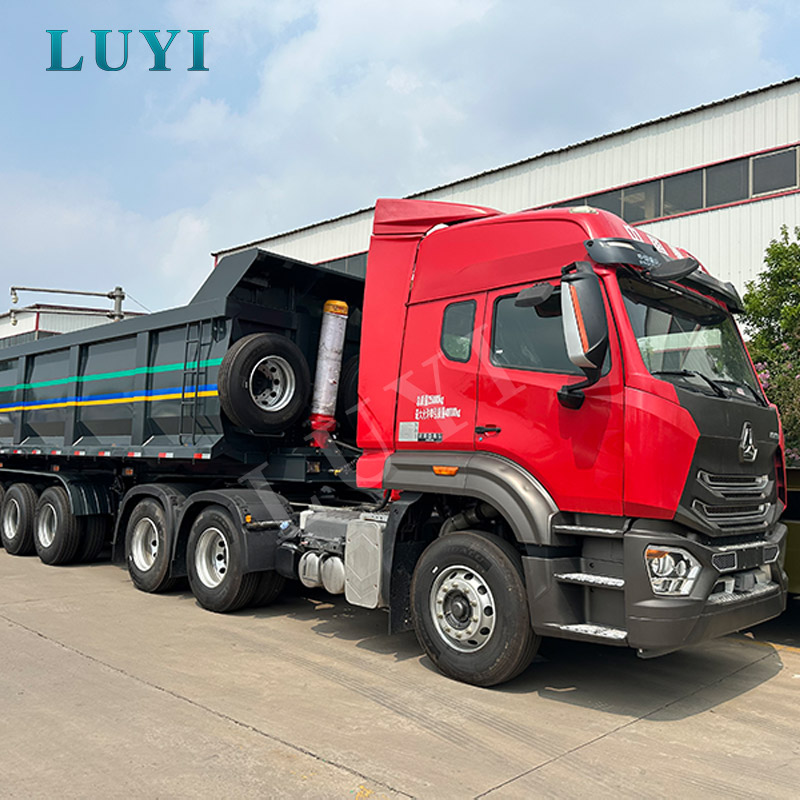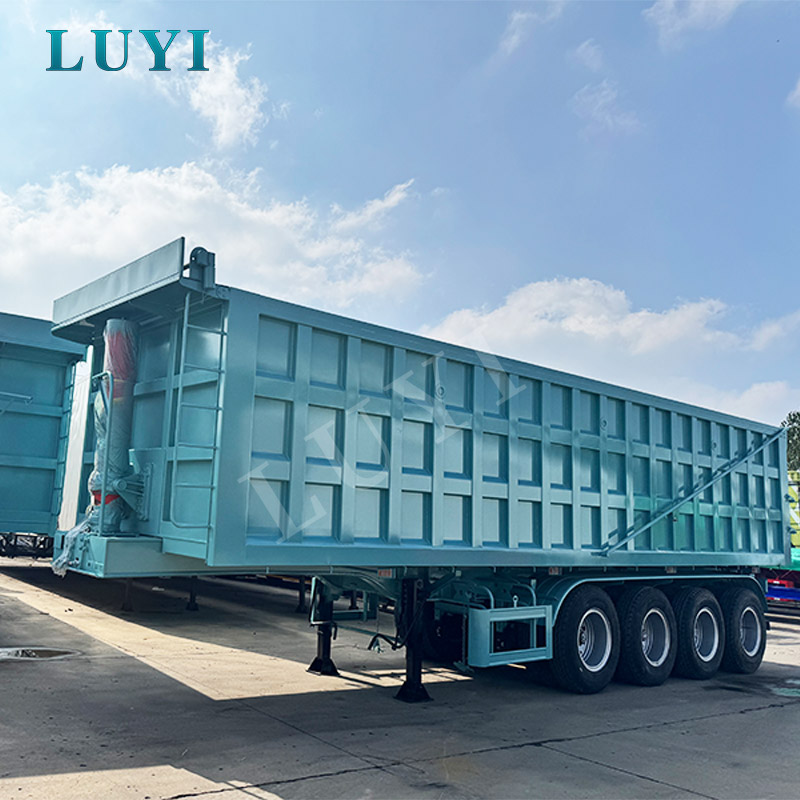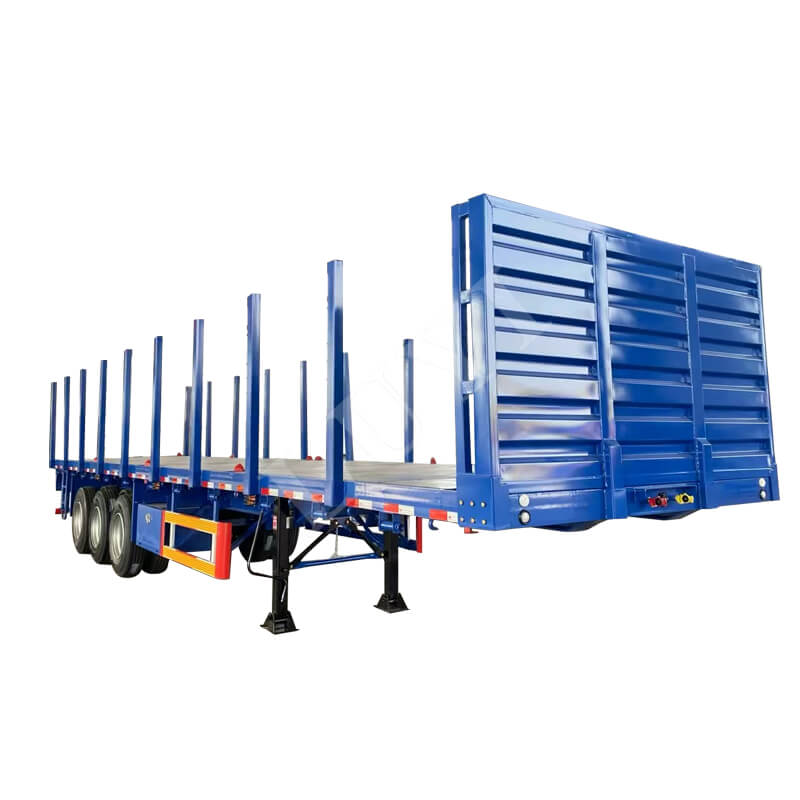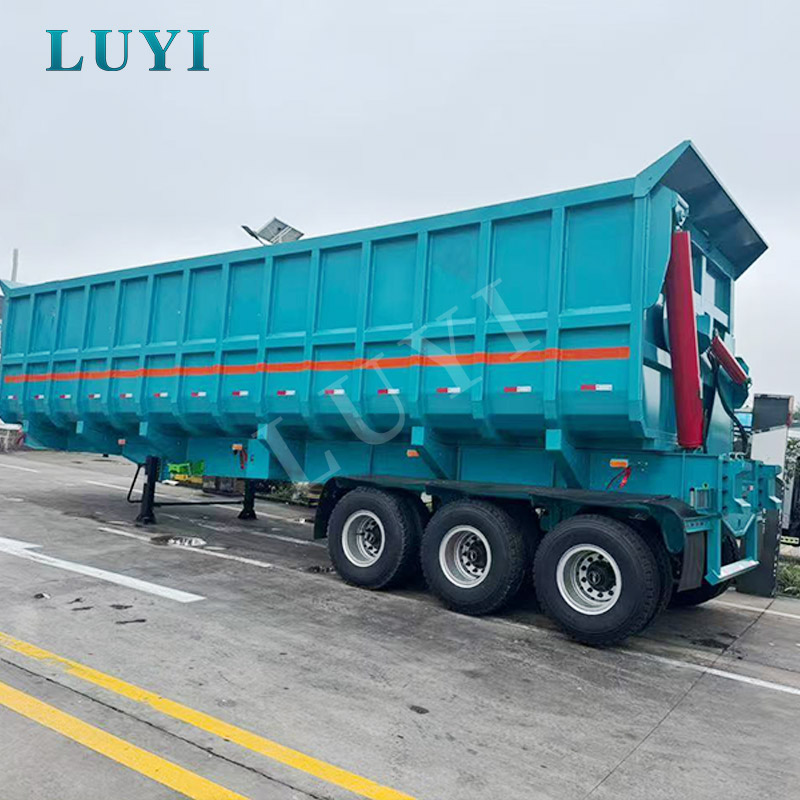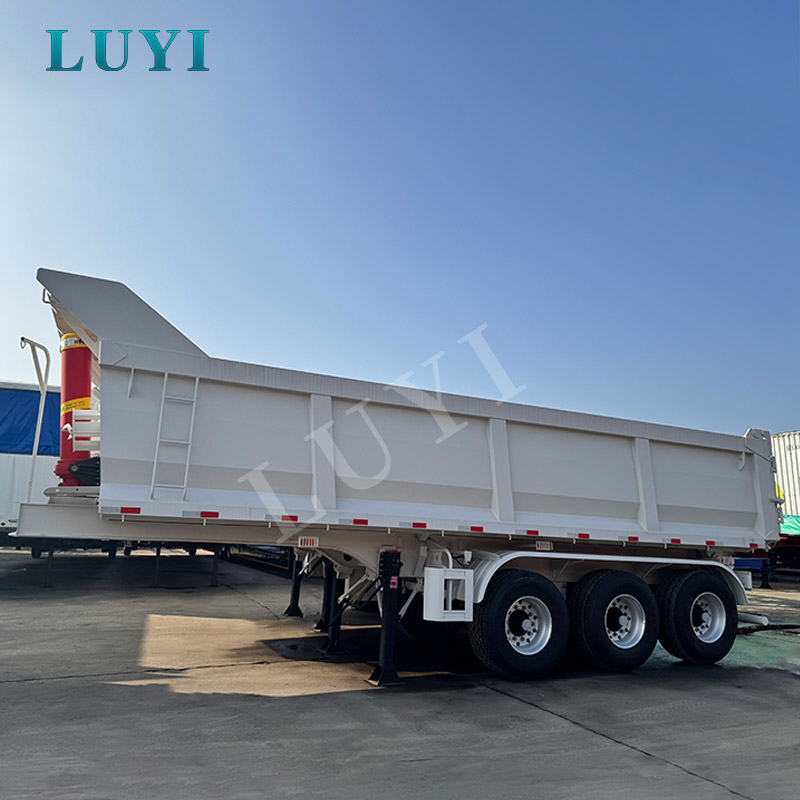

A four axle black rear dump semi trailer is built for fleets that move loose bulk materials every day—ore, sand, gravel, coal, slag, overburden, soil, aggregates, demolition waste and similar heavy cargo. Compared with a standard 3 axle dump trailer, the four axle layout helps distribute load more effectively, improves operating stability under heavy payloads and gives buyers more flexibility when working in mining areas, construction sites, quarries, ports and long-distance bulk transport routes.
For international buyers, this trailer should not be selected only by body volume or color. A practical configuration depends on the material density, legal axle load, unloading frequency, road condition, tractor capacity, hydraulic lifting requirement, cargo box structure and corrosion exposure. Luyi Auto supplies rear tipping semi trailers for sand, gravel, coal, ore and construction material transport, with custom configurations for different payload targets and working conditions.
A four axle rear dump semi trailer is a heavy-duty tipping trailer with four rear axles, a hydraulic lifting system and a rear-discharge cargo box. During unloading, the hydraulic cylinder raises the front of the box, allowing loose material to slide out from the rear. This makes it suitable for high-cycle hauling operations where fast discharge, payload stability and reduced unloading labor directly affect daily productivity.
The black exterior is more than a visual choice when specified correctly. For mining, construction and coastal transport markets, buyers often request black polyurethane paint, anti-rust primer or additional protective coating to improve corrosion resistance and maintain a cleaner fleet appearance under mud, dust and harsh site conditions.
For buyers comparing available models, Luyi Auto’s 4 Axle 60T U Dump Trailer is a useful reference for heavy-duty bulk cargo transport, while the 4 Axle Rear Tipping Semi Trailer provides another product benchmark for sand, coal, slag and aggregate hauling.
Mining and quarry operators use four axle rear dump trailers to haul ore, stone, slag, overburden and crushed materials between extraction areas, stockpiles, crushers and transfer yards. In these conditions, the trailer needs a reinforced cargo box, strong chassis, durable mechanical suspension, reliable tires and a hydraulic system that can handle repeated lifting cycles.
Road construction, bridge projects, railway construction and large infrastructure sites require continuous movement of aggregates, soil, sand, gravel and construction debris. A four axle dump trailer can improve trip efficiency when compared with smaller-capacity trailers, especially when the route allows heavier payloads and the unloading area supports rear tipping safely.
Coal transport often involves dense material, high-frequency loading and long operating hours. Buyers should pay attention to box wear resistance, sealing performance, suspension durability and braking reliability. For coal and similar materials, a U-shaped body may reduce residue and improve unloading smoothness compared with some rectangular body designs.
Ports, logistics yards and industrial plants use rear dump trailers for short-distance bulk transfer, raw material movement and fast turnaround operations. In these scenarios, unloading speed, maneuverability, tire wear and hydraulic reliability are important because the trailer may repeat many cycles in a single working day.
In some markets, rear dump trailers are also used for grain, fertilizer, feed, sugarcane residue and other agricultural bulk materials. For lighter-density cargo, the buyer may need more cargo volume rather than maximum payload. This is why body size, side height and discharge angle should be selected based on actual material type.
The specifications below are common reference points for a four axle rear dump semi trailer. Final configuration should be confirmed according to cargo density, route conditions, legal limits and the tractor unit.
| Specification Item | Common Configuration Range | Buyer Consideration |
|---|---|---|
| Trailer Type | Four axle rear dump / rear tipping semi trailer | Suitable for bulk materials such as sand, gravel, ore, coal, slag, soil and construction waste. |
| Payload Capacity | Commonly 40–100 tons depending on design and local regulations | Choose based on material density, legal axle load, route condition and tractor capacity. |
| Common Working Payload | 50T, 60T and 80T configurations are often requested | Do not choose payload only by maximum tonnage; check whether the route allows it legally. |
| Axle Configuration | 4 heavy-duty axles, commonly 13T–16T per axle | Axle brand, rating and spacing affect load distribution, compliance and maintenance cost. |
| Cargo Box Shape | U-shaped body or rectangular body | U-shaped boxes help reduce material residue; rectangular boxes can be practical for certain bulk cargo and volume needs. |
| Cargo Box Size | Customized by material type, density and route rules | High-volume bodies are not always suitable for dense cargo such as ore or wet soil. |
| Hydraulic System | HYVA or HYVA-style hydraulic lifting system depending on order configuration | Hydraulic reliability is critical for safe tipping, fast unloading and reduced downtime. |
| Suspension | Mechanical suspension or air suspension | Mechanical suspension is common for mines and construction sites; air suspension is more suitable for smoother long-haul routes. |
| Tires | 12R22.5, 315/80R22.5 or market-specific options | Tire selection should consider axle load, road surface, heat, replacement availability and operating speed. |
| Brake System | Dual-line air brake; ABS optional or required by market | Brake configuration must match loaded weight, road gradient and destination market rules. |
| Kingpin | 50# or 90# JOST-type kingpin options | Must match the tractor’s fifth wheel and expected gross combination weight. |
| Exterior Coating | Black polyurethane paint, primer and optional anti-corrosion coating | Important for mining dust, coastal humidity, road salt exposure and long-term appearance. |
| Lighting | 24V LED lighting and reflective markings | Improves visibility during night operation, port movement and roadside unloading. |
The first question is not only “how many tons can it carry?” Buyers should confirm the actual material: dry sand, wet sand, gravel, coal, ore, slag and construction waste all have different density and flow behavior. Dense materials require stronger box structure and careful legal load calculation, while lighter materials may need larger body volume.
A 60–100 ton design may be possible from a manufacturing perspective, but legal payload depends on local axle load rules, bridge limits, road type and permit requirements. For cross-border or long-distance work, buyers should review transport regulations before confirming axle rating, total length and cargo box size.
A U-shaped cargo box is often preferred for sand, gravel, coal and ore because the curved structure helps material slide out more smoothly and reduces residue after unloading. A rectangular box may provide more usable volume for certain materials and can be easier to repair in some markets. The right choice depends on material type, unloading site and maintenance habits.
Rear dump trailers rely heavily on the hydraulic lifting system. If the trailer works in high-frequency loading and unloading cycles, hydraulic cylinder quality, pump performance, lifting angle, hose routing and tipping stability should be reviewed carefully. A slow or unstable lifting system can delay site operations and increase safety risk.
Mining roads, quarry roads and construction access roads usually require strong mechanical suspension and durable axle components. For smoother long-distance routes, air suspension can improve ride quality, but it also requires better maintenance support. Buyers should select the option that matches the real route rather than choosing only by catalog preference.
The tractor must match the trailer’s kingpin, fifth wheel height, hydraulic connection, braking system, towing capacity and gross combination weight. If the tractor is not suitable, the buyer may face poor stability, slow lifting, excessive tire wear or unsafe braking under load.
The main advantage of a four axle dump trailer is load distribution. By spreading the load across four axles, the trailer can support heavier bulk transport tasks and reduce concentrated stress on each axle group. This is especially useful for mining, quarry and infrastructure projects where the material is dense and trip efficiency affects operating cost.
However, more axles do not automatically mean better performance in every route. Four axle trailers may have a larger turning radius and higher tire replacement cost than lighter models. Buyers working in tight sites should consider liftable axle options, axle spacing and turning area before confirming the design.
If your fleet needs a lighter or more flexible bulk transport option, you can also compare Luyi Auto’s 3 Axle U Type Rear Tipper Trailer and 3 Axle 60 Ton Rear Dump Semi Trailer before final selection.
The hydraulic system is one of the most important parts of a rear dump semi trailer. Buyers should evaluate the cylinder brand or specification, lifting speed, lifting angle, oil line layout, control method, body stability during tipping and maintenance accessibility. A reliable hydraulic system improves unloading efficiency and reduces the risk of downtime at mines, construction sites and ports.
Safe tipping also depends on the ground condition. Rear dump trailers should unload on stable, level ground whenever possible. Soft soil, side slopes, uneven loading, sticky material and strong wind can increase tipping risk. For high-density material such as ore or wet soil, the cargo box structure and hydraulic lifting capacity should be reviewed with extra caution.
A four axle black rear dump semi trailer can be customized according to payload target, material type, working environment, road regulations and buyer operating habits. Common customization options include:
For buyers comparing different dump trailer types, Luyi Auto’s 4 axle hydraulic tipper trailer can also be reviewed as a reference for heavy-duty mining, infrastructure and bulk cargo transport.
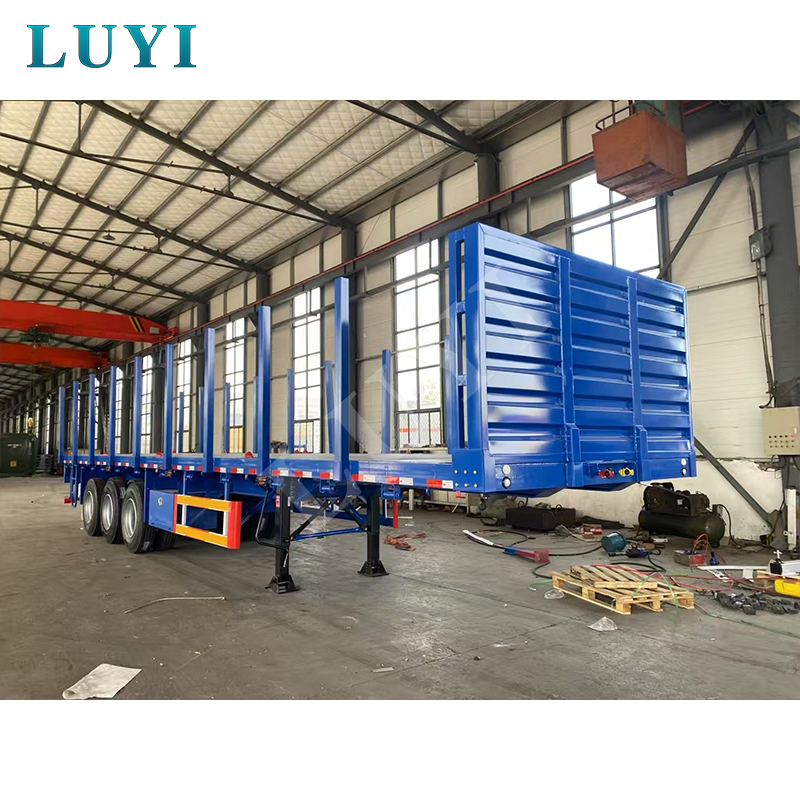
For rear dump trailers, manufacturing quality directly affects safety and uptime. Buyers should check the main beam structure, cargo box welding, bottom plate thickness, side plate reinforcement, axle installation, suspension alignment, hydraulic cylinder mounting, hinge strength, brake system assembly, paint coverage and pre-delivery tipping test.
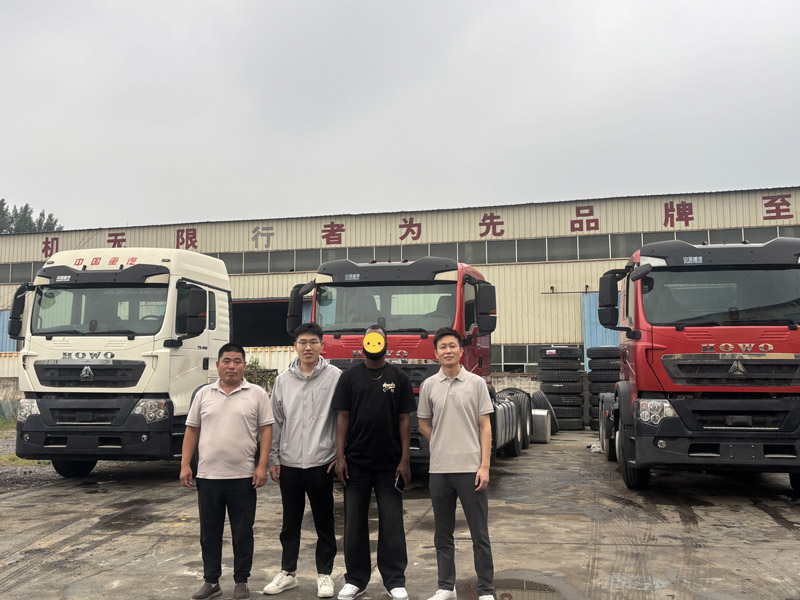
At the Luyi Auto factory, buyers can discuss material selection, frame design, body structure, welding process, hydraulic system layout and final inspection requirements before production. This is important because rear dump trailers operate under repeated lifting, heavy impact loading and harsh unloading environments.
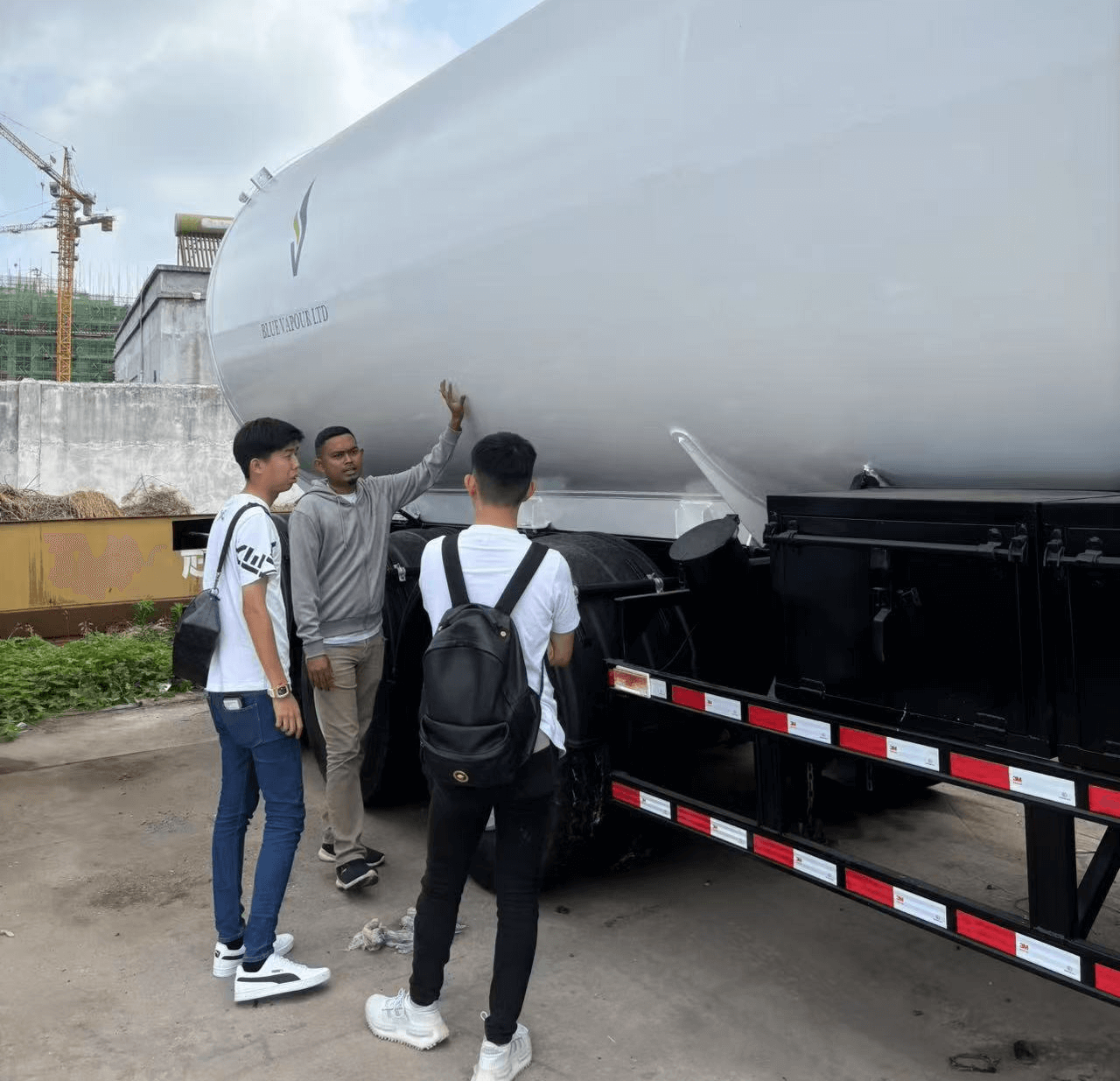
Luyi Auto’s technical and export service team can support buyers with configuration review, cargo analysis, tractor matching, shipping planning, documentation and after-sales communication. For international procurement, this reduces the risk of receiving a trailer that looks correct on paper but does not match the real operating route.
Case studies help buyers evaluate how trailer specifications are matched to real road conditions and transport tasks. In Luyi Auto’s Kyrgyzstan 4-Axle Dump Trailer case study, the customer needed trailers for mountain roads, gravel sections and bulk material hauling, which made the four axle configuration and reinforced design especially relevant.
For African construction and mining conditions, the Uganda 4-Axle Dump Trailer case study shows how payload, durability and harsh site conditions affect trailer configuration. Buyers with heavier mining requirements can also review the Ghana 5-Axle Rear Tipping Dump Semi-Trailer case study to compare how higher axle count may support more demanding bulk hauling operations.
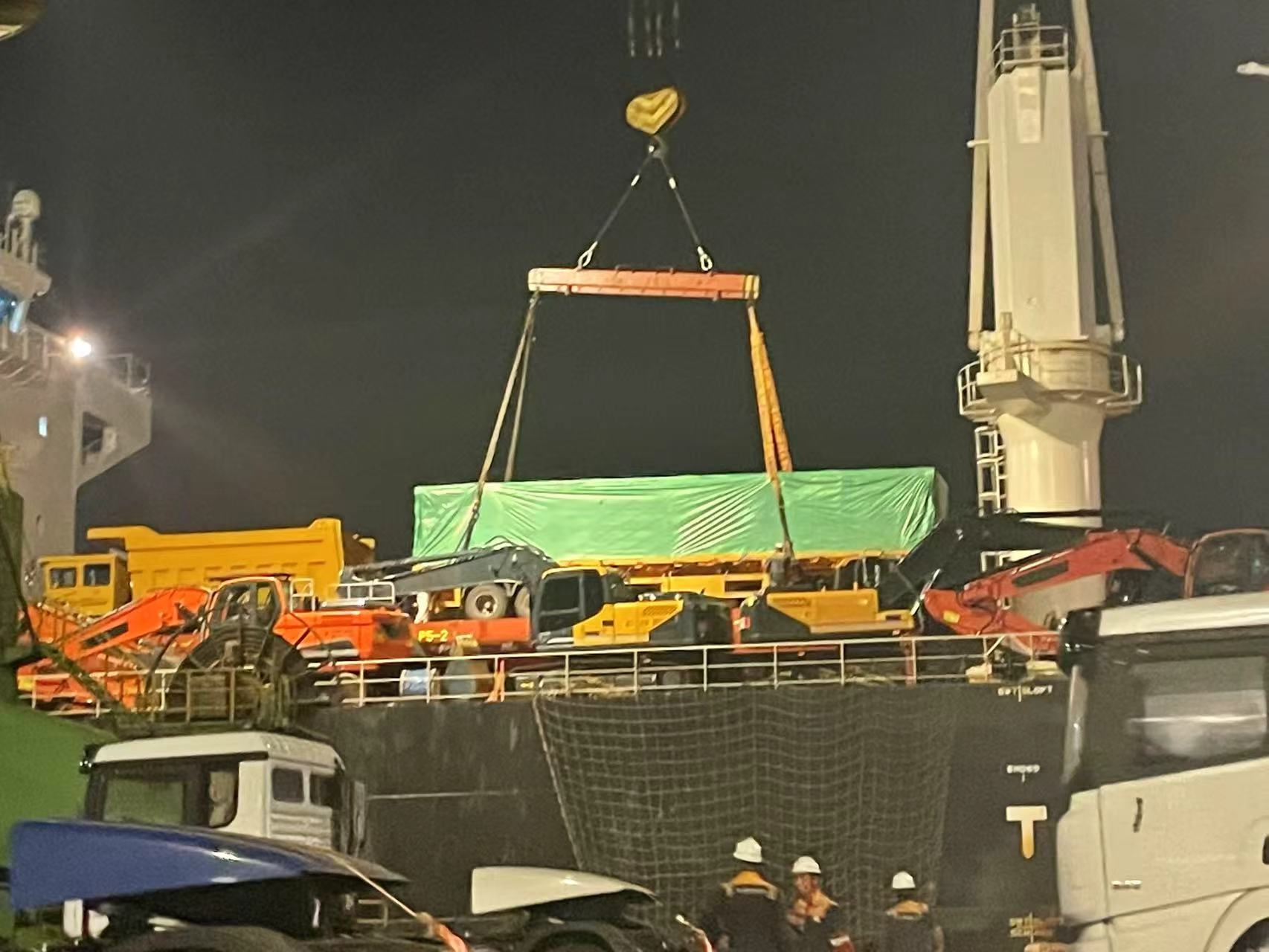
Four axle rear dump trailers are commonly exported by bulk carrier, RO-RO vessel or other project-based shipping methods depending on destination, order quantity and trailer size. Before shipment, the trailer should be inspected for hydraulic function, brake performance, lighting, paint protection, accessory packing and document completeness.
For black-painted trailers, buyers should also confirm whether additional marine protection is needed for ocean transport, especially when shipping to humid, coastal or high-salt environments. If several trailers are shipped together, proper loading and securing plans can reduce paint damage and component risk during long-distance delivery.
It is commonly used for sand, gravel, coal, ore, slag, overburden, soil, aggregates, construction waste and some agricultural bulk materials. The correct cargo box size and structure should be selected according to material density and discharge behavior.
Common working configurations include 50T, 60T and 80T, while heavier designs can be customized. The final payload should be based on cargo density, legal axle load, road condition, tractor capacity and the buyer’s daily transport cycle.
A U-shaped box usually discharges sand, gravel, coal and ore more smoothly and leaves less residue. A rectangular box may provide more volume and can be practical for certain materials. The better choice depends on cargo type, unloading site and maintenance preference.
Black polyurethane paint is often selected for fleet appearance, dust resistance and harsh working environments. For mines, coastal areas or long-term outdoor use, buyers should also consider anti-rust primer and additional corrosion-resistant coating.
Yes, if the frame, suspension, tires and braking system are selected correctly. For mining roads, quarry roads and construction sites, mechanical suspension and reinforced structure are usually recommended.
Unloading speed depends on hydraulic cylinder specification, pump performance, lifting angle, material flow and site condition. Buyers with high-frequency unloading requirements should discuss hydraulic system details before production.
Provide cargo type, material density if known, target payload, cargo box volume requirement, road condition, unloading site condition, tractor model, destination country, axle load regulations and expected quantity.
Procurement note: A four axle rear dump semi trailer should be configured around real material density and real route conditions. The most profitable trailer is not always the largest one—it is the one that carries legal payload safely, unloads efficiently and stays reliable under daily work.
If your fleet transports ore, coal, gravel, sand, aggregates, slag, construction waste or industrial bulk materials, Luyi Auto can help you compare payload capacity, cargo box shape, axle layout, suspension type, hydraulic system, coating and export configuration according to your actual operating conditions.
You can send your trailer requirements or contact Luyi Auto to receive a configuration-based quotation for your four axle black rear dump semi trailer project.