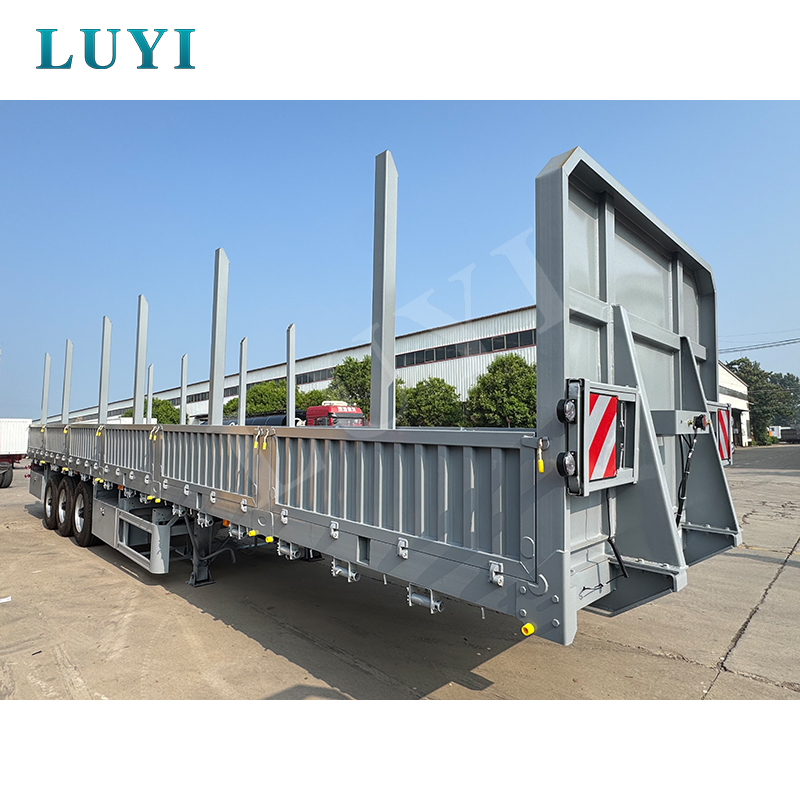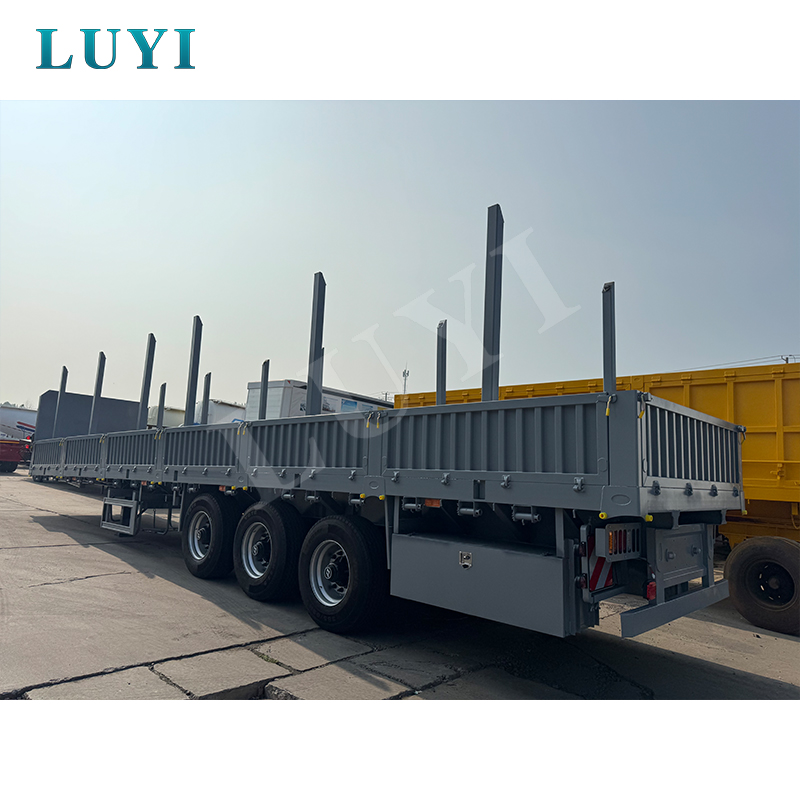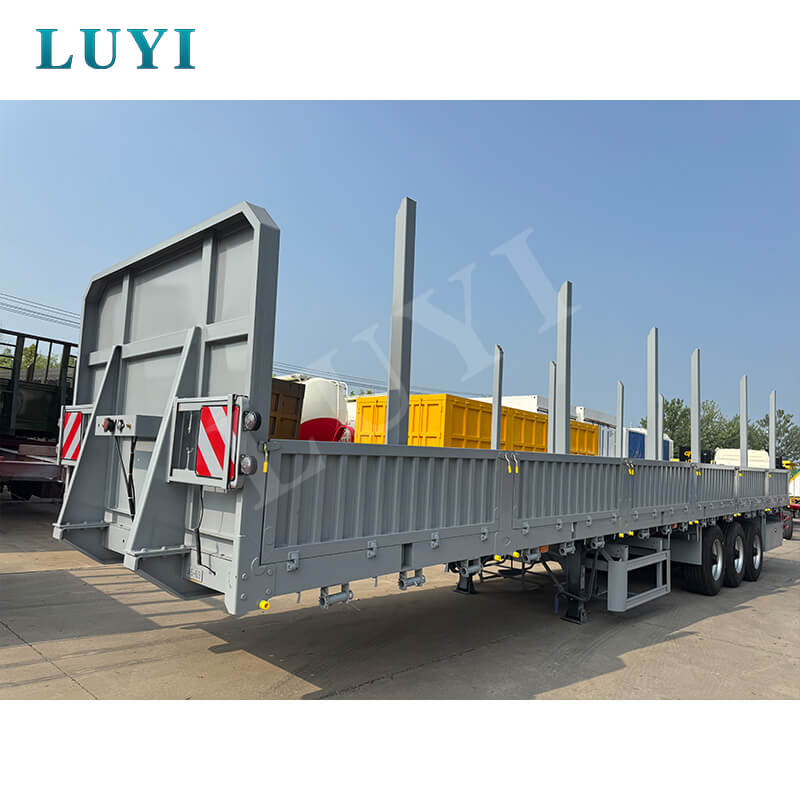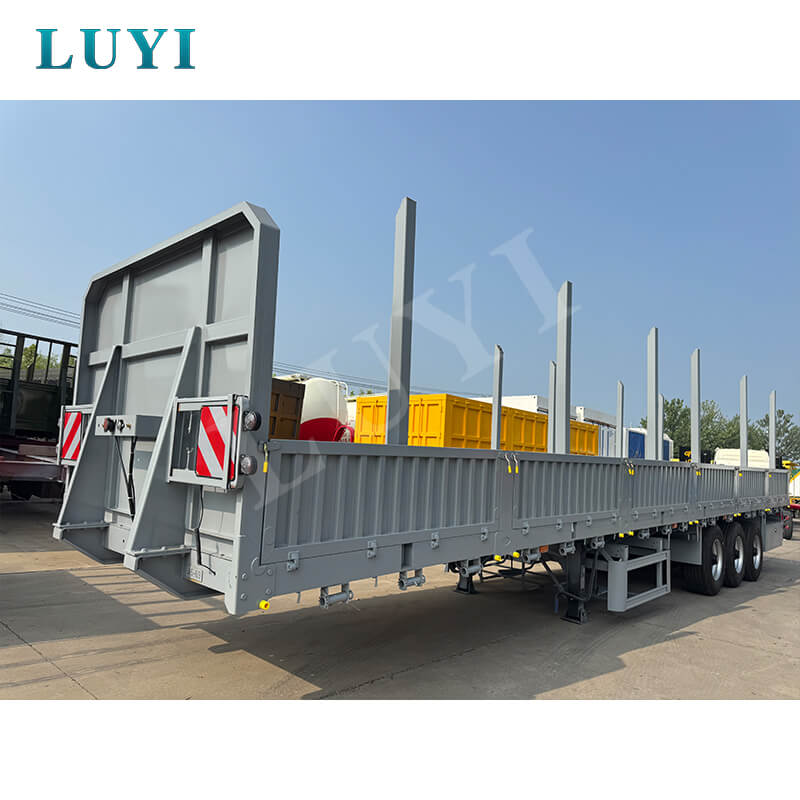

A three-axle side wall semi-trailer is designed for buyers who need one trailer to handle multiple cargo types: bulk goods, bagged materials, steel, timber, agricultural products, palletized freight, machinery parts and even container transport when twist locks are added. Compared with a plain flatbed trailer, the side walls help keep cargo contained during road transport. Compared with a fully enclosed trailer, the open structure keeps loading flexible for forklifts, cranes and side access operations.
For international fleet owners, the key value of a side wall trailer is not only capacity. The right trailer should match your cargo density, route conditions, loading method, local axle load limits, tractor compatibility and maintenance environment. Luyi Auto manufactures sidewall semi trailers for logistics, construction material delivery, agricultural distribution, port transport and mixed freight operations, with customized side wall height, axle, suspension, tire, brake and cargo securing options.
A three-axle side wall semi-trailer is a semi-trailer equipped with three axles and side panels along the cargo platform. The side walls can be fixed, detachable, folding or openable depending on the buyer’s cargo and loading process. The trailer is pulled by a tractor through the fifth wheel and kingpin system, while landing gear supports the trailer when it is parked or disconnected.
The three-axle layout helps distribute cargo weight across the rear axle group, improving road stability and reducing concentrated stress on the frame, tires and suspension. For medium- and long-distance transport, this configuration is commonly selected by buyers who need better load distribution than a 2-axle trailer but do not require the heavier cost and turning radius of a 4-axle or 5-axle unit.
Luyi Auto’s 3 Axle Open Side Wall Semi Trailer is a useful reference model for buyers who need a 60-ton rated trailer for 20ft/40ft containers, construction materials, agricultural products, steel, palletized goods and general bulk cargo.
Construction material suppliers and contractors often use side wall semi-trailers to transport cement bags, steel bars, lumber, stone, bricks, pipes, scaffolding parts and small machinery. Detachable or openable side walls make forklift loading easier at busy construction sites, especially when cargo must be loaded from the side rather than only from the rear.
In agricultural transport, side wall trailers are used for grain, feed, fertilizer, fresh produce, seed bags and farm equipment. Higher side walls help reduce cargo spillage, while mechanical suspension and durable tires are often preferred for rural roads, farm access roads and mixed paved/unpaved routes.
Industrial logistics buyers use these trailers for pallets, machinery parts, steel coils, packaged goods, coal, ore, spare parts and production materials. For factory-to-warehouse or warehouse-to-port operations, the open side access can reduce loading time and improve trailer utilization across different cargo types.
For logistics fleets, side wall trailers are useful when daily cargo changes frequently. One trip may involve bagged cement, the next trip may involve cartons, timber, pallets or machinery parts. This makes the trailer practical for freight companies that cannot justify using a separate vehicle for every cargo category.
When side walls are removed or opened, some side wall trailers can operate similarly to a flatbed trailer. With proper twist locks, they can also support 20ft or 40ft container transport. Buyers who mainly transport containers may compare this solution with a dedicated flatbed semi trailer, while buyers handling mixed cargo may prefer side wall flexibility.
The following specification points are commonly reviewed when selecting a three-axle side wall semi-trailer. Exact configuration should be confirmed according to cargo type, payload target, route condition and destination market rules.
| Specification Item | Common Configuration Range | Buyer Consideration |
|---|---|---|
| Trailer Type | Three-axle side wall / dropside / stake semi-trailer | Suitable for bulk cargo, bagged goods, construction materials, agricultural cargo, pallets and mixed freight. |
| Load Capacity | Commonly 40–60 tons; reinforced models can be customized up to higher payloads | Choose according to cargo density, legal axle load, road conditions and tractor capacity. |
| Overall Length | Approx. 11,000–13,500 mm or customized | Longer platforms support more cargo volume but may reduce maneuverability in tight yards. |
| Overall Width | Approx. 2,400–2,550 mm or customized by market | Must comply with destination road regulations and loading site requirements. |
| Side Wall Height | Approx. 600–1,500 mm, fixed, detachable or folding | Higher walls help contain bulk cargo; detachable walls improve loading flexibility. |
| Axles | 3 axles, commonly 13T or 16T per axle | Axle brand, rating and spacing affect payload, compliance and maintenance cost. |
| Main Beam | High-strength steel such as Q345B or Q460, depending on design | Main beam strength is critical for repeated heavy-load transport and rough road use. |
| Floor | Patterned steel plate, checker plate or customized surface | Anti-slip flooring improves safety for palletized cargo, bagged cargo and forklift operation. |
| Suspension | Mechanical leaf spring suspension or air suspension | Mechanical suspension is practical for rough roads; air suspension helps reduce vibration for sensitive cargo. |
| Tires | 12R22.5, 12.00R22.5, 315/80R22.5 or market-specific options | Select according to axle load, route surface, heat, speed and local replacement availability. |
| Braking System | Dual-line air brake, ABS or EBS depending on market requirements | Brakes should match payload, road gradients and destination compliance rules. |
| Kingpin | 50# or 90# options | Must match the tractor’s fifth wheel height and expected gross combination weight. |
| Surface Protection | Sandblasting, anti-rust primer, topcoat and optional protective wax | Important for humid, coastal, dusty or long-distance export environments. |
Before confirming the trailer, buyers should identify the main cargo type. Steel, stone and construction materials require stronger frame and floor reinforcement. Grain, feed and fertilizer may require higher side walls and better anti-spillage design. Pallets and cartons may need easier forklift access and practical tie-down points. Mixed freight buyers should choose a configuration that balances strength, volume and loading flexibility.
Side wall height should not be selected only by appearance. Low side walls are practical for palletized goods, steel and general cargo. Higher side walls are better for loose bulk goods, agricultural cargo and bagged materials. If loading methods change often, detachable or folding side walls may reduce loading time and improve daily efficiency.
A reinforced trailer may be structurally capable of carrying heavy cargo, but legal payload depends on local axle load limits, bridge restrictions, road rules and permits. Buyers should confirm destination regulations before selecting 60-ton, 80-ton or heavier configurations. This is especially important for cross-border transport and long-distance regional logistics.
Mechanical leaf spring suspension is widely used for construction, agriculture and rough-road transport because it is durable, simple and easier to repair. Air suspension is more suitable for long highway routes, fragile cargo or buyers who need smoother ride quality. The correct choice depends on road surface, maintenance resources and cargo sensitivity.
The trailer should match the buyer’s tractor before production. Important details include fifth wheel height, kingpin size, braking interface, electrical connector, tractor horsepower and gross combination weight. A mismatch may cause coupling difficulty, poor load balance, unsafe braking or unnecessary modification after delivery.
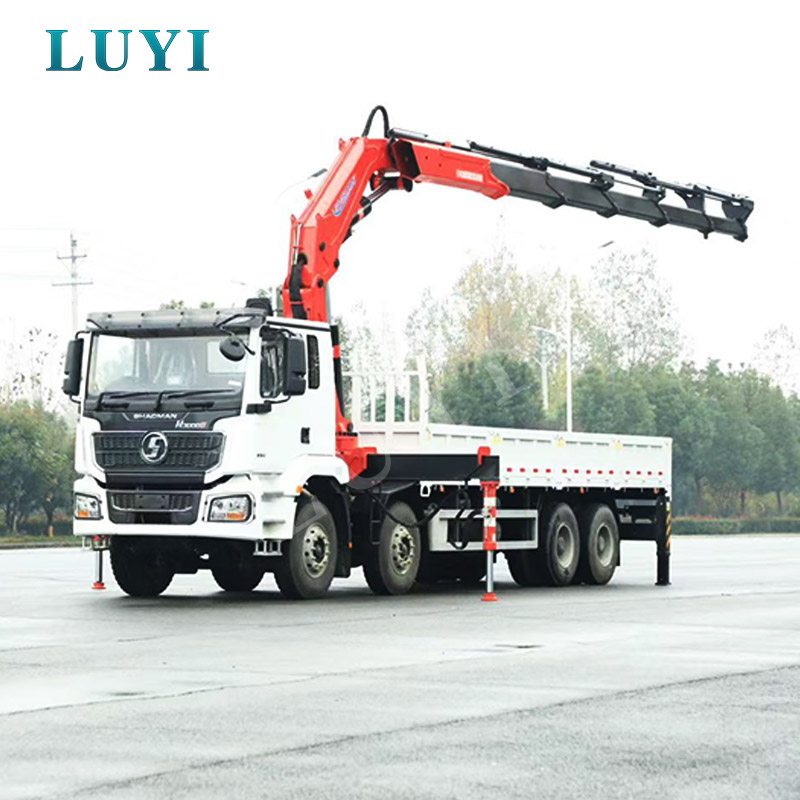
Forklift loading, crane loading and manual loading all require different trailer details. If the trailer is loaded from both sides, side wall opening structure and locking system become important. If cargo is loaded by crane, the buyer should confirm lashing points, floor strength and side wall clearance. If the trailer works in narrow yards, turning radius and axle layout should also be considered.
A side wall trailer is usually better when cargo needs containment, such as bagged cement, grain, produce, cartons, construction materials and loose bulk goods. The side walls reduce the risk of cargo movement and spillage during transport.
A flatbed trailer is usually better when the buyer mainly moves containers, large machinery, steel structures, pipes or oversized cargo that requires completely open access. For fleets that handle both general cargo and containers, a side wall trailer with removable panels and optional twist locks can provide a more flexible middle ground.
Buyers carrying large-volume light cargo may also compare Luyi Auto’s high side cargo trailer or 30–60 tons high fence semi trailer before finalizing the configuration.
A three-axle side wall semi-trailer can be customized according to cargo type, working environment, destination regulations and fleet operating habits. Common customization options include:
For heavier or larger-volume transport, buyers may compare the 80 Sidewall Semi-Trailer and the 4 Axle Side Wall Semi-Trailer to decide whether a 3-axle model is enough for the route and payload requirement.
For international B2B buyers, side wall trailer quality should be evaluated through both specification and production control. Important inspection points include main beam welding, cross member layout, side wall hinge strength, locking mechanism, floor flatness, axle installation, suspension alignment, brake response, lighting function, paint coverage and pre-delivery inspection records.
At the Luyi Auto factory, buyers can discuss steel selection, frame structure, welding process, side wall design, suspension matching, brake configuration, anti-rust treatment and export packing before production. This helps reduce the risk of receiving a trailer that looks acceptable in a quotation but does not match daily operating conditions.
Luyi Auto’s technical and export service team can also support buyers with configuration review, cargo analysis, tractor matching, shipping planning, spare parts discussion and after-sales communication. For overseas procurement, this service is especially valuable when buyers operate in markets with rough roads, limited maintenance resources or mixed cargo requirements.
Side wall semi-trailers are commonly shipped by RO-RO vessel, bulk carrier or flat rack depending on trailer size, order quantity and destination port. Before shipment, small accessories should be packed and fixed securely. The trailer body should receive anti-rust protection to reduce corrosion risk during ocean transport, especially for humid or coastal destinations.
Buyers should confirm destination port conditions, unloading equipment, customs documentation, import requirements and inland transport arrangements before shipment. For batch orders, loading method and shipping plan can affect total landed cost, delivery schedule and paint protection during long-distance transport.
Real case references help buyers judge whether a supplier understands actual operating conditions. In Luyi Auto’s DRC side wall semi trailer case study, the customer needed trailers for rough mining routes, heavy payloads and mixed cargo transport. The solution focused on reinforced frame structure, heavy-duty suspension, three-side removable walls and improved anti-corrosion protection.
For African logistics and regional freight operations, Luyi Auto’s 3-axle sidewall semi-trailer delivery to Gabon is another useful reference for buyers evaluating side wall trailer applications in overseas transport markets.
It is suitable for construction materials, bagged cement, steel, timber, grain, feed, fertilizer, palletized goods, packaged freight, machinery parts and mixed bulk cargo. With optional twist locks, it can also support 20ft and 40ft container transport.
Most buyers choose 40–60 tons depending on cargo and route. Reinforced models can be customized for heavier cargo, but the final payload should follow local axle load limits, road conditions and tractor capacity.
Fixed side walls are practical for stable, repeated cargo types. Detachable or folding side walls are better when buyers need faster side loading, oversized cargo flexibility or occasional flatbed-style operation.
Mechanical suspension is durable, easier to repair and suitable for rough roads, rural logistics and construction material transport. Air suspension is smoother and more suitable for fragile cargo or long highway routes, but it requires stronger maintenance support.
Yes, if the trailer is equipped with suitable container twist locks. Buyers should confirm whether they need to carry 20ft containers, 40ft containers or mixed cargo before production.
Provide cargo type, target payload, cargo density if known, side wall height requirement, loading method, road conditions, tractor model, destination country, local regulation requirements, container transport needs and expected quantity.
Procurement note: A good side wall semi-trailer is not simply the model with the highest side wall or the lowest price. It should match the cargo, route, loading method, legal payload and maintenance environment of the buyer’s real daily operation.
If your fleet transports construction materials, agricultural cargo, pallets, bagged cement, steel, timber, containers or mixed general freight, Luyi Auto can help you compare side wall height, axle rating, suspension type, tire model, braking system, cargo securing design and export configuration according to your actual operating conditions.
You can send your trailer requirements or contact Luyi Auto to receive a configuration-based quotation for your three-axle side wall semi-trailer project.