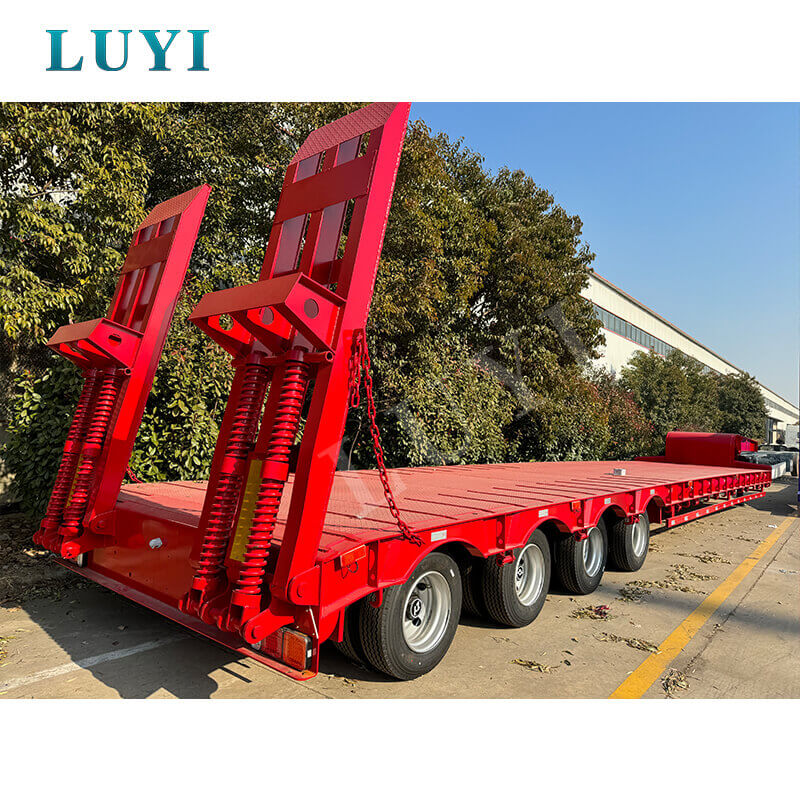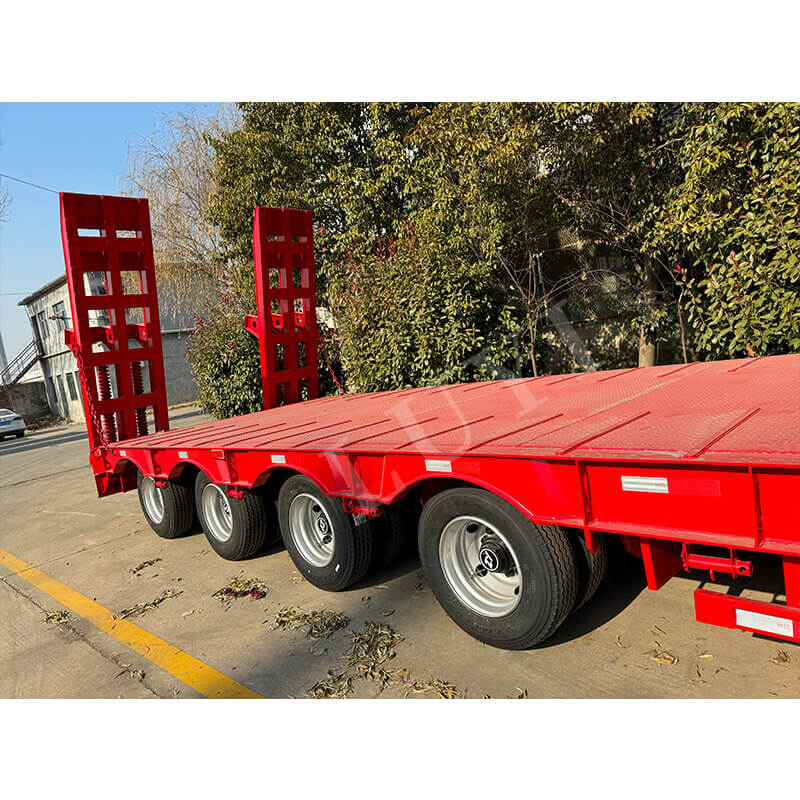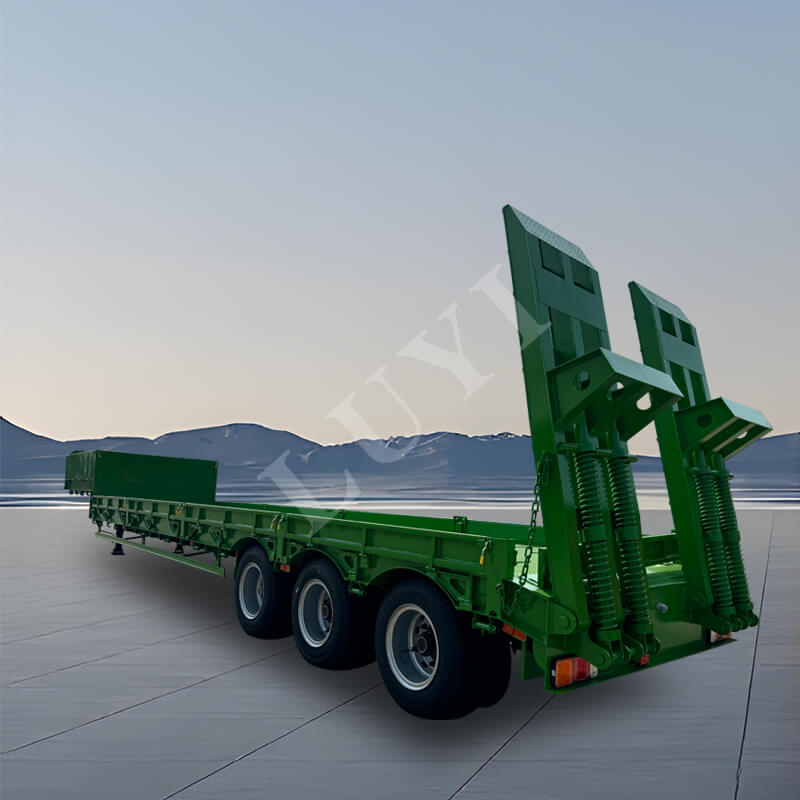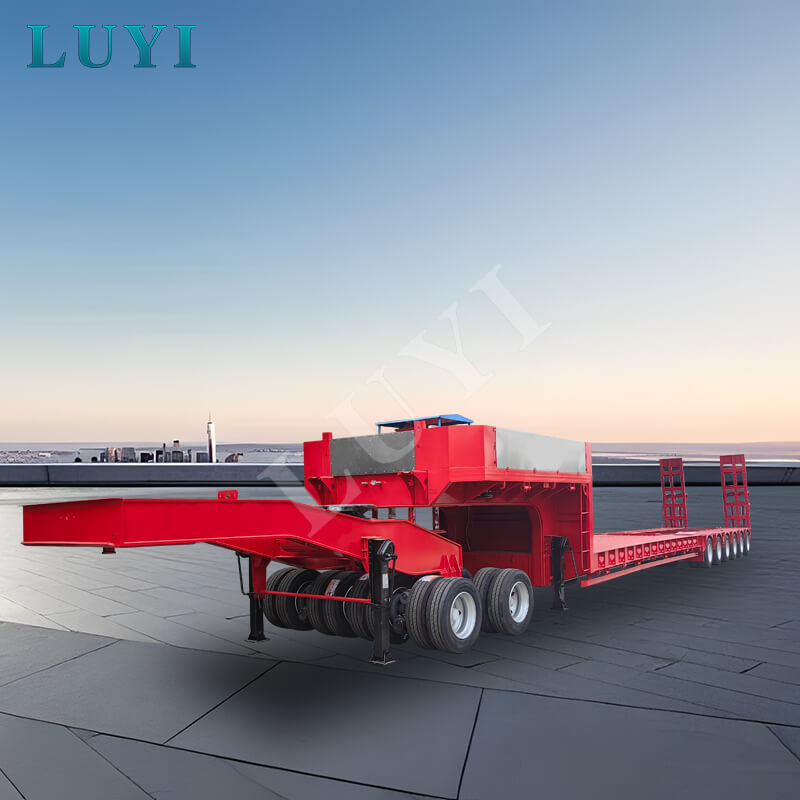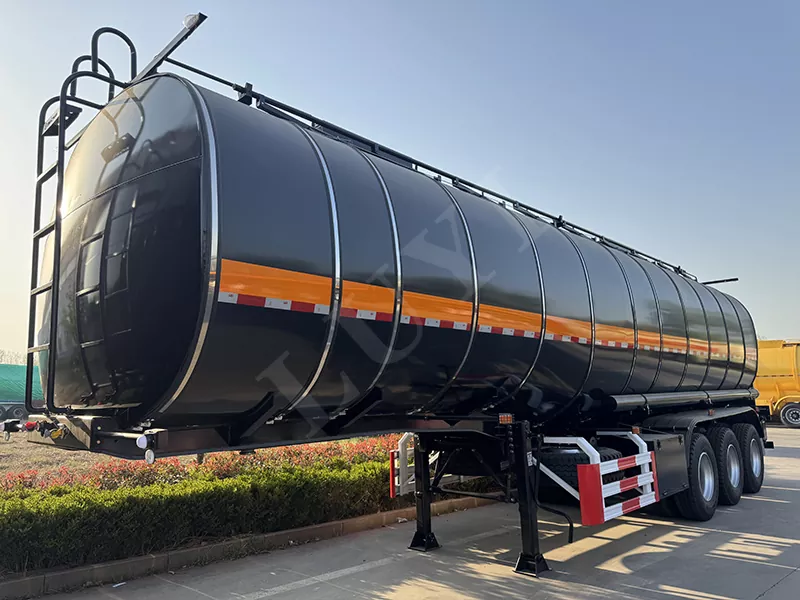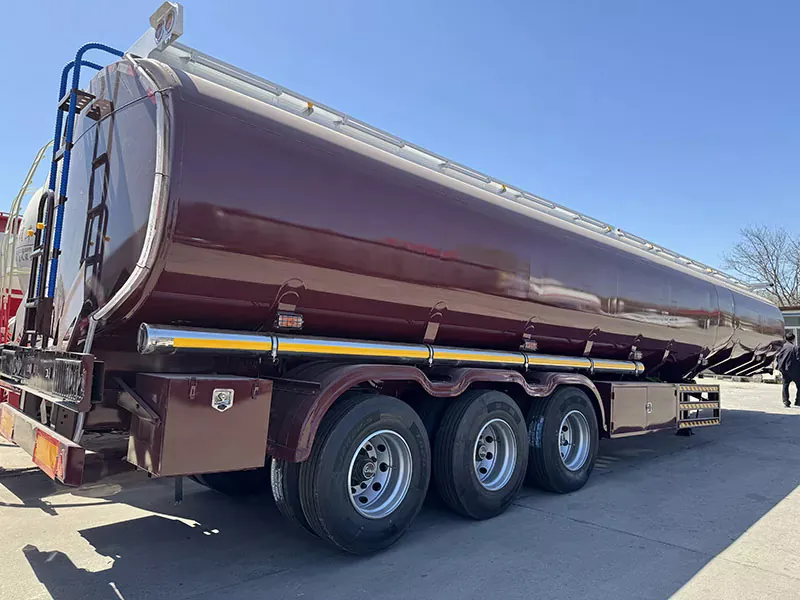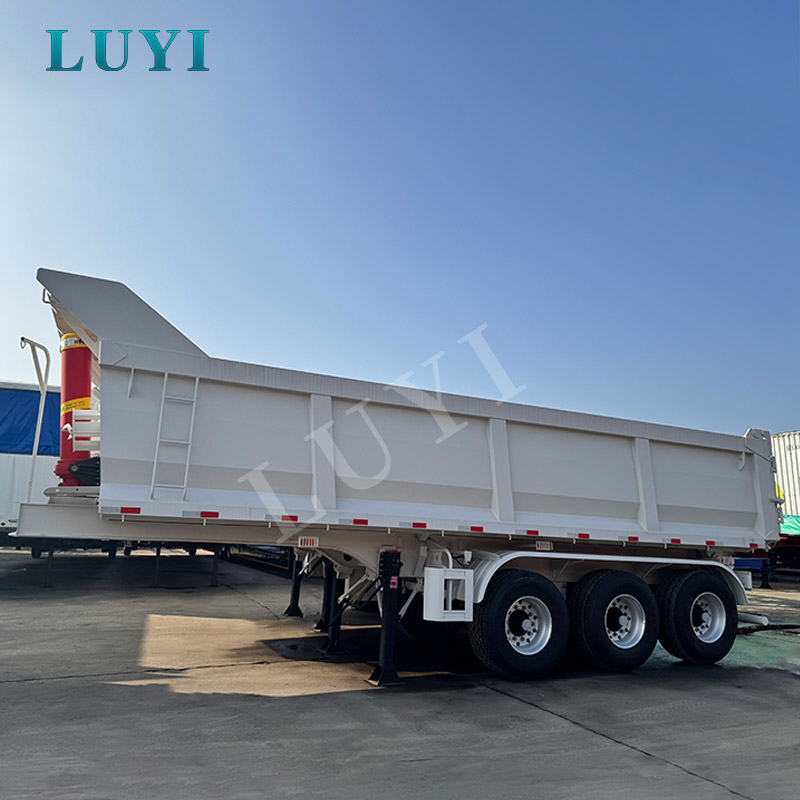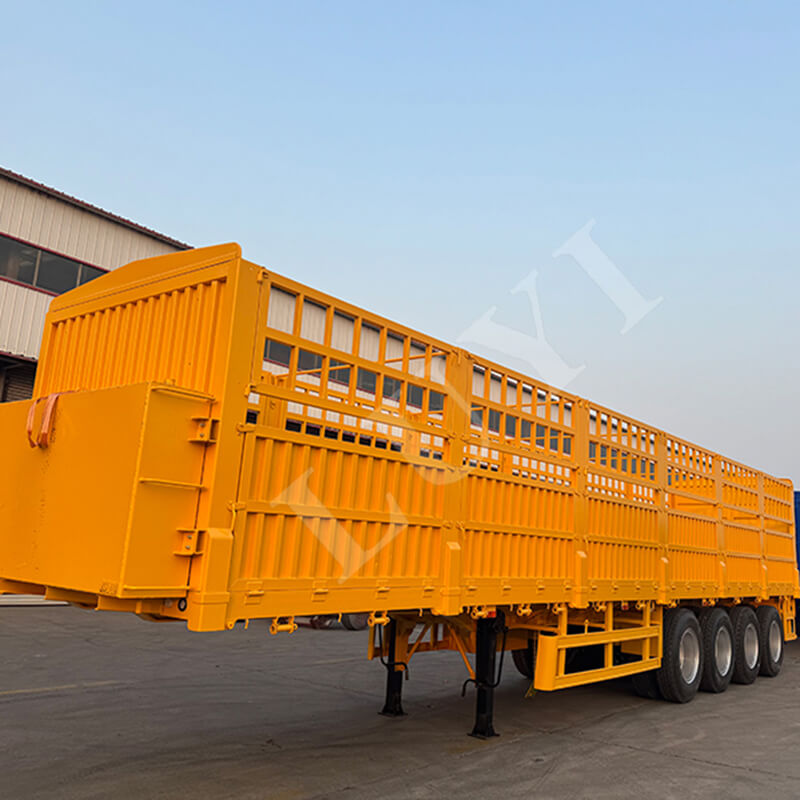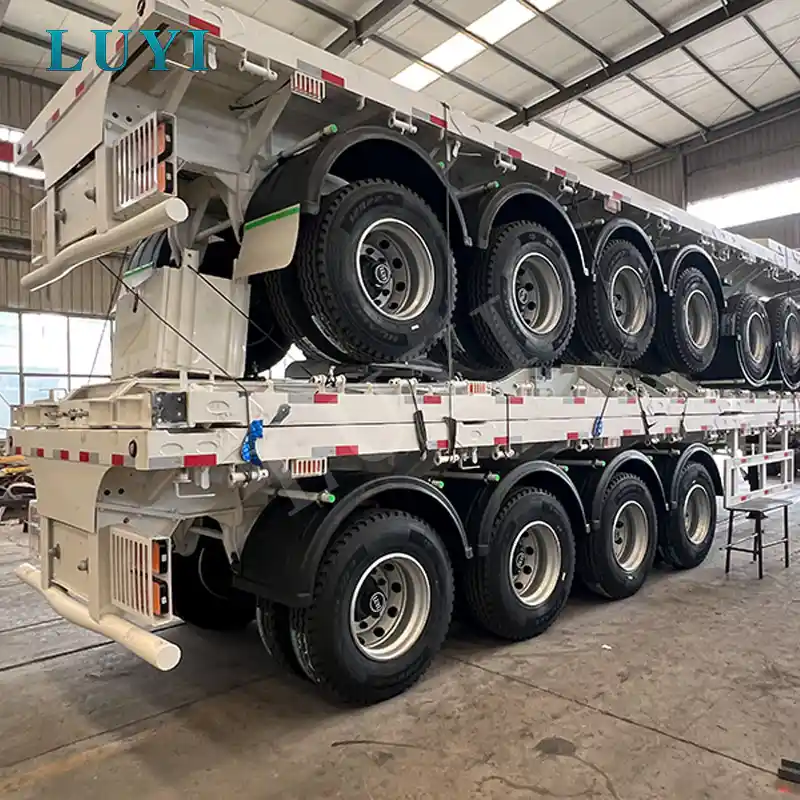

A flatbed semi trailer is one of the most practical open-deck transport solutions for international freight, construction logistics, port operations and project cargo movement. Because it has no fixed side walls or roof, cargo can be loaded from the side, rear or top by forklift, crane or lifting equipment. This makes it suitable for freight that is too long, too heavy or too irregular for enclosed trailers.
For fleet owners and project buyers, choosing the right flatbed trailer is not only about price. The final configuration should match the cargo weight, cargo length, loading method, route conditions, tractor compatibility and destination market regulations. Luyi Auto supplies a wide range of flatbed semi trailers for container transport, steel logistics, machinery transport and general cargo operations.
A flatbed semi trailer is a heavy-duty trailer with an open platform structure. It is usually connected to a tractor through a kingpin and fifth wheel system. Compared with enclosed trailers, the open platform allows faster loading and unloading of large cargo, especially when cranes or forklifts are used at ports, warehouses, construction sites or industrial yards.
In real procurement discussions, buyers usually ask three questions first: what cargo will the trailer carry, how rough the route will be, and whether the trailer must handle containers, machinery, steel or mixed cargo. These answers determine the most important configuration details, including payload capacity, axle quantity, deck structure, suspension type, tire model and cargo securing system.
Flatbed trailers are widely used for transporting 20ft and 40ft containers between ports, inland depots, factories and logistics hubs. For container work, the trailer should be equipped with properly positioned twist locks to secure the container during road transport. Buyers who mainly handle containers should confirm container size, lock quantity, route distance and loading frequency before placing an order.
Construction contractors often use flatbed trailers to move steel beams, prefabricated components, concrete parts, pipes, loaders, small excavators and site materials. For heavier machinery or taller equipment, a lowbed semi trailer may be more suitable because its lower deck height improves loading stability and helps reduce overall transport height.
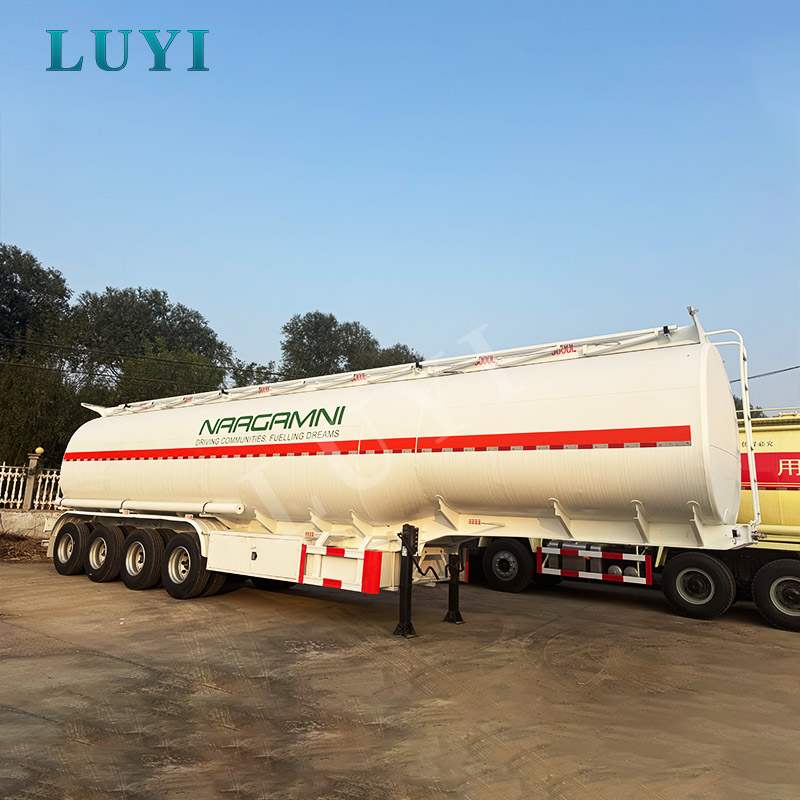
Industrial and mining projects often involve generators, transformers, tanks, structural steel, drilling equipment and machinery parts. These cargoes may not always be extremely heavy, but they often require strong load distribution, reliable tie-down points and a reinforced chassis to withstand repeated transport cycles on mixed road conditions.
Flatbed trailers are also used for timber, agricultural machinery, palletized goods, bagged cargo and seasonal transport. If the cargo needs partial side containment, a sidewall semi trailer can provide better cargo protection while still keeping flexible loading access.
Energy projects may involve drilling components, tanks, large steel sections or power equipment. For long or oversized loads, buyers should confirm whether a standard flatbed is enough or whether an extendable structure, multi-axle layout or special heavy-duty solution is required.
The specification of a flatbed trailer should be selected according to the actual job, not copied from a generic catalog. A trailer used for container shuttle service may require a different structure from a trailer used for construction machinery, steel coils or mining support equipment.
| Specification Item | Common Options | Buyer Consideration |
|---|---|---|
| Payload Capacity | Approx. 20–80 tons depending on design | Choose according to cargo weight, safety margin, axle load and road regulations. |
| Trailer Length | 40ft, 45ft, 48ft, 53ft or customized | Match container size, cargo length, local road rules and turning radius. |
| Axle Configuration | 2 axles, 3 axles, 4 axles or heavy-duty multi-axle design | More axles can improve load distribution but may increase cost, tare weight and maintenance. |
| Main Beam | High-strength steel structure, reinforced web and flange design | Critical for long-term resistance to bending, torsion and repeated heavy loading. |
| Deck Material | Steel plate, checker plate, timber deck or customized surface | Choose based on cargo type, anti-slip needs, corrosion exposure and repair convenience. |
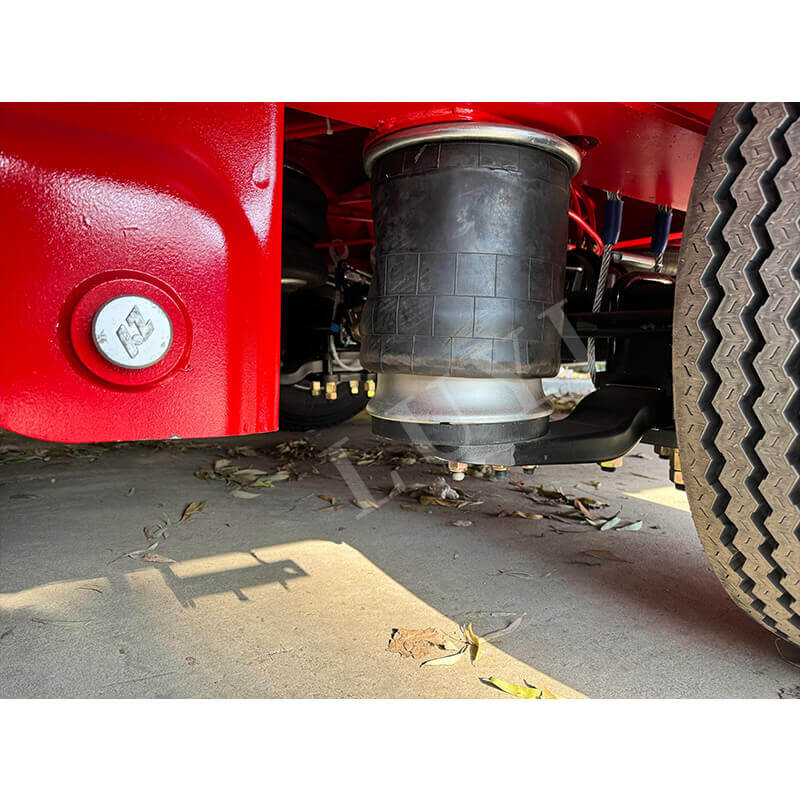
| Suspension | Mechanical suspension or air suspension | Mechanical suspension is common for tough road conditions; air suspension offers smoother highway transport. |
| Container Locks | 4, 8, 12 or customized lock positions | Required if the trailer is used for 20ft/40ft container transport. |
| Kingpin | 2 inch or 3.5 inch | Must match the tractor’s fifth wheel and expected loading condition. |
| Brake and Lighting System | Export-ready air brake and lighting configuration | Confirm destination market requirements before production. |
The most reliable configuration process starts with cargo information. Buyers should provide cargo type, maximum weight, length, width, loading method and transport frequency. For example, a fleet transporting 40ft containers every day needs a different configuration from a contractor occasionally moving machinery and steel components.
Road conditions directly affect suspension, tire, axle and chassis selection. Long-distance highway transport may prioritize air suspension and fuel efficiency, while construction sites, mining roads and rural routes usually require stronger mechanical suspension, reinforced structure and easier maintenance.
Before production, the trailer should be matched with the buyer’s tractor. Important details include fifth wheel height, kingpin size, air and electrical connector position, tractor power and expected gross combination weight. A mismatch can lead to unstable driving, uneven loading or premature wear.
Axle quantity should be selected according to payload, route rules and cargo center of gravity. For medium and heavy-duty cargo, many buyers choose a tri-axle flatbed structure. For heavier transport tasks, Luyi Auto also offers solutions such as the 3 axle 80 ton flatbed trailer and the heavy duty 4 axle 80T flatbed semi trailer.
A standard flatbed trailer is suitable for many general freight tasks, but not every route or cargo type can be handled by a standard design. Customization may be needed for longer decks, additional container locks, reinforced side beams, special deck surfaces, toolbox positions, spare tire carriers, widened platforms or destination-specific lighting and braking requirements.
For international B2B buyers, factory capability is part of the product. A flatbed trailer should be evaluated not only by catalog specifications, but also by the manufacturer’s welding process, steel selection, production consistency, anti-corrosion treatment, brake system assembly and pre-delivery inspection.
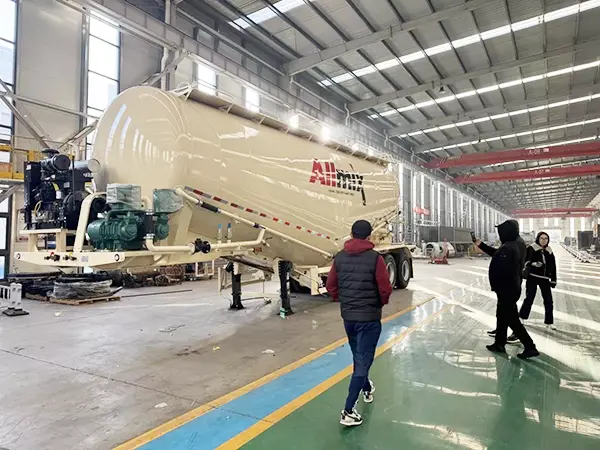
At the Luyi Auto factory, buyers can discuss frame structure, axle configuration, suspension type, deck design and export requirements before production. This is especially important for fleets operating in Africa, the Middle East, Latin America, Southeast Asia and other markets where road conditions, maintenance habits and cargo types may differ significantly.
The engineering and service team can also help buyers review practical details such as loading height, tie-down method, spare parts requirements, paint selection, shipping method and documentation needs.
Case studies are useful because they show how trailer specifications are selected for real customers, not only theoretical applications. For example, Luyi Auto’s Tanzania flatbed trailer case study shows how a customized flatbed trailer solution was developed for route conditions and mixed load requirements.
Another useful reference is the Bolivia 40ft flatbed trailer factory audit case, where buyers inspected manufacturing capability, quality control and customization details before moving forward with the project. For buyers comparing suppliers, these project details help verify whether the manufacturer can support real procurement decisions.
You can also explore more semi-trailer case studies to compare how different trailer types are used in logistics, construction, mining, agriculture and energy transport scenarios.
A flatbed trailer has a straight open platform and is commonly used for containers, steel, timber, machinery parts and general freight. A lowbed trailer has a lower deck height and is usually better for tall, heavy machinery such as excavators, loaders and bulldozers.
Yes. A flatbed trailer can transport 20ft and 40ft containers if it is equipped with suitable container locks. Buyers should confirm the required lock layout before production.
It depends on payload, route regulations and cargo distribution. A 2-axle trailer may fit lighter cargo, while 3-axle and 4-axle configurations are more common for heavier or long-distance transport tasks.
Mechanical suspension is widely used for rough road conditions because it is durable and easier to maintain. Air suspension can provide smoother transport for highway logistics and more sensitive cargo. The final choice should be based on route conditions and maintenance capability.
Yes. Platform length, axle layout, suspension, tire model, container locks, deck surface, toolbox, spare tire carrier, side protection and lighting system can be discussed according to cargo, route and destination market requirements.
To receive a practical recommendation, provide your cargo type, maximum payload, cargo dimensions, route conditions, tractor model, destination country, loading method and expected quantity.
Procurement tip: The best flatbed trailer is not always the heaviest or most expensive model. It is the configuration that safely matches your cargo, route, tractor and daily operating pattern.
If you are planning to purchase flatbed semi trailers for container transport, construction logistics, steel delivery, industrial cargo or mixed freight operations, Luyi Auto can help you review the required configuration before production. Share your cargo details, road conditions, destination market and expected quantity, and our team will recommend a practical solution based on your real transport needs.
Send your trailer requirements to Luyi Auto and request a customized flatbed semi trailer quotation for your project.