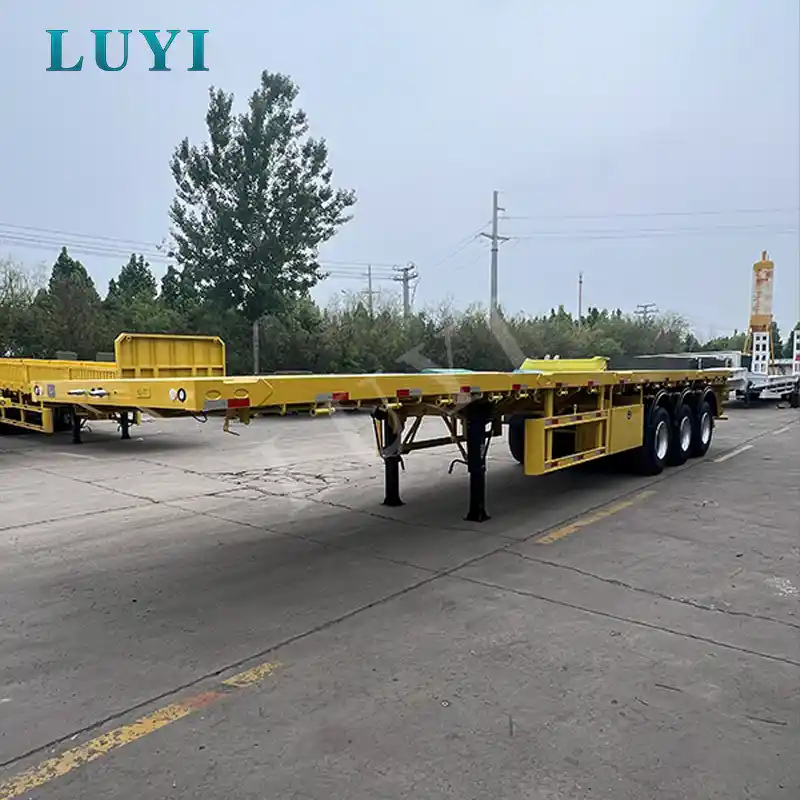
For heavy equipment transport, the choice between a removable gooseneck trailer, a lowboy trailer and an RGN trailer is not only about deck height or price. It directly affects loading efficiency, crane dependency, route compliance, maintenance cost and long-term fleet productivity.
Many buyers use the terms “lowboy trailer” and “RGN trailer” together, but in real heavy-haul operations they solve different problems. A removable gooseneck trailer is often preferred when machines can drive onto the deck by themselves, while a fixed gooseneck lowboy trailer is usually more practical for tall, heavy cargo loaded by crane or ramp. This guide explains the difference from a buyer’s point of view, so you can choose the right trailer based on cargo type, jobsite conditions, axle requirements and operating cost.
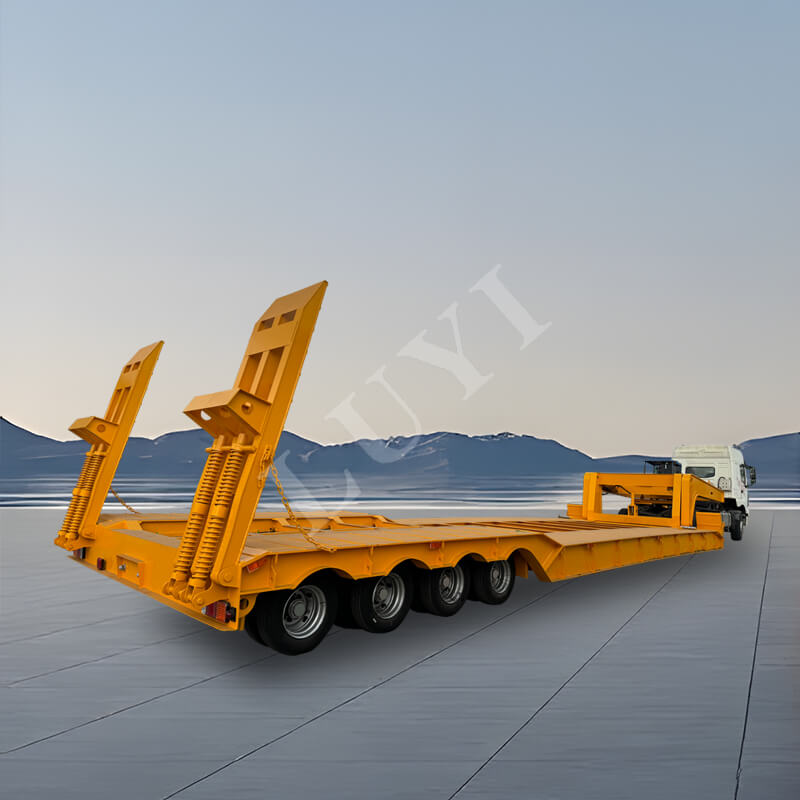
A removable gooseneck trailer, also called an RGN trailer, is a heavy-duty low deck trailer with a detachable front gooseneck. When the gooseneck is removed, the front of the trailer lowers to the ground, creating a loading path for self-propelled machines such as excavators, bulldozers, loaders, graders and mining equipment.
This design is valuable in remote construction sites, mining areas, oil and gas projects, agricultural operations and infrastructure jobs where cranes may be unavailable, expensive or difficult to schedule. Instead of waiting for lifting equipment, the machine can drive directly onto the trailer deck, helping reduce loading time and improve project mobility.
For buyers who need this type of loading efficiency, Luyi Auto’s detachable gooseneck lowboy trailer is a relevant solution for heavy machinery and oversized equipment transport.
A lowboy trailer is a double-drop semi trailer with a low main deck designed to carry tall and heavy cargo while keeping the overall transport height under control. In many markets, “lowboy trailer” usually refers to a fixed gooseneck lowboy trailer, where the neck does not detach from the main deck.
Because the gooseneck is fixed, loading normally requires a crane, rear ramp, side ramp or other external loading equipment. This makes a lowboy trailer suitable for cargo that does not move under its own power, such as transformers, industrial tanks, stationary cranes, drilling equipment, large machinery components, road construction equipment and military cargo.
If your main requirement is low deck height, strong frame structure and heavy equipment transport rather than front self-loading, you can also review Luyi Auto’s lowbed semi trailer category for different axle and load-capacity options.
| Comparison Point | Removable Gooseneck Trailer / RGN Trailer | Fixed Gooseneck Lowboy Trailer |
|---|---|---|
| Loading Method | Front gooseneck detaches; equipment can drive onto the deck from the front | Usually requires crane, rear ramp, side ramp or loading platform |
| Best For | Self-propelled heavy machinery, remote jobsites, frequent loading and unloading | Tall, heavy, non-mobile cargo and projects with crane access |
| Typical Cargo | Excavators, bulldozers, loaders, graders, mining machines, agricultural equipment | Transformers, drilling rigs, industrial equipment, tanks, stationary machines |
| Loading Efficiency | Faster when self-loading equipment is available | Efficient when crane or ramp support is already planned |
| Structure Complexity | More complex because of detachable neck and hydraulic or mechanical mechanism | Simpler fixed structure, easier routine maintenance |
| Initial Cost | Usually higher due to detachable gooseneck system and stronger configuration options | Usually lower for comparable capacity, depending on axle and deck design |
| Long-Term Cost Logic | Can reduce crane rental and waiting time if self-loading is frequent | Cost-effective when cargo is crane-loaded and self-loading is not required |
| Customization Focus | Gooseneck type, hydraulic system, axle number, extendable deck, deck reinforcement | Deck height, axle number, ramps, suspension, cargo securement and frame strength |
Choose a removable gooseneck trailer when loading independence is more important than the lowest initial purchase price. In real operations, the RGN trailer is especially useful when equipment needs to move between multiple jobsites and waiting for cranes would delay work.
In these conditions, the higher purchase cost of an RGN trailer may be offset by better loading efficiency and lower dependency on third-party lifting equipment.
Choose a lowboy trailer when the cargo is tall, heavy and usually loaded by crane or ramp. A fixed gooseneck lowboy trailer is often selected by buyers who want a strong, low-deck structure with simpler maintenance and lower initial cost.
For many fleets, the lowboy trailer remains a practical heavy-haul solution because it combines low loading height, strong frame design and relatively straightforward maintenance.
The right trailer should be selected according to cargo mobility, cargo height, loading environment, road condition and legal axle-load limits. In heavy equipment transport, a wrong trailer choice can lead to loading delays, permit issues, unsafe cargo height or unnecessary operating cost.
| Transport Scenario | Recommended Trailer Type | Reason |
|---|---|---|
| Excavators and bulldozers moving between construction sites | Removable gooseneck trailer / RGN trailer | Self-loading reduces crane dependency and improves site mobility |
| Transformers and industrial equipment loaded by crane | Lowboy trailer | Fixed low deck supports tall and heavy non-mobile cargo |
| Mining machinery in remote areas | RGN trailer | Useful when crane access is limited and equipment can drive onto the deck |
| Oil and gas drilling equipment | Lowboy trailer or RGN trailer | Depends on whether the cargo is self-propelled and how it will be loaded |
| Agricultural machines and large farm equipment | RGN trailer | Front loading is practical for large mobile machines |
| Oversized project cargo with special route permits | Customized lowboy or RGN trailer | Axle layout, deck length and load distribution should be engineered around the route |
Before purchasing a removable gooseneck trailer, lowboy trailer or RGN trailer, buyers should not only ask for the rated payload. The correct configuration depends on a combination of cargo size, working route, tractor compatibility and local transport regulations.
For project-specific requirements, Luyi Auto can support custom low bed trailer manufacturing based on cargo data, operating environment and local compliance needs.
Many trailer purchase problems happen before production starts. The issue is often not manufacturing quality alone, but incomplete technical confirmation during the quotation stage.
Professional heavy-haul trailers should be configured around real operating conditions. A trailer used for mining machinery in rough terrain may need different suspension, tires and frame reinforcement compared with a trailer used for urban transformer transport.
Buyers who operate across construction, mining, energy and infrastructure sectors should send detailed cargo and route information before requesting a quotation. This allows the trailer manufacturer to recommend a configuration that balances payload, safety, maintenance and long-term operating cost.
Heavy-haul trailers are load-bearing equipment, so buyers should evaluate more than the visible appearance. Frame material, welding process, axle assembly, suspension matching, hydraulic reliability, braking layout and surface treatment all affect long-term performance.
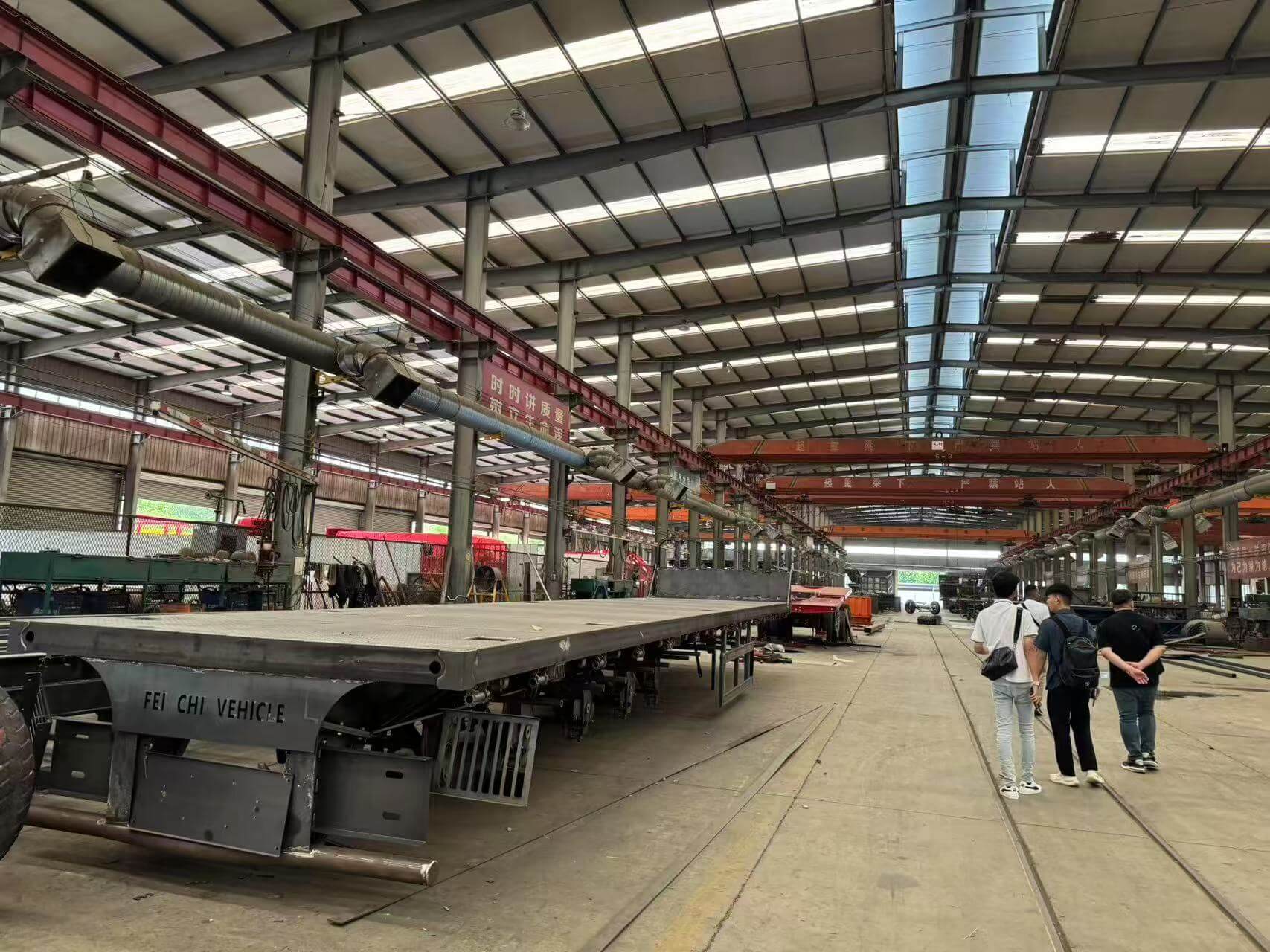
At Luyi Auto’s manufacturing facility, trailer production focuses on practical heavy-duty use, from raw material preparation and frame welding to assembly, painting, inspection and export delivery. For removable gooseneck trailers and lowboy trailers, special attention should be paid to the main beam, loading deck, gooseneck connection, axle alignment, braking system and hydraulic movement.
For overseas buyers, factory inspection records, production photos, loading videos and pre-shipment checks can provide stronger confidence than general marketing claims. These details help confirm whether the trailer is suitable for real project use after arrival.
There is no single “best” trailer for every buyer. The better choice depends on how your equipment is loaded, where it operates and how often the trailer is used.
If you are unsure which structure is right for your business, prepare your cargo weight, cargo dimensions, destination country, road conditions, tractor model and expected loading method. Luyi Auto can help you compare suitable trailer configurations and provide a practical quotation based on real transport requirements.
An RGN trailer is technically a type of low deck heavy-haul trailer, but in the industry it is usually discussed separately because its removable gooseneck allows front self-loading. A fixed lowboy trailer does not have this detachable neck function.
A standard fixed gooseneck lowboy trailer usually cannot self-load from the front. It normally requires a crane, ramp or loading platform. If self-loading is required, a removable gooseneck trailer is usually a better option.
For excavators, bulldozers and other self-propelled machines, an RGN trailer is often more efficient because the equipment can drive onto the deck after the gooseneck is detached.
A fixed gooseneck lowboy trailer usually has a simpler structure and lower routine maintenance requirements. A removable gooseneck trailer has more hydraulic or mechanical parts, so it requires more attention to the gooseneck system, cylinders, hoses and connection points.
Permits depend on cargo height, width, weight, axle load and local road regulations. Oversized or overweight transport usually requires permits, route planning and sometimes escort vehicles.
Please send cargo type, cargo weight, cargo dimensions, destination country, road condition, tractor model, loading method, required axle configuration and target quantity. You can submit these details through Luyi Auto’s inquiry page for a configuration-based recommendation.
A removable gooseneck trailer is usually the stronger choice for frequent self-loading of heavy machinery, especially in remote or changing jobsites. A lowboy trailer is often more cost-effective for tall, heavy, non-mobile cargo when crane or ramp loading is available. For professional buyers, the right decision should be based on cargo mobility, loading method, axle requirements, route regulations, maintenance capability and total operating cost.
To select the right trailer for your project, contact Luyi Auto with your cargo and route details. Our team can help you compare removable gooseneck trailer, lowboy trailer and RGN trailer configurations for safer, more efficient heavy equipment transport.
Copyright © 2026 Shandong Luyi Dedicated Vehicle Manufacturing Co., Ltd. All Rights Reserved. Links Sitemap RSS XML Privacy Policy