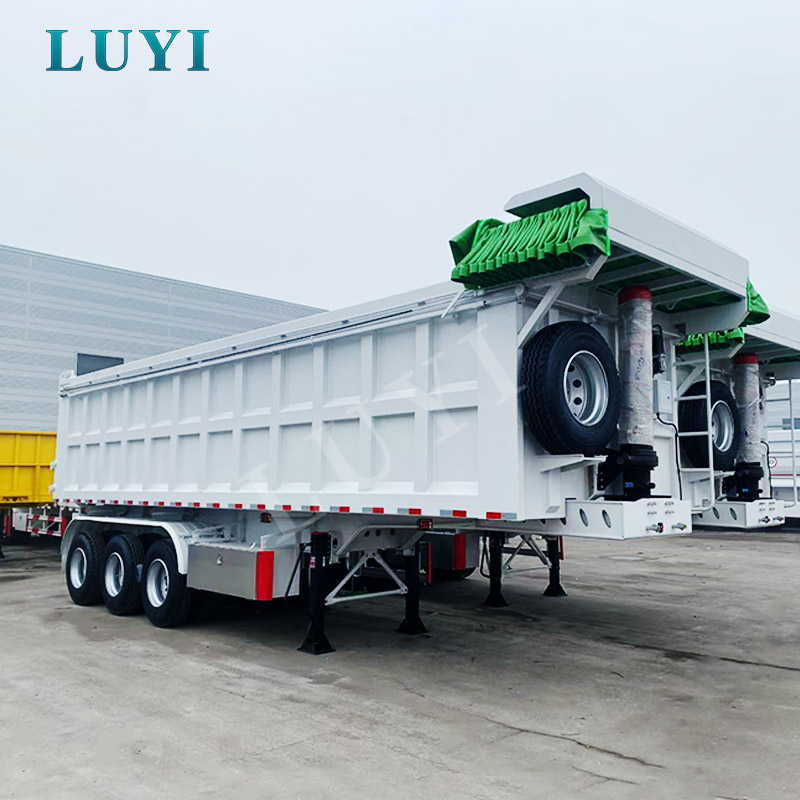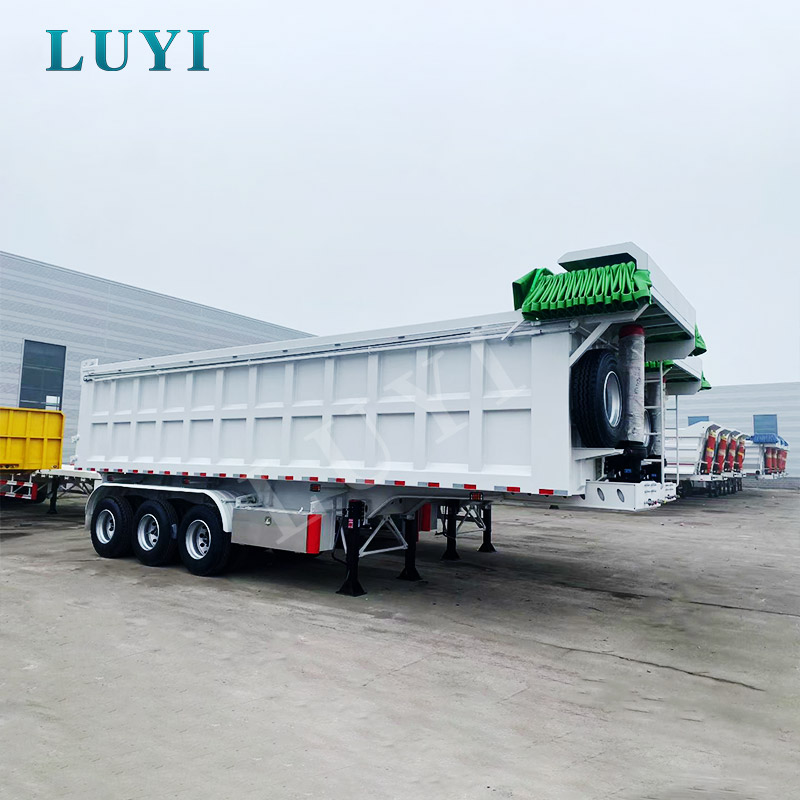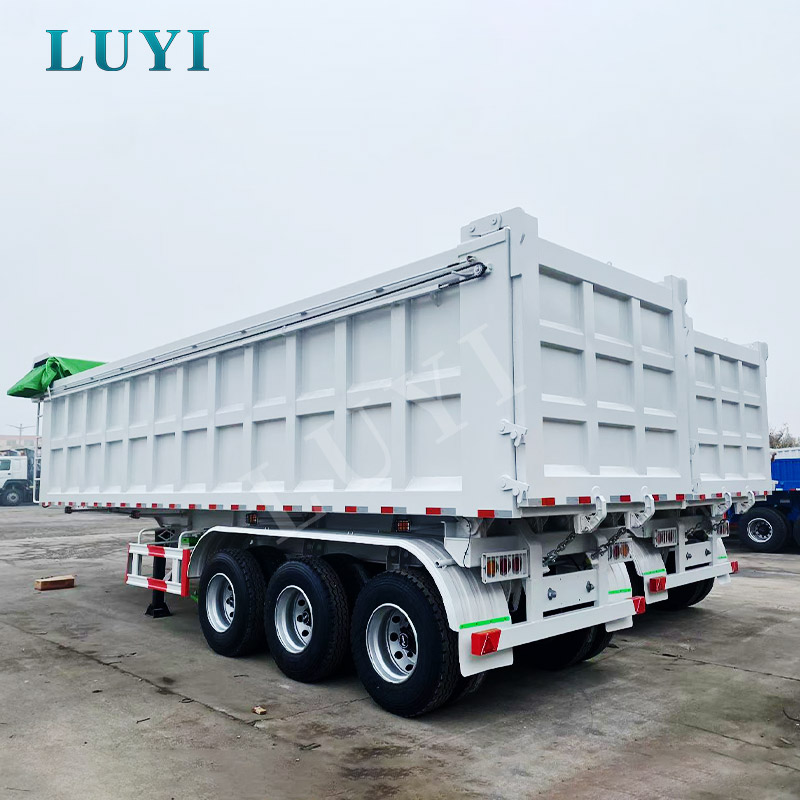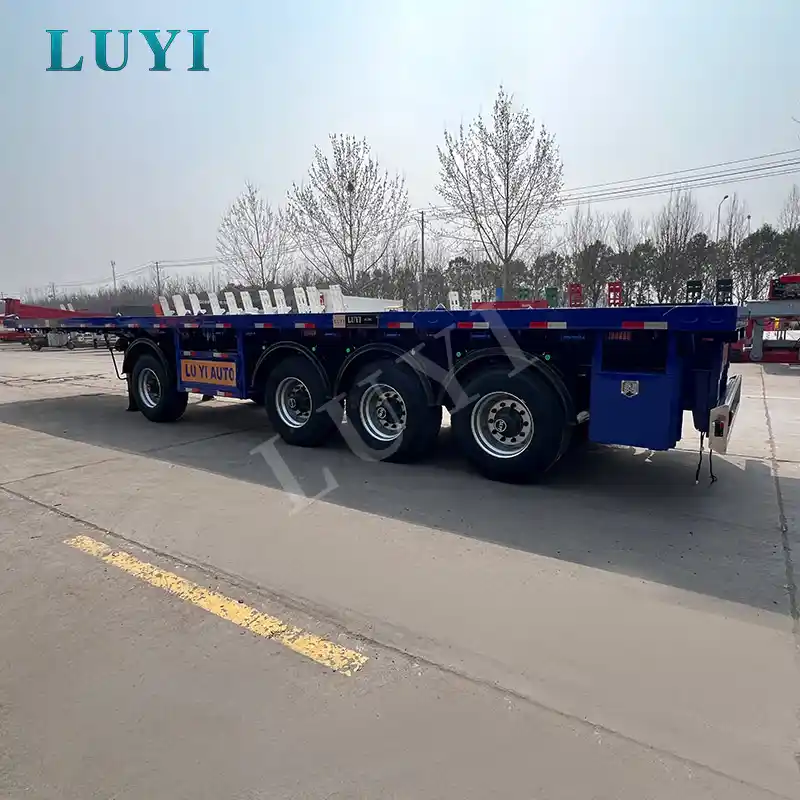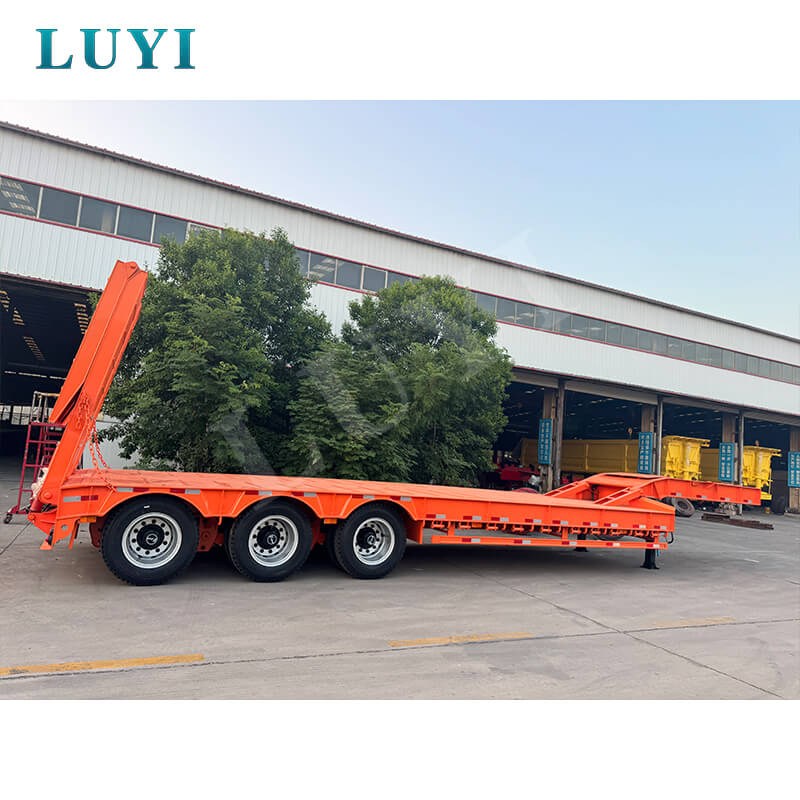

A white 3 axle rear dump semi trailer is a practical heavy-duty transport solution for fleets that need to move loose bulk materials and unload them quickly through a hydraulic rear tipping system. It is commonly used for sand, gravel, coal, ore, soil, construction debris, agricultural bulk goods and port-yard material transfer.
For overseas B2B buyers, the key question is not only “how much can it carry?” but whether the axle configuration, cargo body, suspension, hydraulic system, braking system and surface treatment match the real working conditions. This guide explains how to evaluate a white 3 axle rear dump trailer from a procurement and operation perspective, with practical references to Luyi Auto’s rear tipping semi trailer product range.
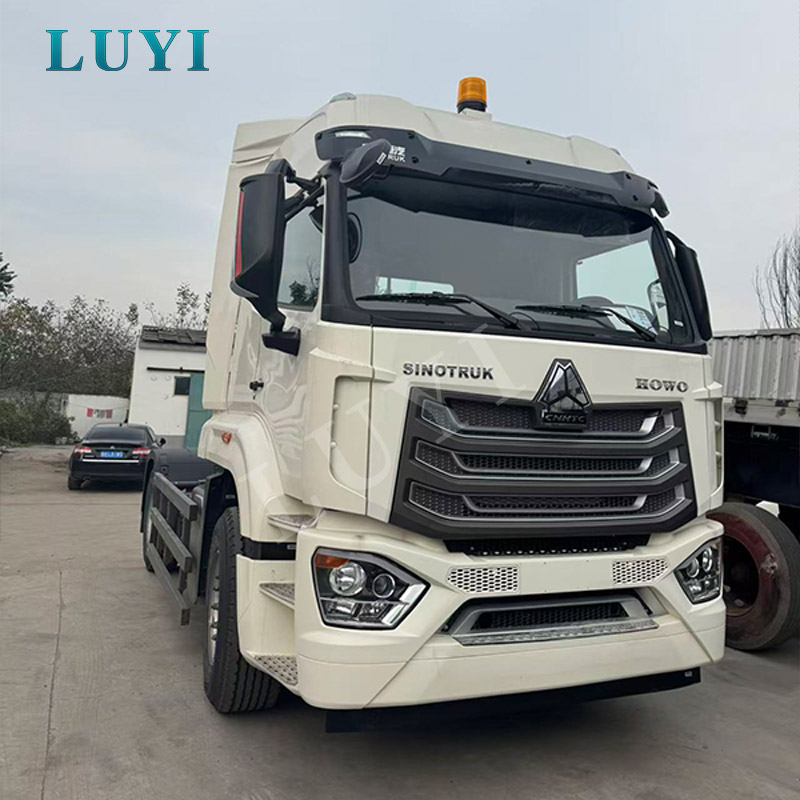
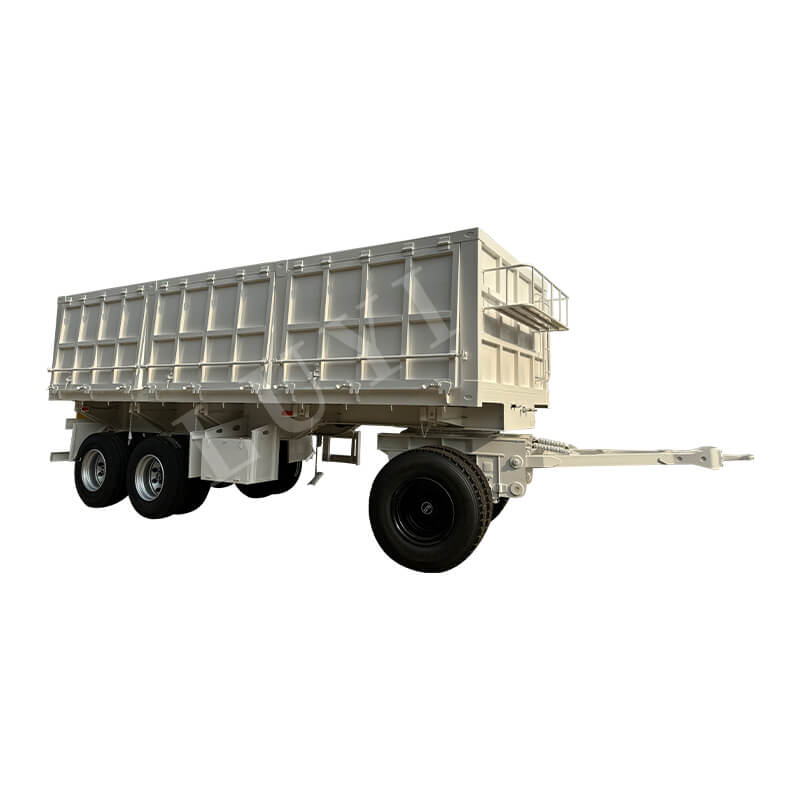
A white 3 axle rear dump semi trailer is a semi-trailer designed for transporting bulk materials and unloading them by raising the cargo body from the front. The hydraulic cylinder lifts the front end of the body, allowing the cargo to slide out from the rear. It is pulled by a tractor truck and usually includes a reinforced chassis, cargo box, hydraulic lifting system, three heavy-duty axles, suspension, braking components, lighting and safety markings.
The 3 axle layout is widely used because it provides a practical balance between payload capacity, maneuverability, purchase cost and maintenance convenience. For many construction material suppliers, quarry operators and infrastructure contractors, a 3 axle rear dump trailer is easier to operate than heavier multi-axle configurations while still offering enough capacity for daily bulk material transport.
The white exterior is not only a visual choice. In hot or sunny regions, a lighter-colored trailer body can reflect more sunlight than darker coatings, helping reduce heat absorption on the surface. It can also improve daytime visibility in busy construction sites, ports and industrial yards. However, coating quality, anti-corrosion treatment and surface preparation are more important than color alone, especially for coastal, humid or mining environments.
For a product reference, buyers can review Luyi Auto’s 3 axle 60 ton rear dump semi trailer, which is designed for mining, construction, roadwork, bridge projects, port logistics and agricultural material handling.
A rear dump semi trailer is selected when fast unloading, strong cargo body structure and stable operation under loaded conditions are important. The following applications are common in international projects.
In construction and infrastructure work, a white 3 axle rear dump semi trailer can transport sand, gravel, crushed stone, road base materials, soil, concrete debris and demolition waste. These jobs often involve repeated short-distance cycles between material yards and job sites. A strong tipping body and reliable hydraulic system help reduce waiting time during unloading.
For project-related references, buyers can explore Luyi Auto’s construction and infrastructure case studies, where dump trailers and heavy-duty transport equipment are used for demanding job-site conditions.
Mining and quarry operations often involve dense, abrasive and impact-heavy materials such as coal, ore, crushed rock and slag. In this environment, buyers should pay close attention to body plate thickness, reinforced ribs, axle rating, suspension strength, tire specification and welding quality. A standard configuration may not be enough for rough mine access roads or high-frequency loading cycles.
For more demanding mining and heavy haulage scenarios, buyers can also compare related solutions through Luyi Auto’s mining and heavy haulage application references.
Agricultural users may use rear dump trailers for grain, feed, fertilizer, biomass and other loose cargo. In this case, buyers usually care more about cargo cleanliness, body sealing, loading volume, tarpaulin cover and corrosion resistance than extreme wear resistance. The white exterior can also match fleet branding and improve visibility around farm roads, storage yards and rural loading points.
For demolition debris, municipal waste, soil and mixed job-site materials, the cargo body should be selected according to material size, sharpness and moisture. If leakage, dust or environmental control is required, buyers may need additional sealing, reinforced tailgate design or tarpaulin options.
In port and industrial yard operations, rear dump trailers are often used for short-haul bulk movement where fast unloading is more important than long-distance speed. The trailer should have clear lighting, reflective markings, reliable braking and a stable tipping structure because vehicles often operate near workers, loaders and other heavy equipment.
Specifications should always be confirmed according to cargo type, operating country, road regulations, tractor compatibility and loading frequency. The table below summarizes common configuration points for a white 3 axle rear dump semi trailer.
| Specification Item | Common Configuration | Buyer Evaluation Point |
|---|---|---|
| Trailer Type | 3 axle rear dump semi trailer | Suitable for bulk materials requiring hydraulic rear unloading. |
| Typical Payload Range | 40–60 tons standard; reinforced configurations may be discussed for heavier work | Must match cargo density, legal axle load and road regulations. |
| Axles | 3 heavy-duty axles, commonly 13T; 16T options available for specific markets | Axle rating affects payload distribution, durability and registration compliance. |
| Suspension | Mechanical suspension or air suspension | Mechanical suspension is practical for rough sites; air suspension supports smoother road operation and cargo protection. |
| Cargo Body | High-strength steel body; U-shaped or rectangular body optional | Body shape and material should match cargo flow, unloading residue and wear level. |
| Body Plate Thickness | Common references include 8 mm floor and 6 mm sidewalls, adjustable by cargo type | Dense or abrasive cargo requires stronger wear resistance than light agricultural cargo. |
| Hydraulic System | Front hydraulic cylinder; optional dual-cylinder or remote-control configurations | Hydraulic capacity and lifting stability affect unloading safety and cycle time. |
| Dump Angle | Commonly around 45–55 degrees depending on design | A suitable tipping angle helps reduce material residue and improve unloading efficiency. |
| Tires | 12R22.5, 315/80R22.5 or market-specific options | Tire size should match axle load, road condition and local replacement availability. |
| Braking System | Dual air brake system; ABS, EBS or TPMS optional depending on market requirements | Important for loaded braking, downhill routes and local road compliance. |
| Lighting and Visibility | LED lights, reflective strips and market-specific electrical connectors | Supports safer operation in ports, construction sites and night transport. |
| Surface Treatment | White polyurethane paint; anti-corrosion coating optional | Useful for hot, humid, coastal or dusty environments when paired with proper surface preparation. |
The right configuration should be selected around actual cargo, terrain, regulations and long-term maintenance. A trailer that looks affordable at purchase may become expensive if the cargo body wears too quickly, the hydraulic system fails frequently or the axle configuration does not match local road rules.
Sand, gravel, coal, ore, fertilizer and demolition waste do not create the same stress on the trailer body. For abrasive materials, buyers should consider thicker plates, reinforced ribs and wear-resistant steel options. For lighter bulk cargo, volume and sealing may matter more than maximum plate thickness.
A 3 axle rear dump trailer can be suitable for many 40–60 ton applications, but final payload must be confirmed against local axle load limits, gross vehicle weight rules and route conditions. Overloading a trailer beyond its designed structure can damage axles, tires, suspension, hydraulic components and the main frame.
Mechanical suspension is often selected for construction sites, mining access roads and rough operating environments because it is strong and relatively easy to maintain. Air suspension may be more suitable for highway transport, smoother road conditions or markets where ride stability and cargo protection are more important.
A rectangular cargo body offers practical volume for general bulk materials. A U-shaped body can improve unloading flow and reduce material residue, especially when carrying sticky, wet or fine materials. Buyers comparing rear tipping body structures can also review Luyi Auto’s 3 axle U type rear tipper trailer.
The hydraulic lifting system is one of the most important parts of a rear dump trailer. Cylinder size, cylinder brand, lifting angle, oil tank, hose routing and control method all affect unloading safety. For remote construction or mining sites, a more robust hydraulic system can reduce downtime and improve daily operating efficiency.
White paint can improve visual identity and surface reflectivity, but corrosion resistance depends on surface preparation, primer, paint quality and coating thickness. For coastal ports, humid climates, fertilizer transport or dusty mining roads, buyers should discuss sand blasting, primer, polyurethane coating, anti-rust wax or additional corrosion protection with the manufacturer.
A rear dump semi trailer should be evaluated by the parts that affect daily operation: chassis strength, body wear resistance, hydraulic lifting stability, axle installation, suspension connection, braking performance, electrical reliability and coating quality.
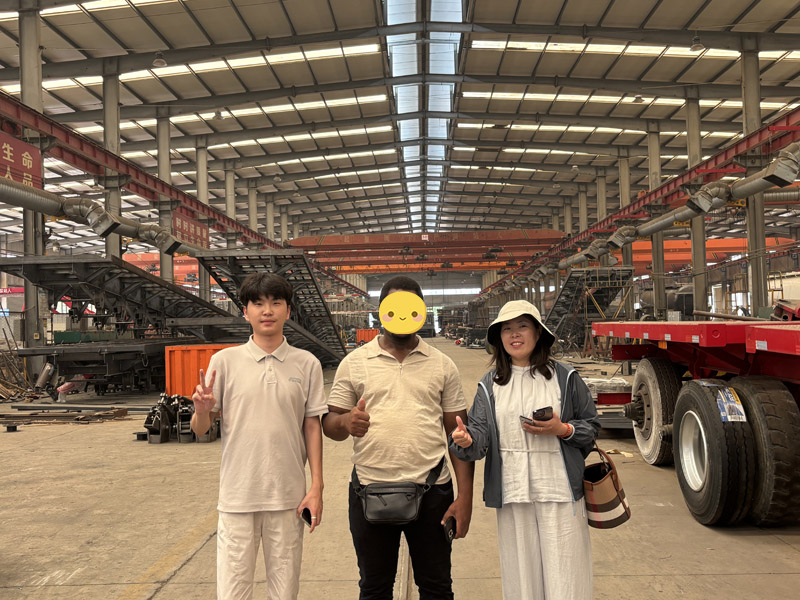
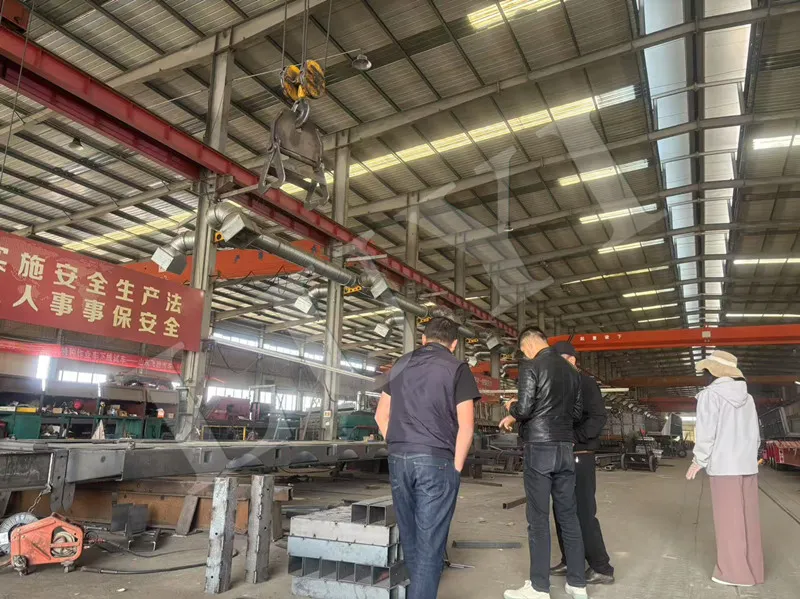
Before confirming an order, buyers should ask the manufacturer how the main beam is fabricated, what steel is used for the cargo body, how welds are inspected, how the hydraulic system is tested and what pre-delivery inspection records can be provided. Luyi Auto’s factory page gives buyers a direct reference for understanding manufacturing capability, workshop conditions and production support.
For export orders, a practical pre-delivery inspection should include:
A white 3 axle rear dump semi trailer can be customized according to cargo type, regional regulations, road conditions, unloading frequency and fleet budget. For most B2B buyers, customization should focus on practical operating value rather than cosmetic changes alone.
If your operation requires a heavier axle layout or higher payload distribution, it may also be useful to compare a 3 axle model with Luyi Auto’s 4 axle rear tipping semi trailer. This comparison helps buyers decide whether the additional axle investment is justified by local weight regulations and route conditions.
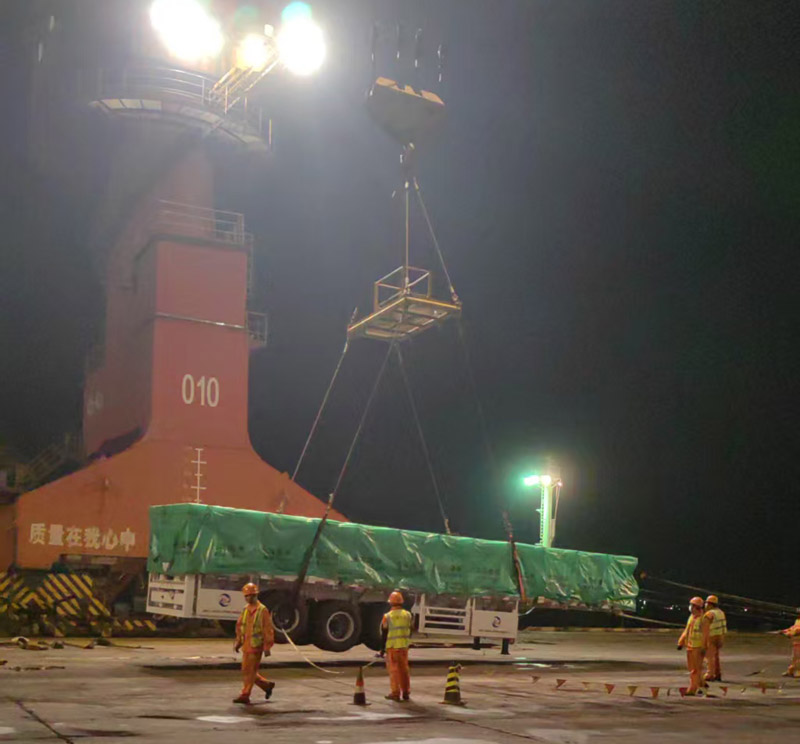
For overseas buyers, delivery planning should be discussed before production is completed. Rear dump semi trailers are large equipment, so shipping method, port conditions, anti-rust protection and detachable accessory packing directly affect delivery safety and total landed cost.
Common shipping methods may include bulk vessel, flat rack or RO-RO depending on trailer size, order quantity and destination port. Before shipment, accessories should be packed and fixed securely, and the trailer surface should be protected against moisture, salt air and handling damage.
Luyi Auto can support configuration communication, export documentation, shipment coordination and after-sales communication through its service support process. Buyers who are ready to compare configurations can submit cargo type, payload target, operating country and destination port through the Luyi Auto inquiry page.
Service life depends on cargo type, loading frequency, road condition, maintenance quality and corrosion exposure. With regular inspection and correct use, a rear dump trailer can serve for many years. In severe mining or coastal environments, buyers should plan stronger body plates, better coating and more frequent maintenance.
Yes, but configuration matters. For rough construction or mining roads, mechanical suspension, suitable tire specification, reinforced body structure and stronger frame design are recommended. For smoother highway operation, air suspension may be considered depending on local regulations and cargo requirements.
A U-shaped body usually supports smoother unloading and less residue for sticky or wet materials. A rectangular body may provide more usable volume for lighter bulk cargo. The better choice depends on cargo density, material flow and unloading frequency.
White paint does not change the trailer’s structural performance, but it can improve visual identity and reflect sunlight better than darker paint. For long-term durability, buyers should focus on surface preparation, primer, coating quality and corrosion protection.
It is not recommended to modify payload capacity after purchase because the frame, axles, suspension, tires and braking system are designed as a complete structure. Buyers should confirm payload requirements before production to avoid unsafe modification later.
Please provide cargo type, cargo density if available, target payload, destination country, road conditions, unloading site environment, tractor model, suspension preference, tire preference, color requirement, destination port and order quantity. For direct support, contact Luyi Auto through the contact page or send project details through the inquiry form.
A white 3 axle rear dump semi trailer is a versatile solution for bulk material transport in construction, mining, agriculture, waste management and port logistics. The right configuration should be selected according to cargo density, payload target, terrain, climate, legal requirements and unloading frequency.
If your fleet needs a rear dump trailer for sand, gravel, coal, ore, soil, demolition waste or agricultural bulk cargo, review Luyi Auto’s rear tipping semi trailer range and related case studies. For a configuration-based quotation, send your operating details through Luyi Auto’s inquiry page.