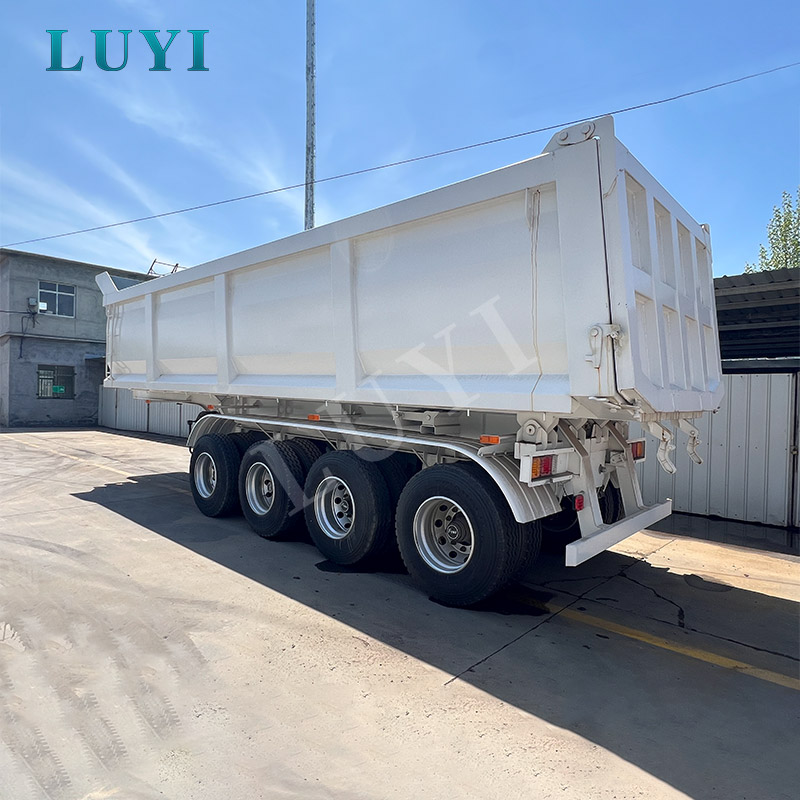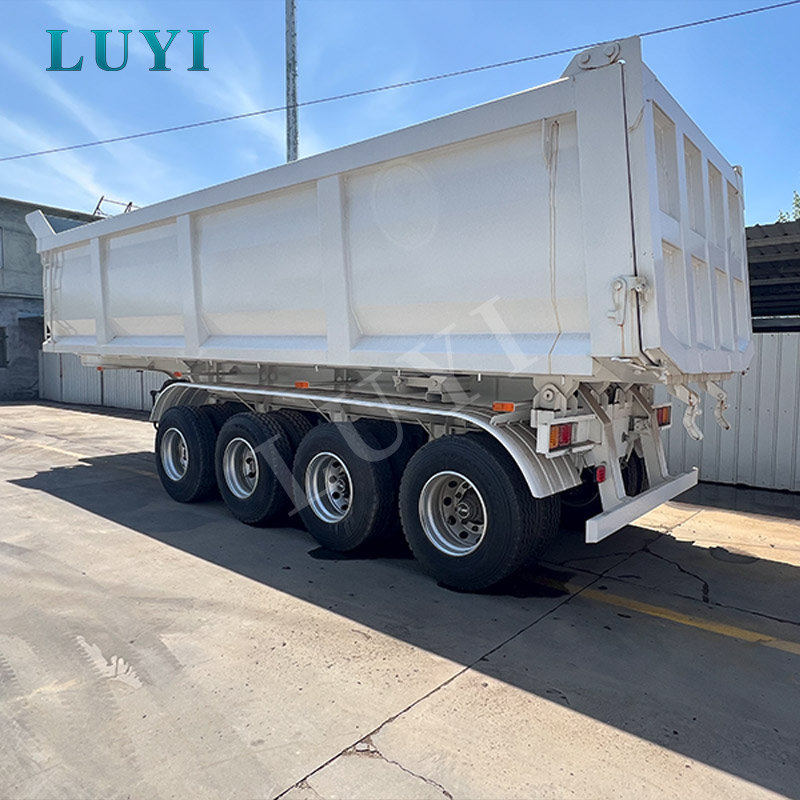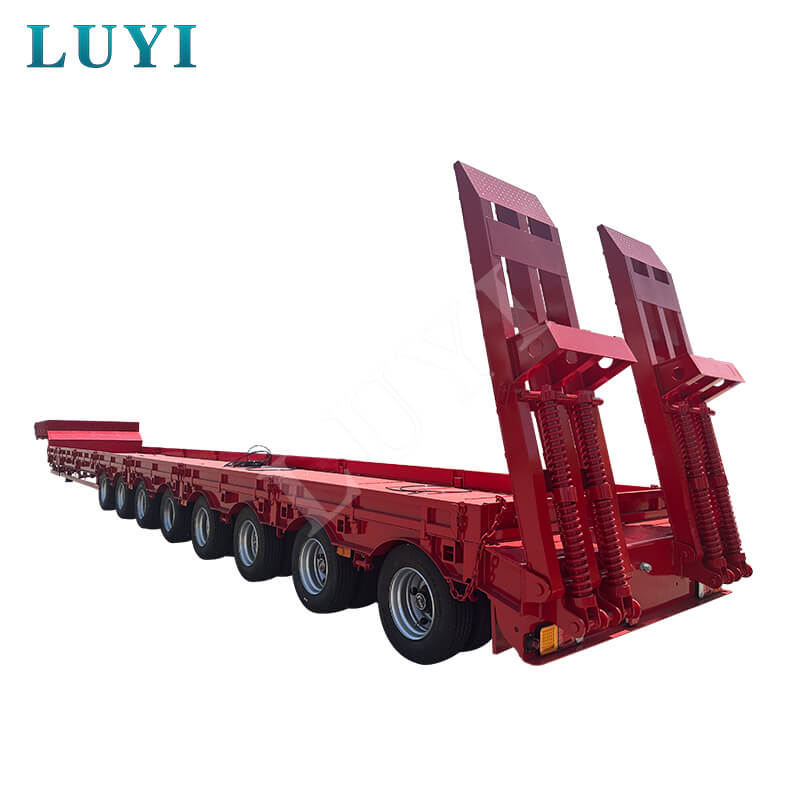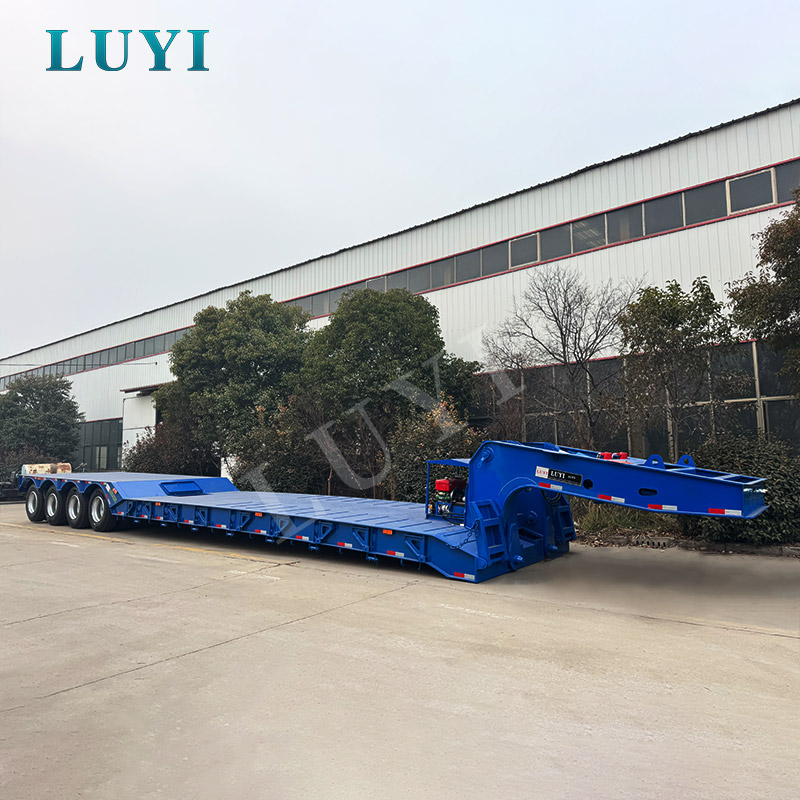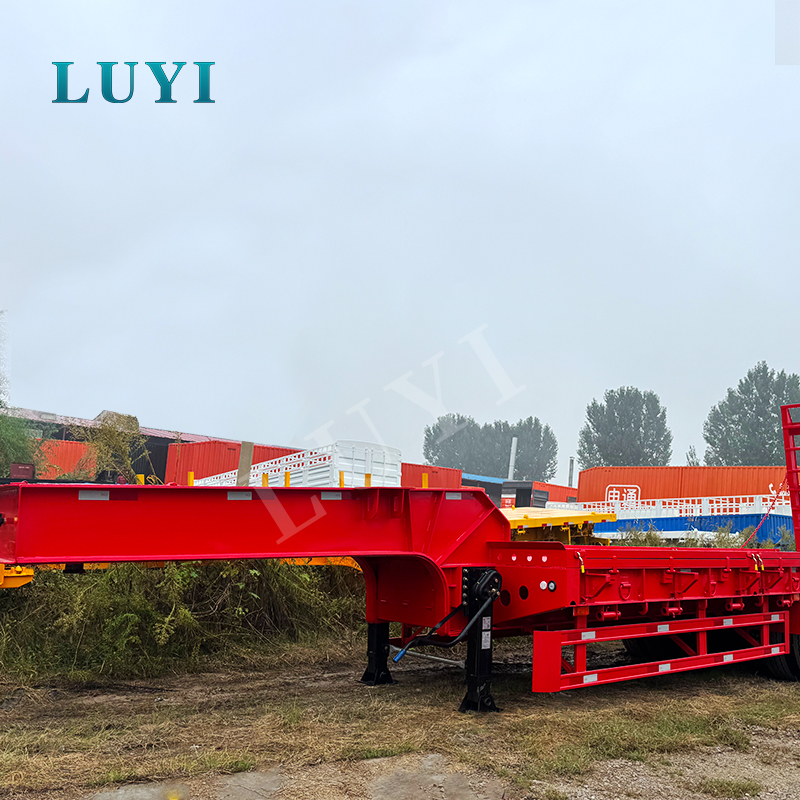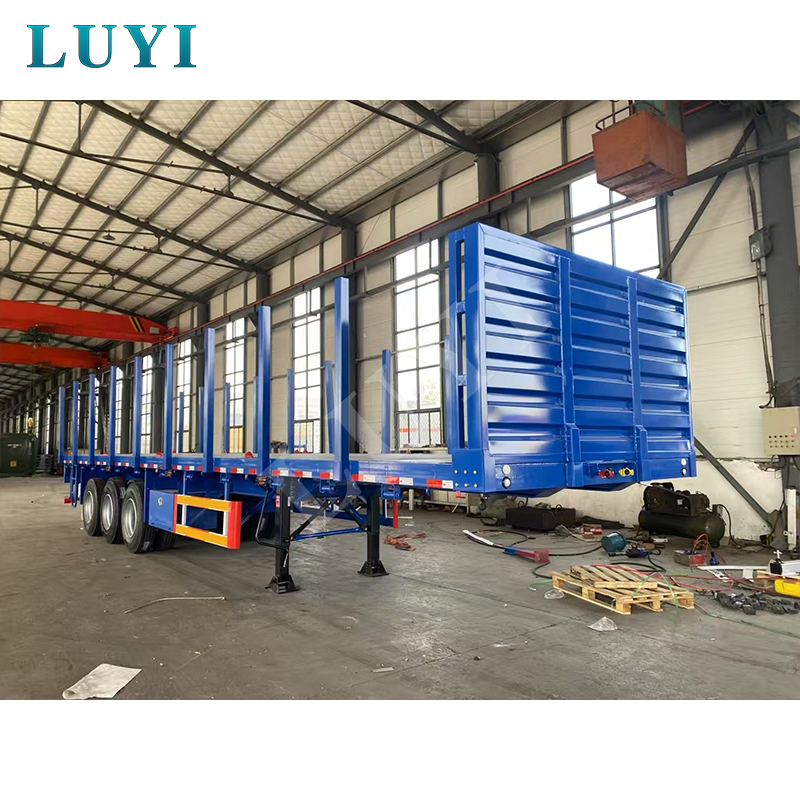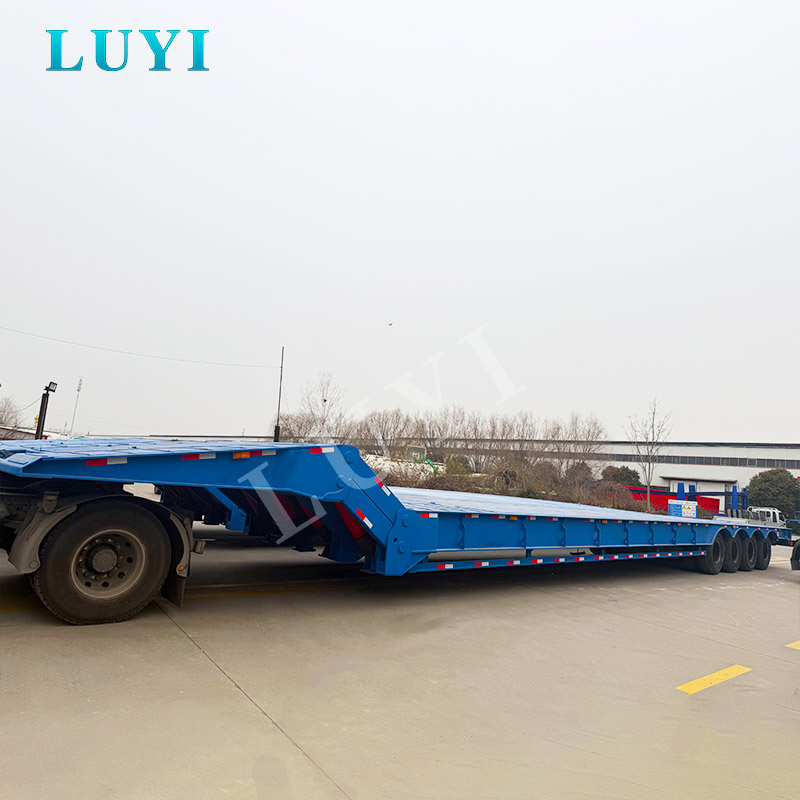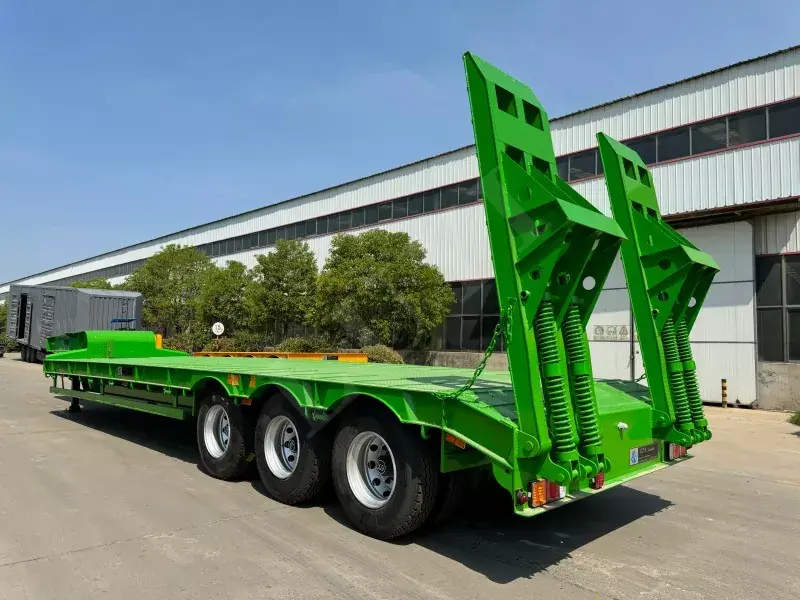

A 4 axle rear dump tipper semi trailer is built for one purpose: moving heavy bulk materials efficiently and unloading them quickly through a hydraulic rear tipping system. For buyers working in mining, construction, quarrying, infrastructure and port logistics, this trailer is often selected when ordinary 3 axle dump trailers cannot provide enough payload distribution, unloading efficiency or long-term durability under repeated heavy-load cycles.
This guide explains how to evaluate a rear tipping semi trailer from a practical B2B purchasing perspective: what it can transport, which technical specifications matter, how to match configuration with road conditions, and what information you should confirm before requesting a quotation from a manufacturer.
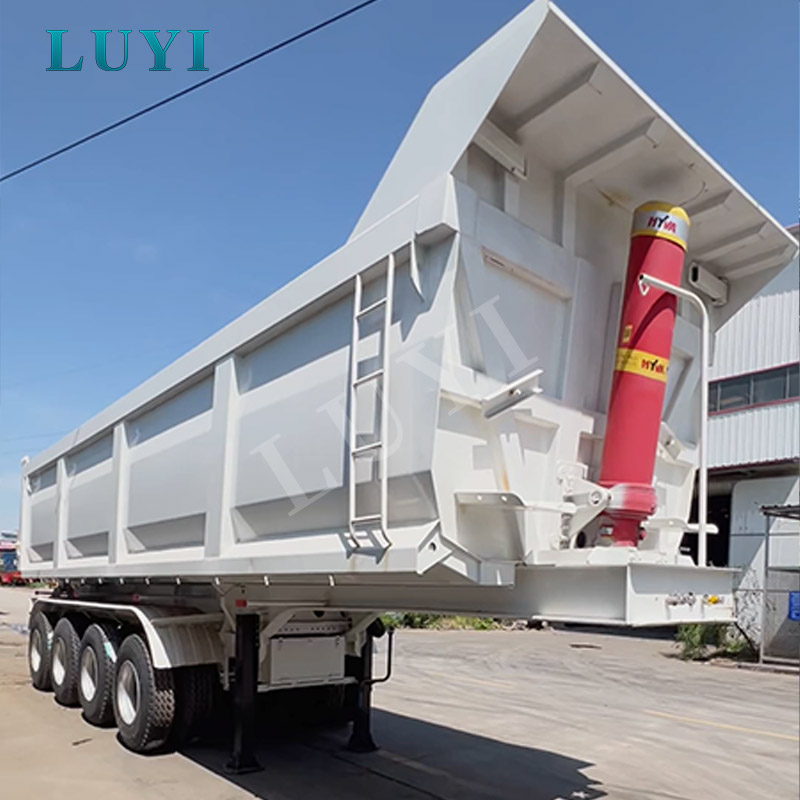
A 4 axle rear dump tipper semi trailer is a heavy-duty semi trailer designed to haul loose bulk materials and discharge them by lifting the cargo body from the front, allowing the material to slide out through the rear. It is usually pulled by a tractor truck and equipped with a reinforced chassis, heavy-duty axles, a hydraulic lifting cylinder, a cargo box and a braking system suitable for loaded operation.
Compared with many 3 axle models, the 4 axle structure helps distribute payload more evenly across the trailer. This is especially important when transporting dense materials such as ore, coal, gravel, slag, sand or construction aggregates. Better load distribution can support improved driving stability, reduce concentrated stress on the frame and help the trailer adapt to local axle load requirements.
For buyers who need a ready product reference, Luyi Auto offers a dedicated 4 axle rear tipping semi trailer designed for sand, coal, ore and slag hauling. For projects requiring an 80-ton class solution, the 4 axle 80-ton rear tipping dump trailer can also be used as a reference configuration.
The main value of a 4 axle rear dump tipper semi trailer is not only its carrying capacity, but also its ability to shorten unloading time and support continuous job-site transport. In many projects, trailer downtime directly affects excavator waiting time, loading-machine efficiency, road construction progress and fleet operating cost.
Mining operators commonly use 4 axle rear dump trailers for ore, coal, overburden, crushed stone, slag and mineral transport. These routes often include uneven access roads, high cargo density and frequent loading cycles. In this environment, buyers should pay close attention to frame reinforcement, cargo box wear resistance, axle brand, suspension strength and hydraulic cylinder reliability.
For road construction, bridge work, railway projects and civil engineering sites, rear dump trailers are used to move sand, gravel, crushed stone, soil, asphalt material and construction debris. Fast unloading helps reduce cycle time between loading points and job sites. For similar project references, buyers can review Luyi Auto’s construction and infrastructure case studies.
In port and terminal operations, rear dump tipper trailers are useful for short-distance transfer of bulk materials where fast discharge is more important than long-haul comfort. The hydraulic tipping system reduces manual unloading work and helps improve turnaround efficiency in high-frequency transport operations.
Some buyers also use rear dump trailers for grain, fertilizer, biomass, industrial waste and other loose materials. For these applications, cargo box shape, sealing, tarpaulin cover and residue control should be selected according to material flow characteristics and local transport regulations.
Specifications vary depending on manufacturer, destination market and cargo density. The table below summarizes common parameters buyers should confirm before placing an order.
| Specification Item | Common Configuration Range | Why It Matters for Buyers |
|---|---|---|
| Payload Capacity | Usually 60–100 tons depending on design, axle rating and local regulations | Determines whether the trailer can legally and safely carry dense materials such as ore, coal and aggregates. |
| Axle Configuration | 4 heavy-duty axles, commonly 13T–16T options | Improves load distribution and helps match road weight limits and operating routes. |
| Cargo Box Shape | Rectangular body or U-shaped body | Rectangular bodies provide high volume; U-shaped bodies can improve unloading for sticky or wet materials. |
| Cargo Box Material | High-strength steel, Q345B, manganese plate or wear-resistant steel options | Affects wear resistance, service life and suitability for abrasive materials. |
| Typical Cargo Box Size | Approximately 9.5 × 2.5 × 1.6 m; customizable | Must match cargo density, legal height limits, unloading site space and payload requirements. |
| Hydraulic System | Front-mounted hydraulic cylinder; brand and cylinder diameter customizable | Controls lifting stability, unloading speed and reliability during repeated tipping operations. |
| Tipping Angle | Commonly around 45 degrees depending on design | Higher and stable tipping angle helps reduce residue and improve discharge efficiency. |
| Suspension | Mechanical suspension or air suspension | Mechanical suspension is practical for rough roads; air suspension is better for smoother highway transport and cargo protection. |
| Tires | 12R22.5, 12.00R20 or market-specific options | Should match axle load, route conditions, tire availability and local maintenance habits. |
| Braking System | Air brake system with optional ABS/EBS depending on market requirements | Important for loaded downhill driving, emergency braking and road compliance. |
| Optional Cover | Manual or electric tarpaulin cover | Helps control dust, reduce material loss and meet environmental transport requirements. |
A good rear dump trailer configuration should be selected around the buyer’s real operating conditions, not only around the cheapest quotation. Before comparing prices, buyers should first clarify payload target, material type, road conditions, unloading site layout and destination regulations.
Sand, gravel, coal, ore and slag do not load the same way. Dense ore requires stronger body plates and frame reinforcement, while lighter bulk materials may need more cargo volume. If the trailer body is too large for the material density, overloading can occur before the box is visually full. If the body is too small, each transport cycle becomes inefficient.
Many countries have strict limits on axle load, overall length, width, height and gross combination weight. A 4 axle design can help spread heavy payload, but it still needs to comply with destination regulations. Buyers should confirm local registration rules before finalizing axle rating, suspension type, tire specification and body dimensions.
Mechanical suspension is widely used for mining sites, construction roads and rough working environments because it is strong, simple and easier to maintain. Air suspension may be more suitable for highway operations where smoother ride performance, cargo protection or regulatory requirements are important.
A rectangular cargo box is a practical choice for many construction materials and general bulk cargo because it can provide higher usable volume. A U-shaped body is often preferred for sticky, wet or abrasive materials because it reduces dead corners and supports cleaner unloading. Buyers handling clay, wet soil or fine aggregates may also compare Luyi Auto’s U-shape dump tipper trailer.
The hydraulic lifting system directly affects unloading safety and work efficiency. Cylinder brand, cylinder diameter, mounting structure, hydraulic pipelines and lifting angle should be selected according to payload and tipping frequency. For mining and construction fleets, a reliable hydraulic system can reduce downtime and prevent unloading delays on job sites.
Many purchasing problems are not caused by the trailer type itself, but by poor configuration matching before production. The following mistakes are common in international bulk transport projects.
For B2B buyers, the most important inspection points are the chassis, cargo box, hydraulic system, suspension, braking system and surface treatment. A rear dump trailer works under repeated impact and heavy unloading cycles, so the trailer must be built for long-term structural stability rather than only visual appearance.
During supplier evaluation, buyers should ask about main beam design, welding process, steel thickness, cargo box reinforcement, hydraulic cylinder brand, axle brand, suspension type and pre-delivery inspection procedures. Luyi Auto’s factory page provides a useful starting point for understanding its manufacturing environment and production capability.
A practical pre-delivery inspection should include checks on weld quality, kingpin area, landing gear, axle installation, suspension connection, brake system, hydraulic pipelines, lighting, surface coating and accessories. For export orders, inspection photos or videos before shipment can help buyers verify the trailer condition before sea freight.
A 4 axle rear dump tipper semi trailer can be customized according to cargo type, operating region, legal payload, road conditions and fleet maintenance habits. For project buyers, customization should focus on real performance needs rather than adding unnecessary options.
For international buyers, trailer procurement does not end at production. Export packing, anti-rust protection, shipping documents, port coordination and spare parts planning all affect the final project experience.
Before shipment, buyers should confirm whether the trailer will be shipped by bulk vessel, flat rack, RO-RO or another method suitable for the destination port. Anti-rust treatment, small parts packing and component fastening are especially important for sea freight. Luyi Auto can support buyers through its service support process, including configuration communication, export coordination and after-sales assistance.
If you are comparing suppliers, ask each manufacturer to provide a clear scope of supply, technical configuration sheet, production lead time, shipping method, spare parts recommendation and warranty terms. This helps avoid misunderstandings after deposit and ensures the trailer you receive matches the agreed working conditions.
Typical payload capacity is usually around 60–100 tons depending on the axle rating, frame design, cargo body structure, material density and local road regulations. Buyers should not select payload by trailer size alone; cargo density and legal axle load must be confirmed.
Yes, it can be suitable for mining roads when configured with a reinforced chassis, suitable cargo box material, heavy-duty axles, strong mechanical suspension and reliable tires. For severe off-road use, buyers should provide road condition details before quotation.
A rectangular body is suitable for many common bulk materials and can provide practical volume. A U-shaped body is better for cleaner unloading of sticky or wet materials because it reduces material residue in corners. The right choice depends on cargo type and unloading frequency.
Production time depends on order quantity, configuration complexity and factory schedule. For customized export orders, buyers should confirm lead time after final specification approval and deposit arrangement.
Send your cargo type, cargo density if available, target payload, operating country, road conditions, unloading site environment, tractor model, preferred axle configuration, suspension preference, destination port and required quantity. These details help the manufacturer recommend a practical configuration instead of a generic model.
Yes. Luyi Auto can adjust trailer dimensions, axle configuration, cargo body structure, suspension, tires, braking system, hydraulic system, color and accessories according to local regulations and working conditions. Buyers can submit project details through the Send Inquiry page or contact the team directly through Contact Us.
A 4 axle rear dump tipper semi trailer is a strong choice for bulk material transport when your operation requires higher payload distribution, faster unloading and more durable performance in mining, construction, port or infrastructure environments. The best configuration should be based on cargo density, route conditions, legal requirements, unloading site layout and long-term maintenance planning.
If your fleet needs a rear dump trailer for sand, gravel, coal, ore, slag, aggregates or construction materials, review Luyi Auto’s rear tipping semi trailer range and related case studies. For a configuration-based quotation, send your payload target, route conditions and destination port through Luyi Auto’s inquiry page.