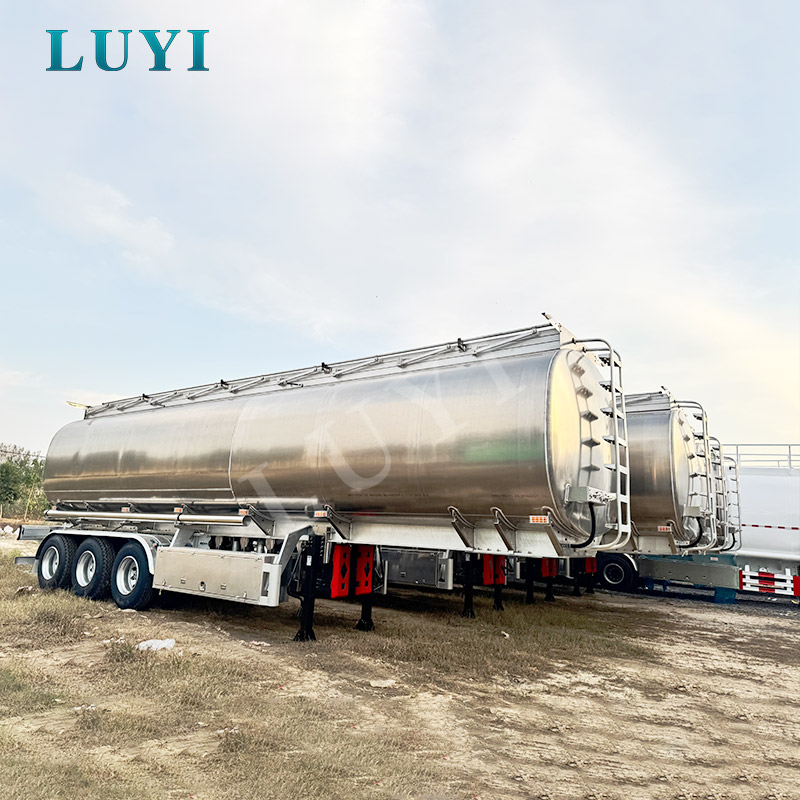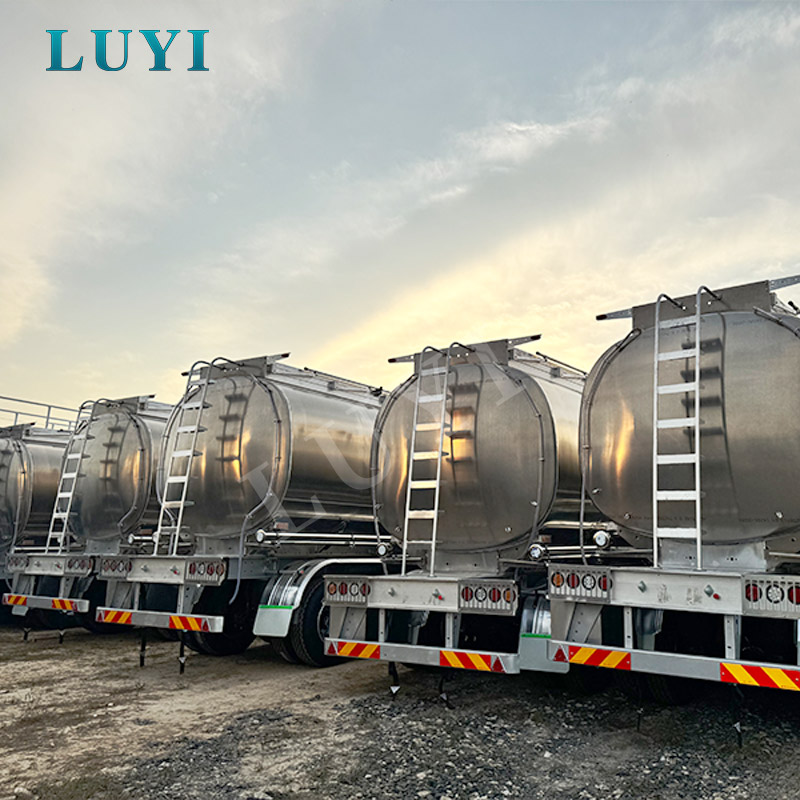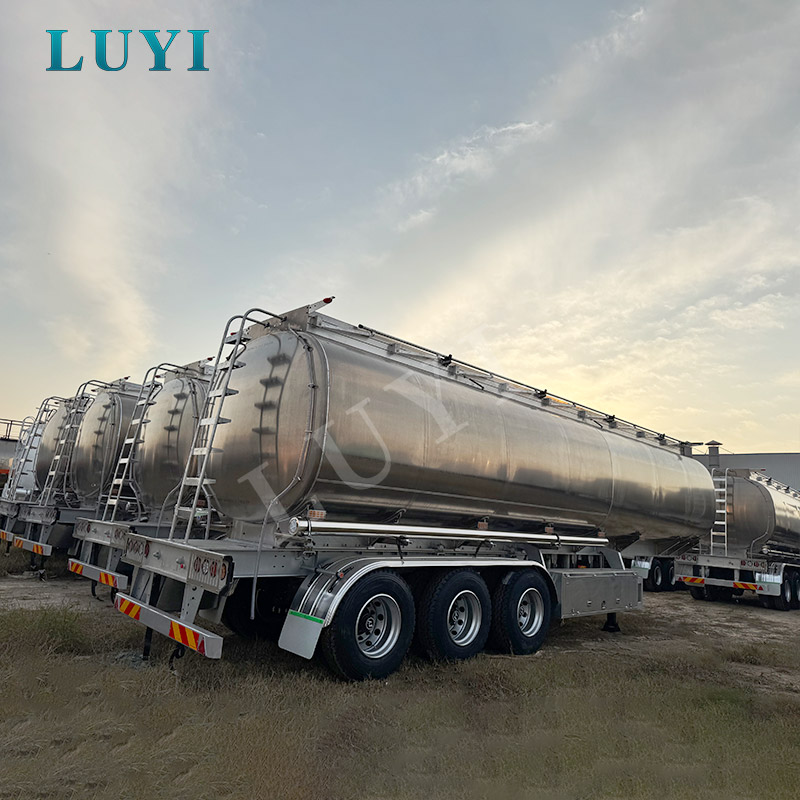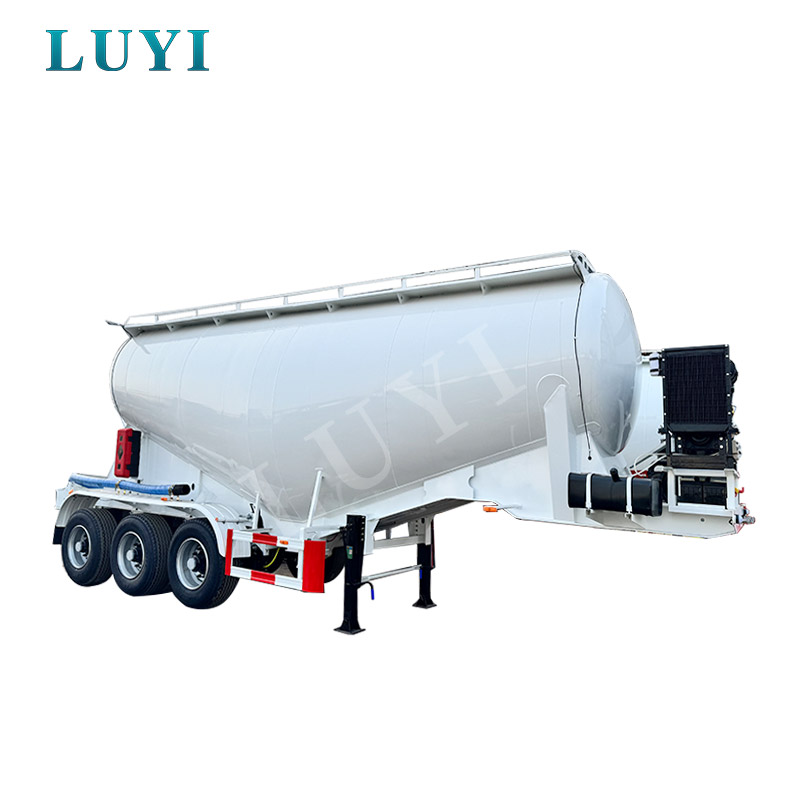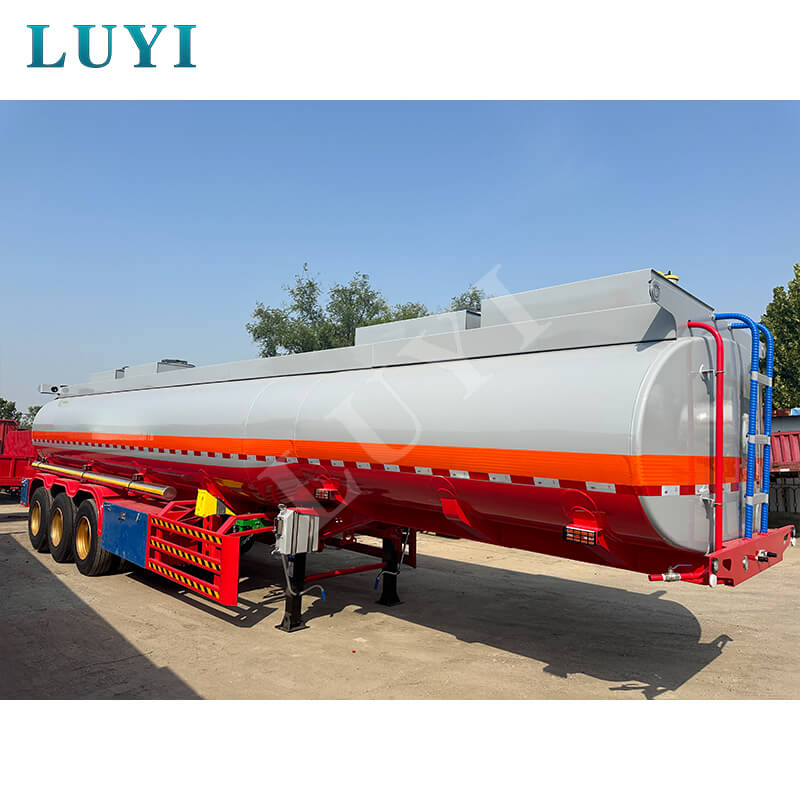

For fuel distributors, logistics fleets and industrial liquid transport operators, choosing a 48,000-liter aluminum tanker is not only about tank volume. The right configuration affects payload efficiency, route safety, loading speed, maintenance cost and local road compliance. This guide explains how an all-aluminum tri-axle tanker is typically selected, configured and inspected before purchase.
A 48,000L aluminum fuel tanker is usually used for medium- and long-distance transport of diesel, gasoline, petroleum products, lubricating oil and selected non-corrosive liquids. Compared with a carbon steel tanker, an aluminum alloy tank body can reduce tare weight, improve payload potential and resist rust in humid or coastal operating environments. For buyers comparing different tanker types, Luyi Auto’s tanker semi trailer solutions provide useful references for fuel, liquid and bulk transport applications.
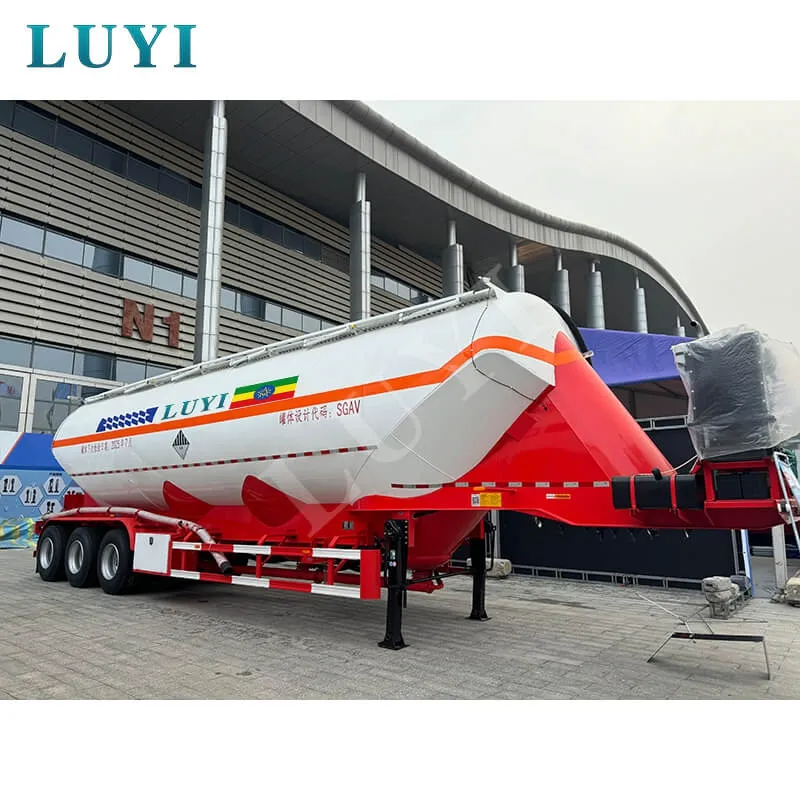
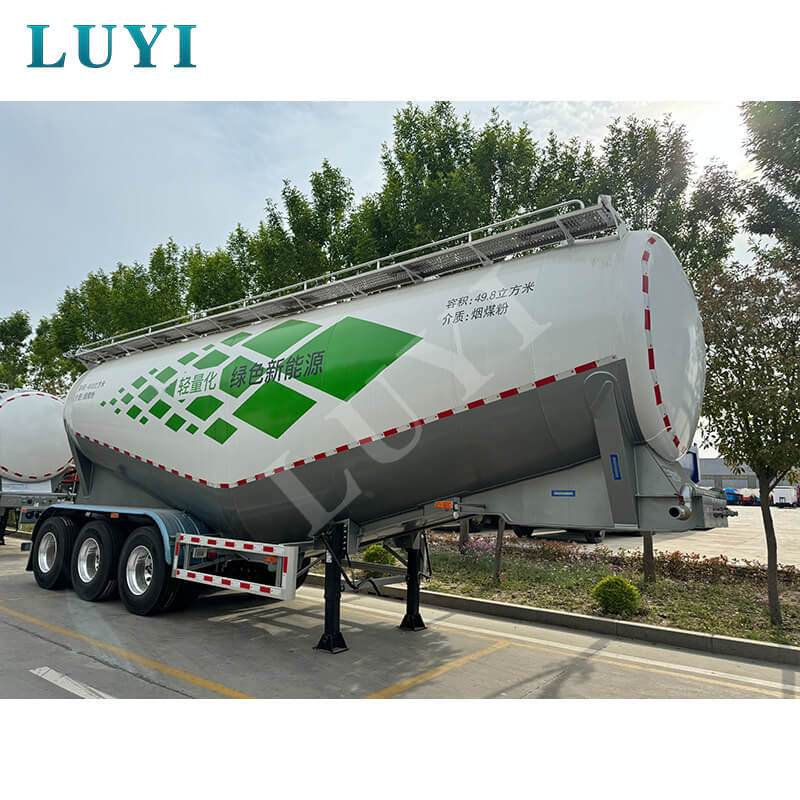
An all-aluminum 48,000L tri-axle fuel tanker trailer is a semi-trailer designed for sealed bulk liquid transportation. The tank body is commonly manufactured from aluminum alloy such as 5182, 5059 or similar transport-grade aluminum materials, depending on the cargo, route conditions and buyer requirements. The trailer is matched with a tractor truck and normally uses a tri-axle layout to balance load distribution during long-haul fuel delivery.
In practical fleet use, this type of tanker is often selected when the operator needs a balance between large carrying capacity, lighter self-weight, corrosion resistance and safer liquid movement control. If your main cargo is fuel, diesel or petroleum products, the dedicated 48,000L aluminum fuel tanker trailer page can be used as a product reference when discussing specifications with the factory.
The correct tanker configuration should start from the cargo and delivery route. A fuel tanker used between a refinery and filling stations has different valve, compartment and discharge requirements from a tanker used for industrial oil distribution or cross-border fuel logistics.
For project buyers working in fuel distribution, chemical supply chains or industrial liquid logistics, related real-world examples can also be reviewed under Luyi Auto’s Energy & Chemical case studies.
| Item | Typical Configuration | Buyer Notes |
|---|---|---|
| Tank Capacity | 48,000 liters / 48 CBM | Final usable volume should be confirmed according to density, loading rules and local axle-load limits. |
| Tank Material | Aluminum alloy, commonly 5182 / 5059 or equivalent | Material selection should match fuel type, corrosion exposure and required service life. |
| Tank Thickness | Approx. 6 mm cylinder, 6 mm end plate, 5 mm anti-wave plate | Thickness can be adjusted according to standard requirements, compartment structure and customer specification. |
| Axle Layout | 3 axles, commonly 13-ton FUWA / BPW or equivalent | Choose axle brand and axle rating according to road conditions, maintenance access and local regulations. |
| Suspension | Mechanical suspension or air suspension | Air suspension is preferred for highway-focused routes and cargo stability; mechanical suspension is often chosen for rugged routes and cost control. |
| Compartments | Single or multiple compartments, commonly 2–5 compartments | Multiple compartments allow one tanker to transport different fuel grades in one trip. |
| Dimensions | Approx. 13,000 × 2,500 × 3,600 mm | Dimensions should be confirmed against route height limits, port shipping conditions and destination rules. |
| Tare Weight | Approx. 12,500 kg, depending on configuration | Lower tare weight can improve payload efficiency, but must not sacrifice structural safety. |
| Brake System | Dual-circuit pneumatic brake system with ABS optional or required by market | ABS, emergency braking components and compatible tractor connections should be confirmed before production. |
| Safety Components | Anti-surge baffles, emergency shut-off valves, manhole covers, anti-static device, API valves | Safety components should be selected according to flammable liquid transport regulations and operating practice. |
In fuel logistics, every kilogram of empty vehicle weight affects how much cargo a fleet can legally carry. Aluminum alloy is often selected because it is lighter than steel, naturally resistant to rust and suitable for long-haul fuel distribution where payload efficiency and lifecycle cost matter.
However, aluminum is not a universal solution for every liquid. For highly corrosive chemicals, buyers should not assume that a standard aluminum fuel tank is suitable. In such cases, a stainless steel tanker, special lining or dedicated chemical tanker may be required. For comparison, buyers can review Luyi Auto’s 40CBM stainless steel tanker semi trailer and 22CBM sulfuric acid tanker trailer for different liquid transport requirements.
The first question should not be “How many liters can it carry?” but “What liquid will it carry every day?” Gasoline, diesel, crude oil, lubricating oil, edible oil and chemical liquids have different requirements for tank material, sealing method, valves, discharge system and cleaning procedure.
A single-compartment tanker may be suitable for one liquid type and fixed-route delivery. A multi-compartment tanker is better when a fleet needs to deliver different fuel grades to several stations in one route. For example, a 5-compartment design can help operators separate gasoline, diesel and other petroleum products while reducing the need for multiple trips.
For highway fuel distribution, air suspension can help reduce vibration, improve cargo stability and protect the tank body during long-distance transport. For rough road conditions, mining areas or remote delivery routes, mechanical suspension may be chosen for easier maintenance and stronger adaptability.
International buyers should confirm local requirements for axle load, braking system, lighting, reflector layout, fire extinguishers, emergency valves, rear bumper design, tank labeling and hazardous goods transport documents before placing an order. Changing these items after production can cause delays, extra cost and port clearance problems.
Fuel tanker safety depends on both the tank structure and the operating environment. A reliable tanker should control liquid surge, reduce static electricity risk, prevent leakage and support safe emergency handling.
Because fuel transport regulations vary by country and region, buyers should provide their destination market, cargo type and registration requirements at the inquiry stage. Luyi Auto can discuss tanker volume, compartment layout, axle configuration and safety accessories through its custom trailer service process.
Many fuel tanker problems start before production, not after delivery. The most common mistakes usually come from focusing only on the purchase price while ignoring cargo compatibility, compliance and long-term maintenance.
Before purchasing a fuel tanker trailer, buyers should ask how the factory controls material sourcing, welding consistency, tank sealing, pressure testing and final inspection. A tanker is a safety-critical transport asset, so quality control should be visible and documented.
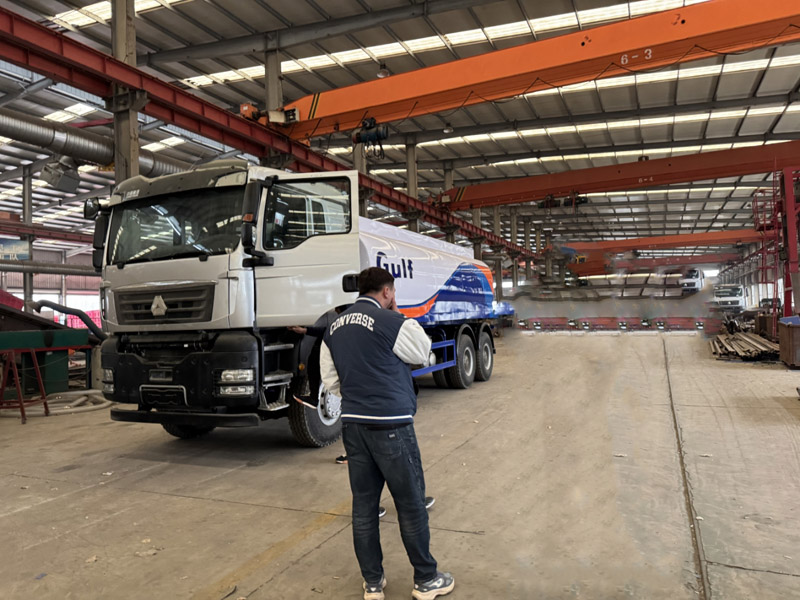
For buyers who want to understand the production environment before ordering, the Luyi Auto factory page provides information about manufacturing capability, quality control and trailer production experience.
For international delivery, fuel tanker trailers are usually shipped by bulk vessel, Ro-Ro vessel or other suitable shipping methods depending on destination port, order quantity and shipping schedule. Before shipment, the tanker body, valves, lights, toolboxes and exposed components should be protected to reduce transport damage.
Buyers should confirm the following before delivery:
Routine maintenance helps extend service life and reduce unexpected downtime. For fuel transport fleets, inspection should focus on both tanker safety and running gear reliability.
With correct operation and regular maintenance, an aluminum fuel tanker can serve for many years because aluminum is naturally resistant to rust. Service life depends on cargo type, road conditions, maintenance quality, loading habits and whether the tanker is used within legal payload limits.
Not all corrosive chemicals are suitable for a standard aluminum fuel tanker. Mild industrial liquids may be possible after compatibility confirmation, but strong acids, alkalis and aggressive chemicals usually require a dedicated chemical tanker, stainless steel tank or special lining.
Aluminum is often preferred for fuel transport because it is lighter and rust-resistant. Steel tankers may have a lower initial cost, but aluminum can offer better payload efficiency and lower corrosion-related maintenance in many fuel distribution routes.
It depends on the delivery model. A single-compartment tanker is suitable for one liquid type and fixed-route operation. A 2–5 compartment tanker is better for fleets that deliver multiple fuel grades or need flexible discharge at several locations.
To receive an accurate tanker proposal, provide the cargo type, density, target capacity, required compartments, destination country, road conditions, preferred axle and suspension brands, loading/unloading method, compliance requirements and expected delivery schedule.
A 48,000L all-aluminum tri-axle fuel tanker trailer is a practical choice for fleets that need safe, efficient and long-distance bulk fuel transportation. The best configuration should be based on cargo characteristics, route conditions, legal payload limits, compartment planning, safety accessories and maintenance access—not only on tank capacity.
If you are planning a fuel transport project, Luyi Auto can help review your operating scenario and recommend a tanker configuration based on your cargo, route, compliance needs and fleet budget. You can send an inquiry to Luyi Auto or contact the team through the contact page to request a customized fuel tanker trailer solution.