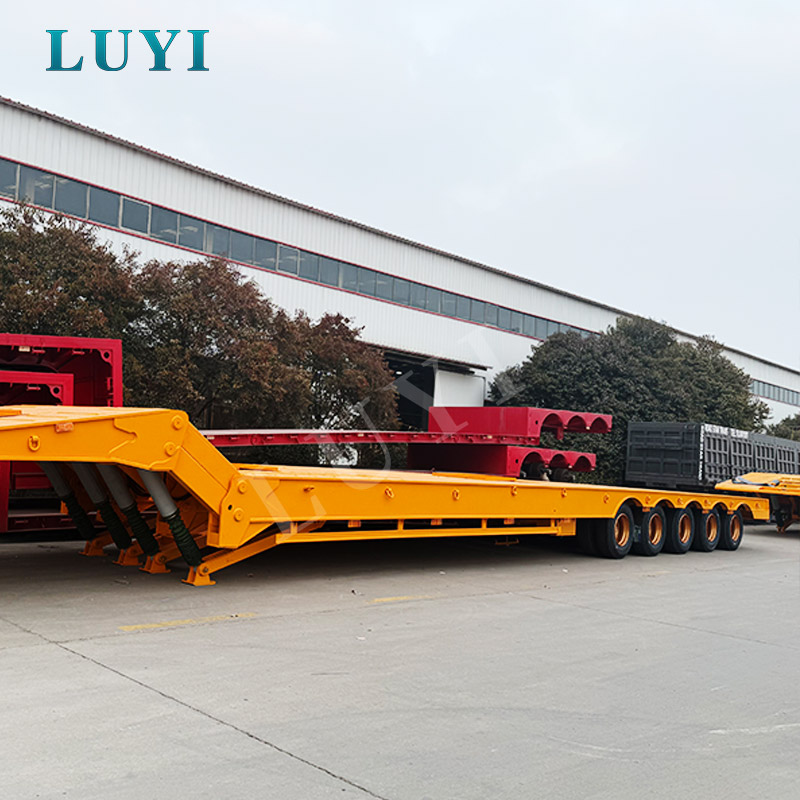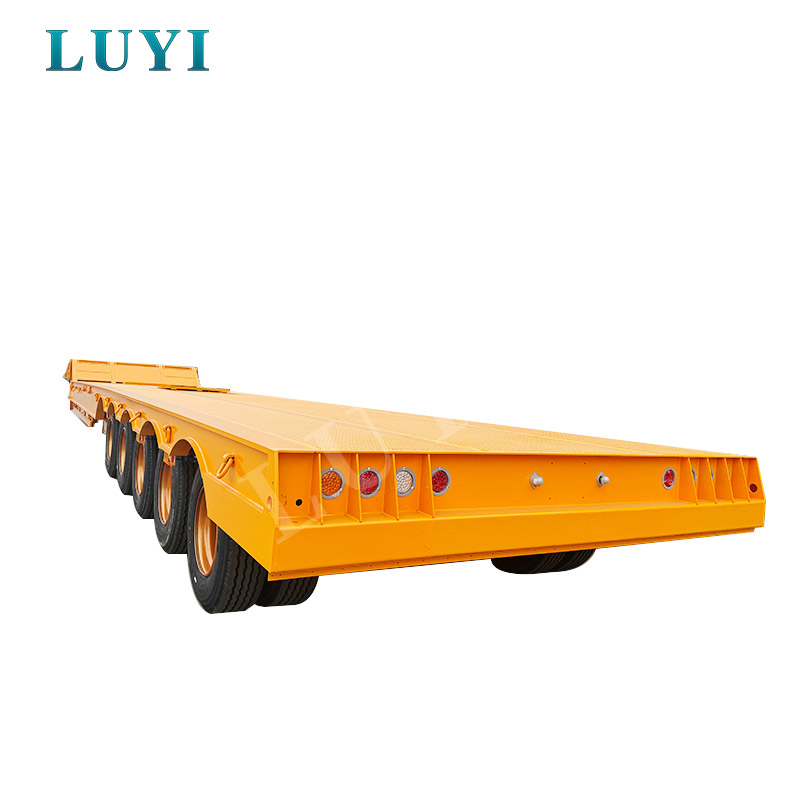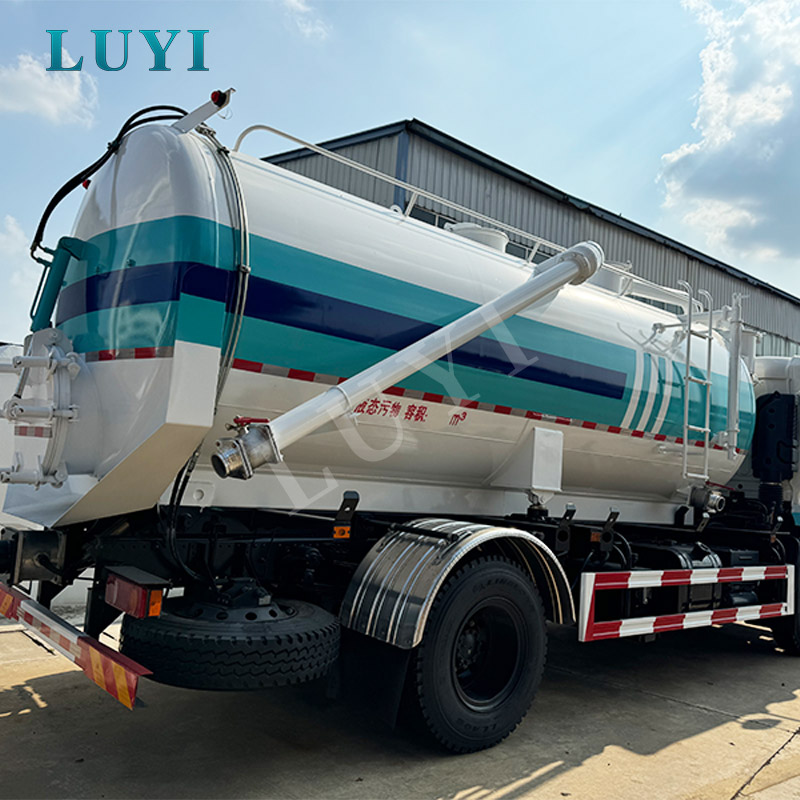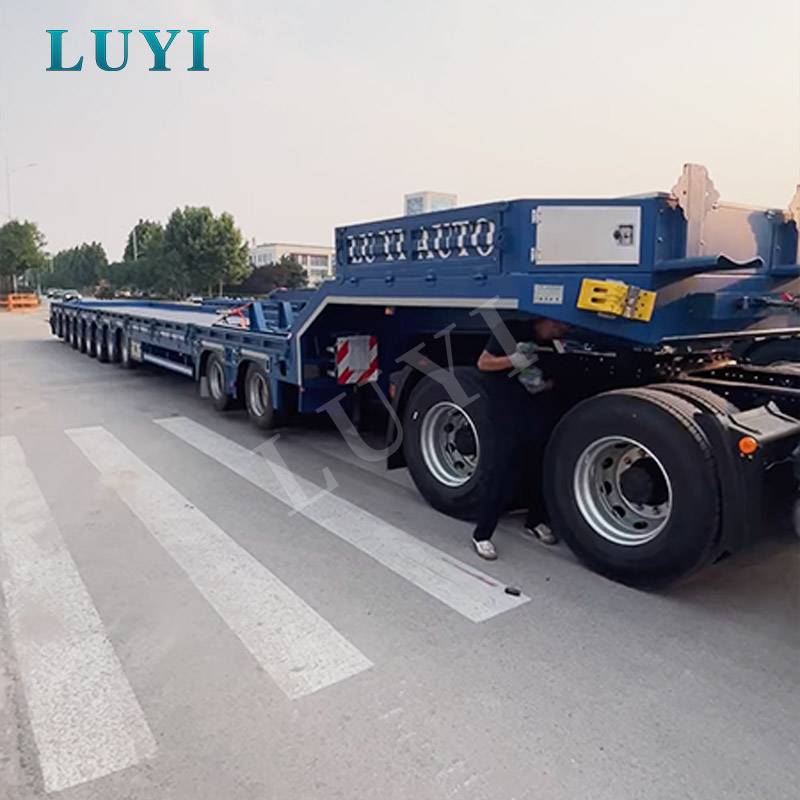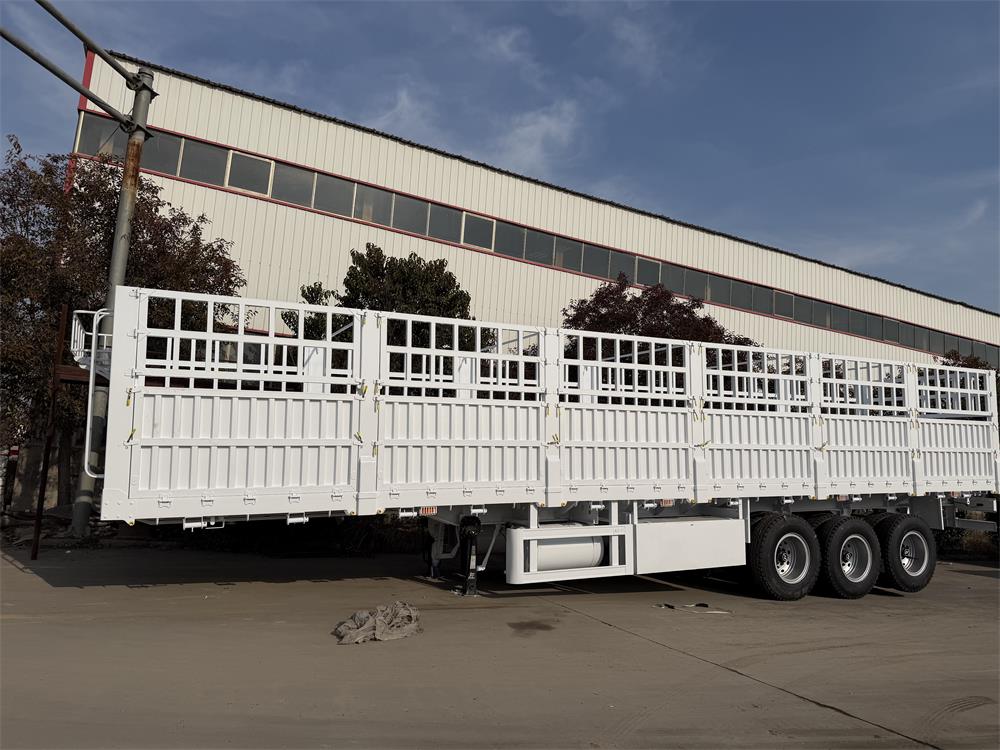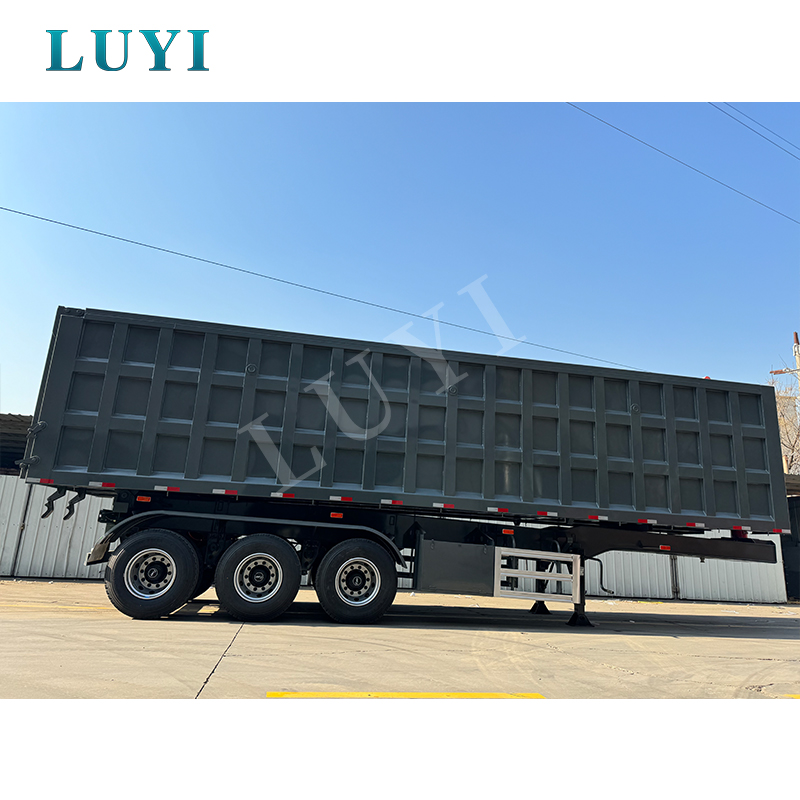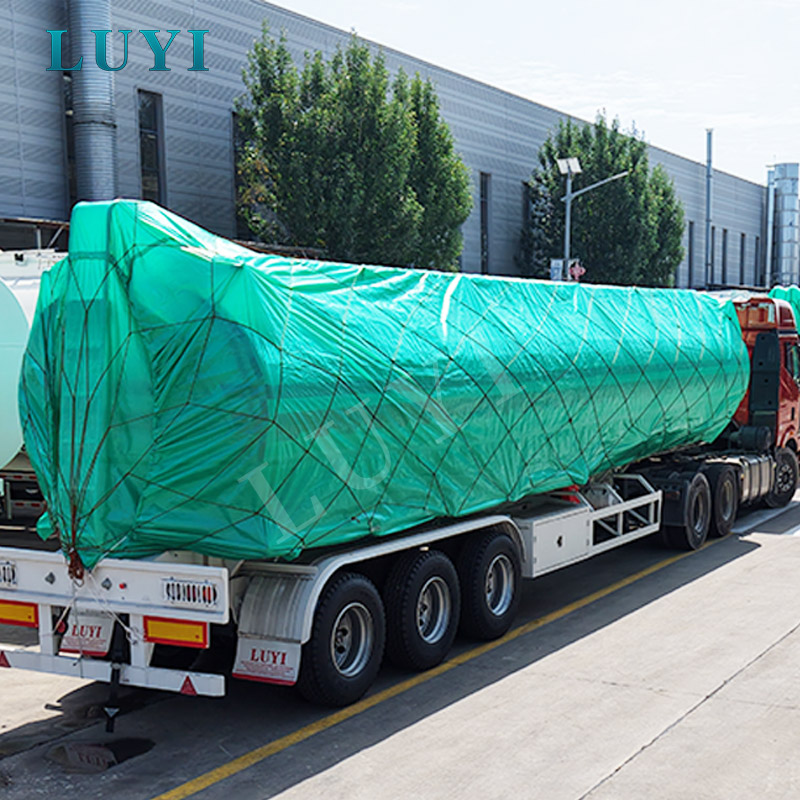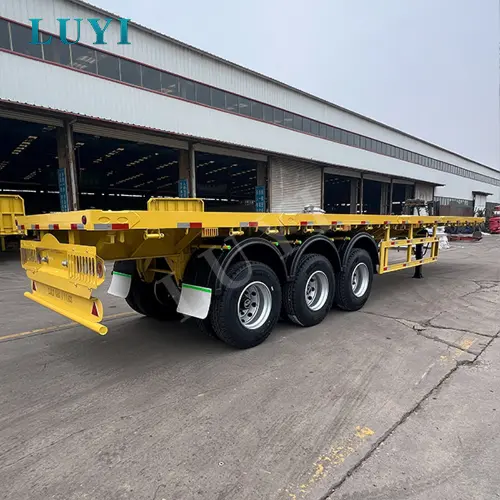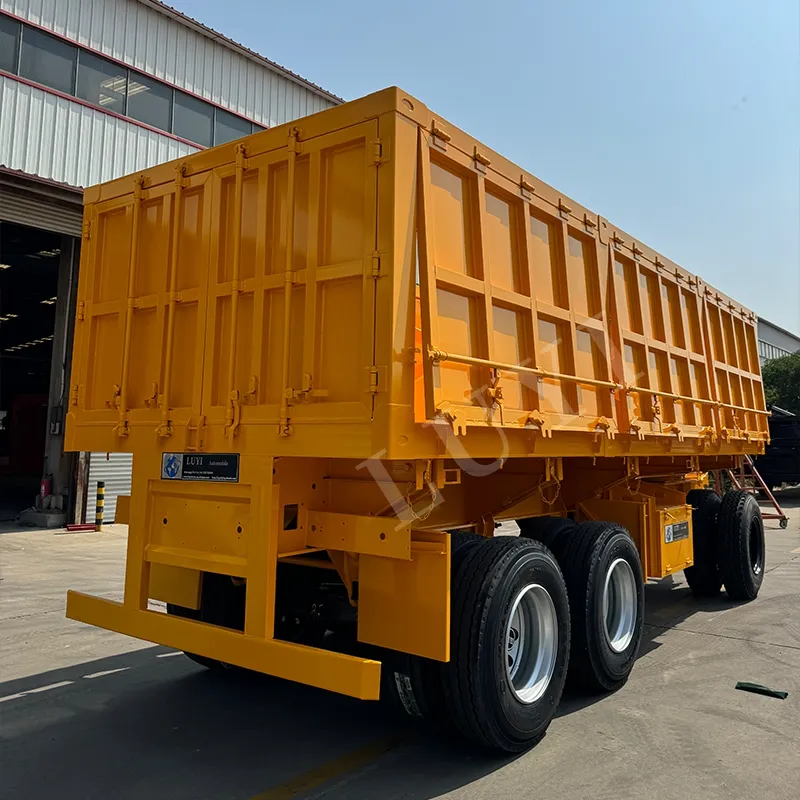
In April 2026, a customer from Lesotho visited Luyi Auto’s factory in Shandong, China to evaluate a practical heavy-haul solution for moving construction machinery, mining equipment and agricultural machines across local and regional routes. Instead of making a decision only from photos or a quotation sheet, the customer came to inspect our production process, trailer samples, welding quality, component selection and export service capability in person.
After technical discussions with the Luyi Auto engineering and sales team, the customer confirmed an order for 2 custom 60-ton lowbed semi-trailers. The project focused on three priorities: reliable loading performance on rough roads, compliance support for Lesotho and South Africa transport routes, and a configuration that could reduce downtime during machinery relocation projects.
Author: Luyi Auto Engineering & Export Project Team
Source: Based on Luyi Auto’s April 2026 Lesotho customer visit, factory inspection, configuration discussion and lowbed semi-trailer order record.
Lesotho’s mountainous terrain, uneven rural roads and cross-border transport links create demanding conditions for heavy equipment logistics. The customer needed trailers that could carry machinery safely while remaining stable on challenging routes and durable enough for repeated work in construction, mining and agricultural transport.
For this type of operation, a standard trailer configuration is often not enough. The customer needed a customized lowbed semi-trailer solution that could match real cargo weight, loading dimensions, route conditions and local compliance requirements.
The customer’s purchasing decision was not only about trailer price. Their team wanted to understand whether the trailer structure, axle configuration, braking system, deck height and ramp design could meet the working conditions in Lesotho.
During the technical discussion, several key challenges were identified:
For this project, the customer did not only ask whether the trailer could carry 60 tons. They wanted to understand why each structural choice was suitable for their roads, cargo type and long-term operating cost.
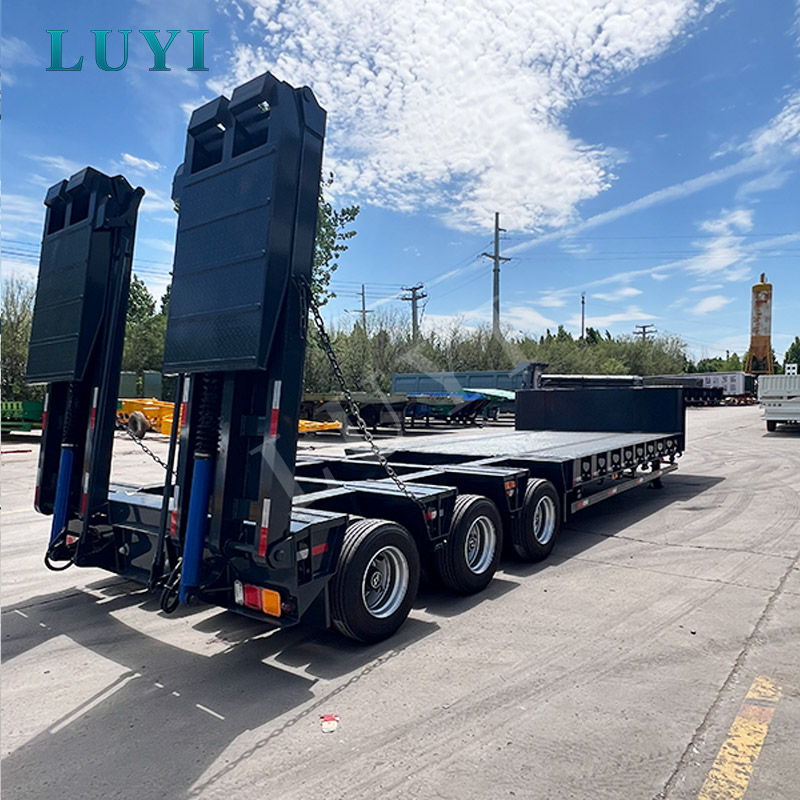
After reviewing the customer’s cargo type and route conditions, Luyi Auto recommended 2 custom 60-ton lowbed semi-trailers with a reinforced frame, low deck height, hydraulic ramps and heavy-duty axle configuration. The solution was designed to improve loading stability, reduce equipment handling difficulty and support safer transport on rough regional roads.
The recommended configuration was developed based on the same engineering logic used in Luyi Auto’s heavy equipment lowbed trailer product range, but upgraded for the customer’s 60-ton payload requirement and local working environment.
| Item | Recommended Specification | Purpose |
|---|---|---|
| Trailer Type | Custom lowbed semi-trailer | For construction, mining and agricultural machinery transport |
| Payload Capacity | Up to 60 tons | Suitable for heavy machinery relocation and project equipment transport |
| Main Frame Material | Q345 high-strength steel | Improves structural strength and resistance to heavy-load stress |
| Welding Process | Automatic submerged arc welding for main beam sections | Helps improve weld consistency and frame durability |
| Deck Size | 10,000 mm × 2,900 mm | Matches common machinery loading dimensions |
| Deck Height | Approx. 850 mm | Supports easier loading and improves transport stability |
| Axles | 3 sets of 13-ton FUWA axles | Supports load distribution and long-term operation |
| Suspension Support | Hydraulic shock absorption configuration | Improves adaptability to rough roads and reduces vibration impact |
| Ramp System | Detachable hydraulic ramps | Improves loading efficiency for excavators, loaders and similar machines |
| Brake System | Dual-line pneumatic braking system | Supports safer braking under heavy-load operation |
| Tires | 12 radial tires | Improves load support and road adaptability |
| Landing Gear | 28T JOST landing gear | Improves support stability during parking, loading and coupling |
| Surface Treatment | Anti-corrosion paint system | Helps extend service life in outdoor working environments |
For machinery transport in Lesotho, the trailer must balance payload, deck height, road adaptability and maintenance practicality. Choosing a larger trailer without checking route conditions can increase cost and compliance risk. Choosing a lighter configuration may reduce purchase cost but increase long-term structural fatigue under heavy machinery loads.
Luyi Auto’s engineering team focused on a configuration that could answer the customer’s actual operating questions:
For buyers comparing different heavy-haul options, Luyi Auto also provides practical guidance on lowbed semi-trailer load capacity selection to help match trailer capacity with cargo weight, route limits and operating cost.
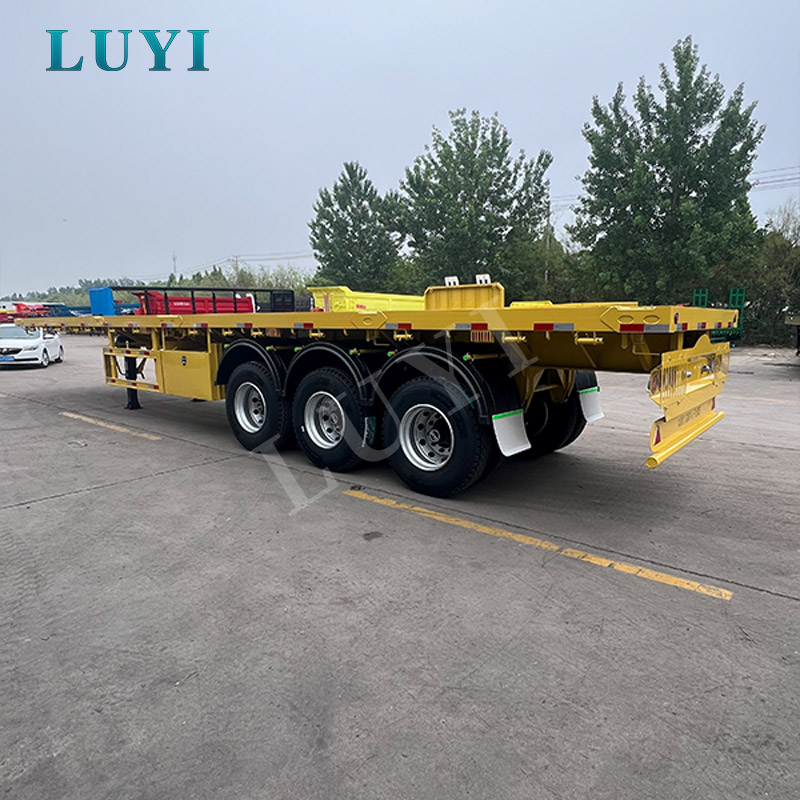
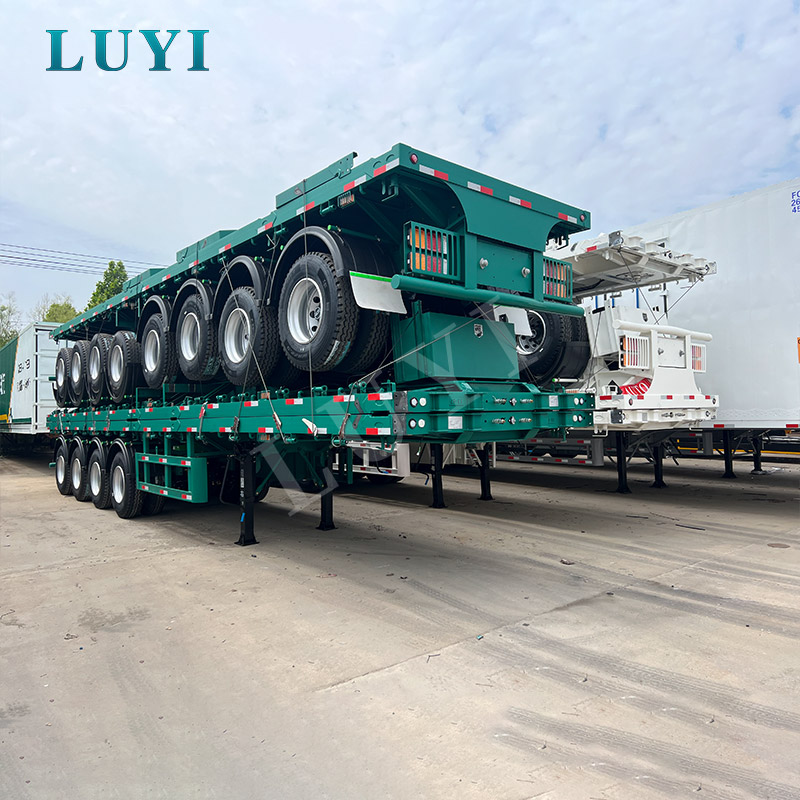
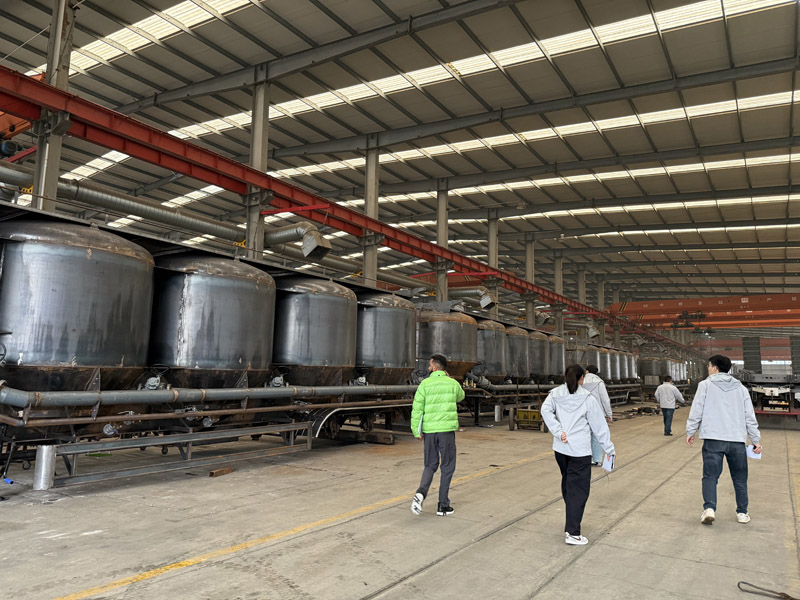
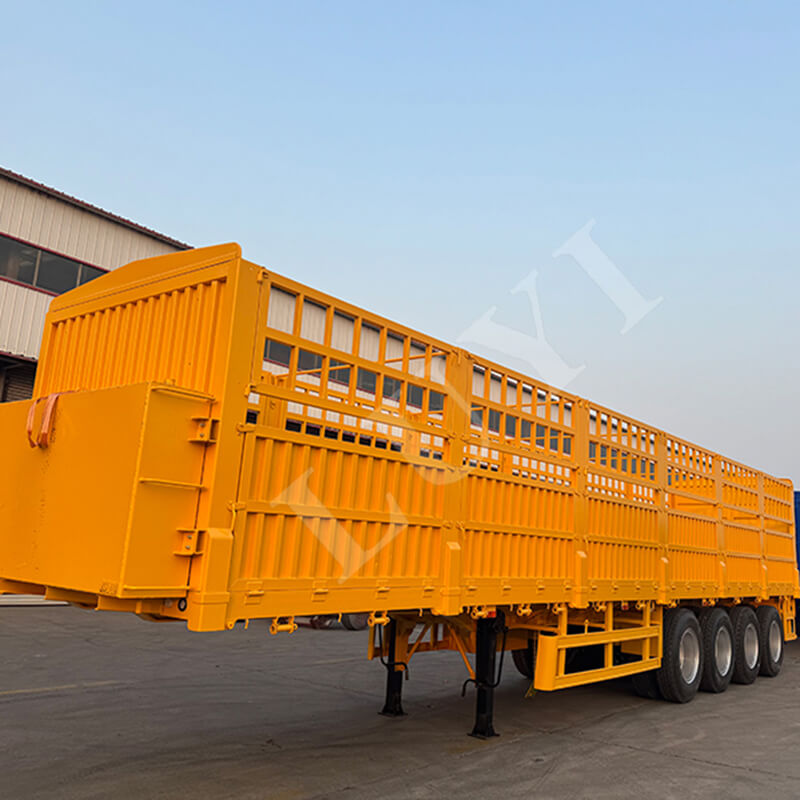
The customer’s factory visit played an important role in the purchasing decision. During the visit, the Luyi Auto team showed the customer our workshop, sample trailers, structural details and quality control process. This allowed the customer to see how trailer frames are fabricated, how key components are assembled and how finished trailers are checked before shipment.
For B2B buyers, especially those purchasing from overseas, factory visibility helps reduce uncertainty. The customer was able to review the production environment directly at the Luyi Auto manufacturing facility and discuss technical points with the team before confirming the order.
Luyi Auto followed a project-based production process for this Lesotho order. Instead of treating the trailers as standard inventory units, the team adjusted the design around the customer’s payload requirement, machinery type and operating environment.
The quality control process covered material inspection, cutting, welding, assembly, surface treatment and final inspection. This process is especially important for lowbed trailers used in heavy equipment transport, because frame strength, weld consistency and component matching directly affect long-term reliability.
This project-based manufacturing approach reflects Luyi Auto’s broader custom trailer service capability, where trailer recommendations are made according to cargo, road conditions, export destination and long-term operating needs.
For the Lesotho project, the planned delivery route was arranged through Durban Port in South Africa, a practical shipping path for landlocked Lesotho. Luyi Auto prepared the delivery plan, export documents and communication process to help the customer receive the trailers with fewer logistics uncertainties.
The trailers were planned for delivery in June 2026. After arrival, Luyi Auto’s technical team was scheduled to support trailer setup, operational testing and user training. This service plan was designed to help the customer’s operators understand correct loading, braking, ramp operation and routine maintenance procedures from the beginning.
Based on the configuration plan and the customer’s operating scenario, the 2 custom lowbed semi-trailers are expected to help the customer improve machinery transport efficiency, reduce repeated loading difficulties and support more stable operation on rough local roads.
The customer expects the trailers to support construction, mining and agricultural machinery transport with better route adaptability and fewer equipment movement delays. With proper operation and maintenance, the trailers are designed for long-term heavy-duty service in demanding working environments.
The customer expressed confidence in the trailer design, structural durability and Luyi Auto’s on-site support plan after the factory visit. They also indicated interest in future cooperation after the first batch enters stable operation.
Heavy equipment transport in African markets often requires more than a standard trailer model. Buyers need a manufacturer that can understand road conditions, cargo type, border requirements, maintenance conditions and delivery routes. Luyi Auto supports customers with practical configuration recommendations instead of simply offering a one-size-fits-all product.
From custom semi-trailer manufacturing to after-sales support, Luyi Auto works with overseas buyers to select trailer structures that match actual working conditions. For customers moving machinery across construction, mining, agriculture and infrastructure projects, this reduces purchasing uncertainty and improves long-term equipment value.
Yes. Luyi Auto can adjust payload capacity, axle configuration, deck size, deck height, ramp system, suspension and braking system according to the customer’s cargo type, road conditions and operating environment.
Yes. Lowbed semi-trailers are commonly used to transport excavators, loaders, bulldozers, rollers, mining machines and other heavy equipment. For each project, the final specification should be confirmed based on cargo weight, dimensions and route limits.
Yes. For Lesotho projects, Luyi Auto can support export coordination through South African ports such as Durban Port and provide documentation support based on customer requirements.
For customized semi-trailers, production time is usually around 30–45 working days after order confirmation, depending on configuration complexity, production schedule and component availability.
Buyers should provide cargo type, maximum cargo weight, cargo dimensions, route conditions, destination country, expected quantity, tractor model and any local compliance requirements. This helps Luyi Auto recommend a more accurate configuration.
Yes. Overseas customers are welcome to visit Luyi Auto’s factory to inspect production capability, trailer samples, quality control process and export service workflow before confirming an order.
If your fleet needs to transport excavators, loaders, mining machinery, agricultural machines or other oversized cargo in demanding road conditions, Luyi Auto can help you evaluate a suitable lowbed semi-trailer configuration.
Send your cargo weight, cargo dimensions, road conditions, destination and expected quantity through our custom trailer inquiry form, or contact the Luyi Auto team directly through our contact page to request a configuration-based quotation.